
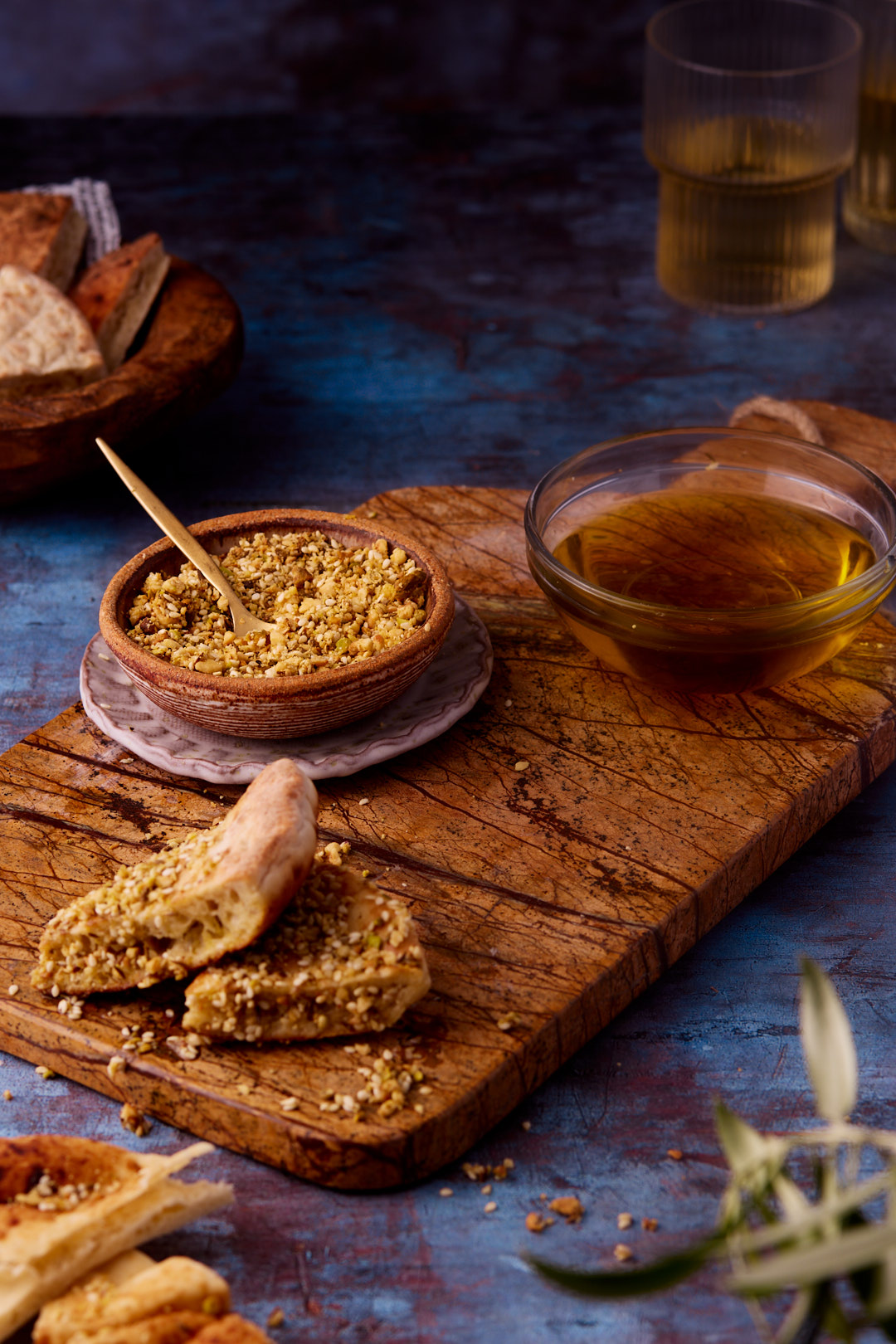
Sometimes the simplest things are the most satisfying. Enter pita and dukkah. If you’ve made a batch of dukkah, this is the easiest, most shareable way to enjoy it — no cooking, no fuss, just pure flavour and texture.
Warm pita, the good fruity olive oil, and a bowl of dukkah. Those three ingredients only shine if each one is special. Use your best-quality olive oil here — the kind that smells fruity and vibrant. And don’t settle for cardboard pita. You can absolutely make your own but if you want a store-bought shortcut, Angel Pita Bread (available at Whole Foods) is incredible. Soft, tender, and perfect for dipping.
Three simple ingredients. Endless satisfaction.
Dukkah
Equipment
- food processor
Ingredients
- 1/2 cup hazelnuts
- 1/2 cup shelled pistachios
- 1 cup sesame seeds
- 2 Tablespoons coriander seeds
- 2 Tablespoons cumin seeds
- 1 teaspoon Diamond Crystal Kosher salt, or 1/2 teaspoon Mortonsws Kosher salt
Instructions
- Toast the hazelnuts: Preheat the oven to 350°F. Spread hazelnuts on a baking sheet and toast for about 5 minutes, until fragrant. Transfer to a container with a tight-fitting lid (like Tupperware), seal, and shake vigorously to loosen the skins. Remove and discard skins; set nuts aside to cool.
- Toast the pistachios: Place pistachios on the same baking sheet and toast for about 5 minutes, just until lightly golden and aromatic. Set aside to cool.
- Toast the seeds: In a dry skillet over medium heat, toast the sesame seeds until light golden brown, stirring often. Transfer immediately to a bowl so they don’t continue to brown. In the same skillet, toast the coriander and cumin seeds, shaking the pan occasionally, until fragrant and the seeds begin to pop.
- Grind and mix: Transfer the coriander and cumin to a food processor and pulse until finely ground. Pour into the bowl with sesame seeds. Add cooled hazelnuts and pistachios to the processor and pulse until the mixture resembles coarse breadcrumbs — you want texture, not nut butter. Add the nut mixture to the bowl with the ground spices, sprinkle in the salt, and stir well to combine.
- Store: Transfer to an airtight container or zip-top bag and store in the freezer. Keeps well for several months.
Notes
- Shaking the hazelnuts in a sealed container is cleaner and easier than rubbing them in a towel.
- Hazelnuts are often sold already skinned, which makes the first step even easier — just toast them lightly before proceeding.
- Freezing keeps the nuts fresh and the flavours bright.
Nutrition
How to serve Pita and Dukkah
To enjoy dukkah the classic way, warm fresh pita and cut it into wedges (or lightly toast it for extra texture). Drizzle your best, fruitiest olive oil into a shallow bowl — the kind that smells grassy and vibrant — and set out a small dish of dukkah beside it. Dip the pita into the olive oil first, then into the dukkah, letting the spices and nuts cling to the surface.
In many Middle Eastern food markets, this is the most traditional — and beloved — way to enjoy dukkah. Vendors sell long, warm strips of fresh pita that you dip first into a bowl of olive oil, then into your own take away little cone of dukkah. It’s the ultimate street food: simple, portable, and completely satisfying. No instructions, no ceremony — just the pure pleasure of warm bread, fragrant oil, and that crunchy, nutty coating.
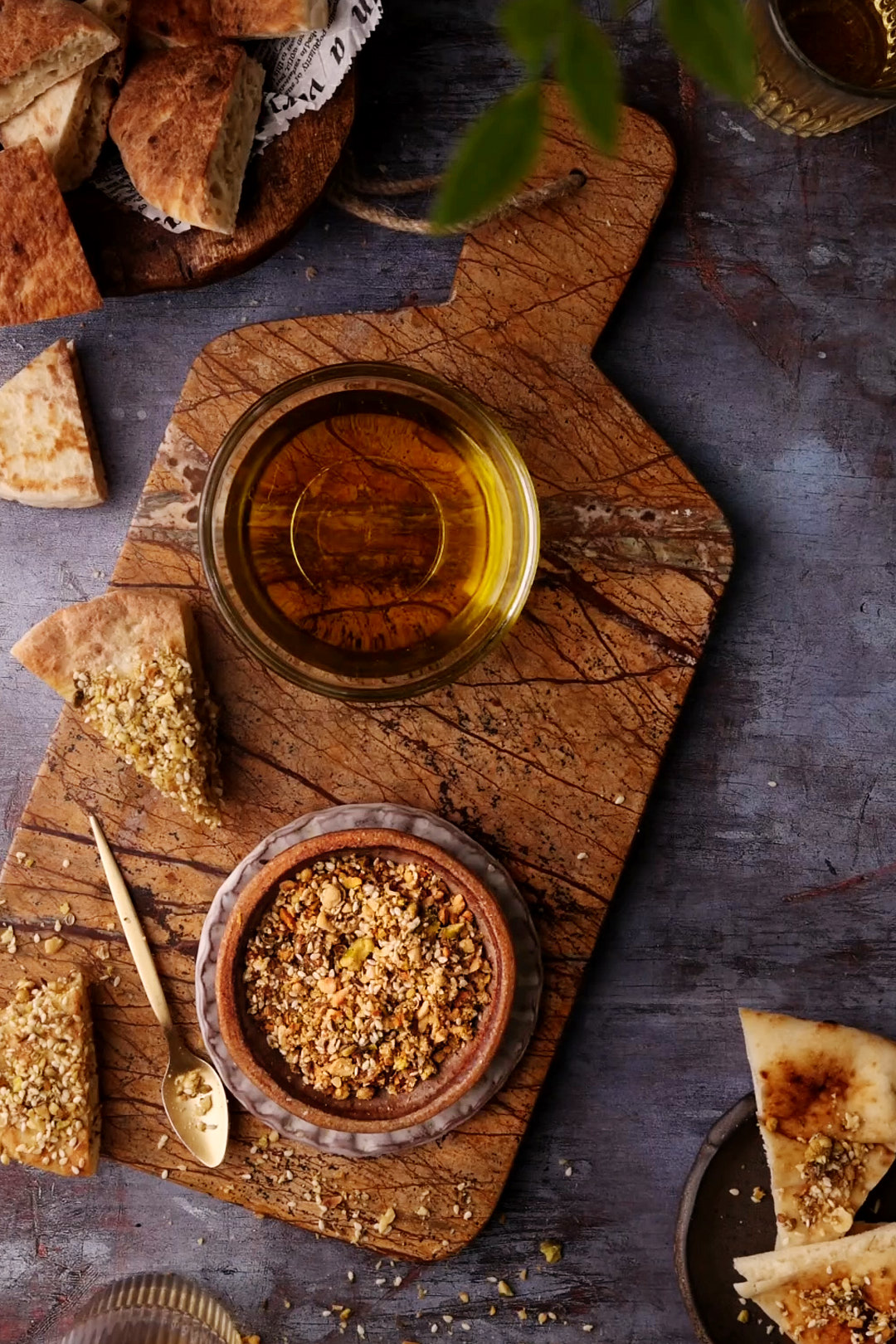
This little ritual — warm pita, your best olive oil, and a dip into nutty, crunchy dukkah — is how I end up eating half the batch before dinner even begins. It’s unfussy, delicious, and the perfect reminder that when the ingredients are good, the simplest bites become extraordinary.
More Ways to Use Dukkah
Continue the series here: