 Every spring, when I was little, my parents would fold down the last two rows of our station wagon and line it with blankets and pillows. Then they would wake my sisters and me at midnight and pack us into the back of the wagon, like sardines (this was before the days of seatbelt laws). Through the night we drove, to Philadelphia, to visit my dad’s family.
We loved those annual trips to Philadelphia. My older sister and I got to stay at my Auntie BeBe and Uncle Sammy’s house. We slept in my cousin Bonnie’s room. She was 3 years older than me and the most glamorous pre-teen I knew. I loved her American accent, her clothes and her friends. I was very jealous of her pierced ears and adorable earring tree which housed all her beautiful earrings. The rest of my family stayed at a hotel. When my little sisters got older, they were allowed to stay at the house too, in my younger cousin David’s room.
Our days had a definite structure to them. We’d get up in the morning and have “Tastykakes” for breakfast, followed by a chaser of Diet Pepsi. Tastykake has been baking in Philadelphia since 1914 and their signature product is a cream filled cupcake, much like a Hostess Ho Ho. Then we’d set the dining room table for lunch. At about 10:30 a.m. my parents and siblings would arrive and all the kids would go upstairs and start rehearsal for the play we’d put on that night. Our performance each night followed a fairly similar formula, some variation of dressing my little cousin David up in girl’s clothes.
Morning rehearsal was followed by lunch, always cold cuts, coleslaw and potato salad, Wise’s potato chips and of course the ubiquitous Pepsi and Diet Pepsi. My Uncle Sammy is a definite member of the Pepsi generation. No Coke in that house!! I never made a sandwich with bread for lunch. I just rolled slices of roast beef around Wise’s potato chips. Depending upon your perspective, you may either be amazed or horrified that this is what I remember most vividly about that time in my childhood.
Lunch was followed by cleanup and setting the table for dinner. The afternoon usually involved some shopping for the girls. Back in the day my mom was a marathon shopper. What she could accomplish in 2 short hours was astonishing. Fortunately that gene has been passed down to several of her daughters and at least one granddaughter! Then back to the house for dinner, clean up, setting the table for lunch the next day and the evening performance. For dessert there were always Bubbe cookies.
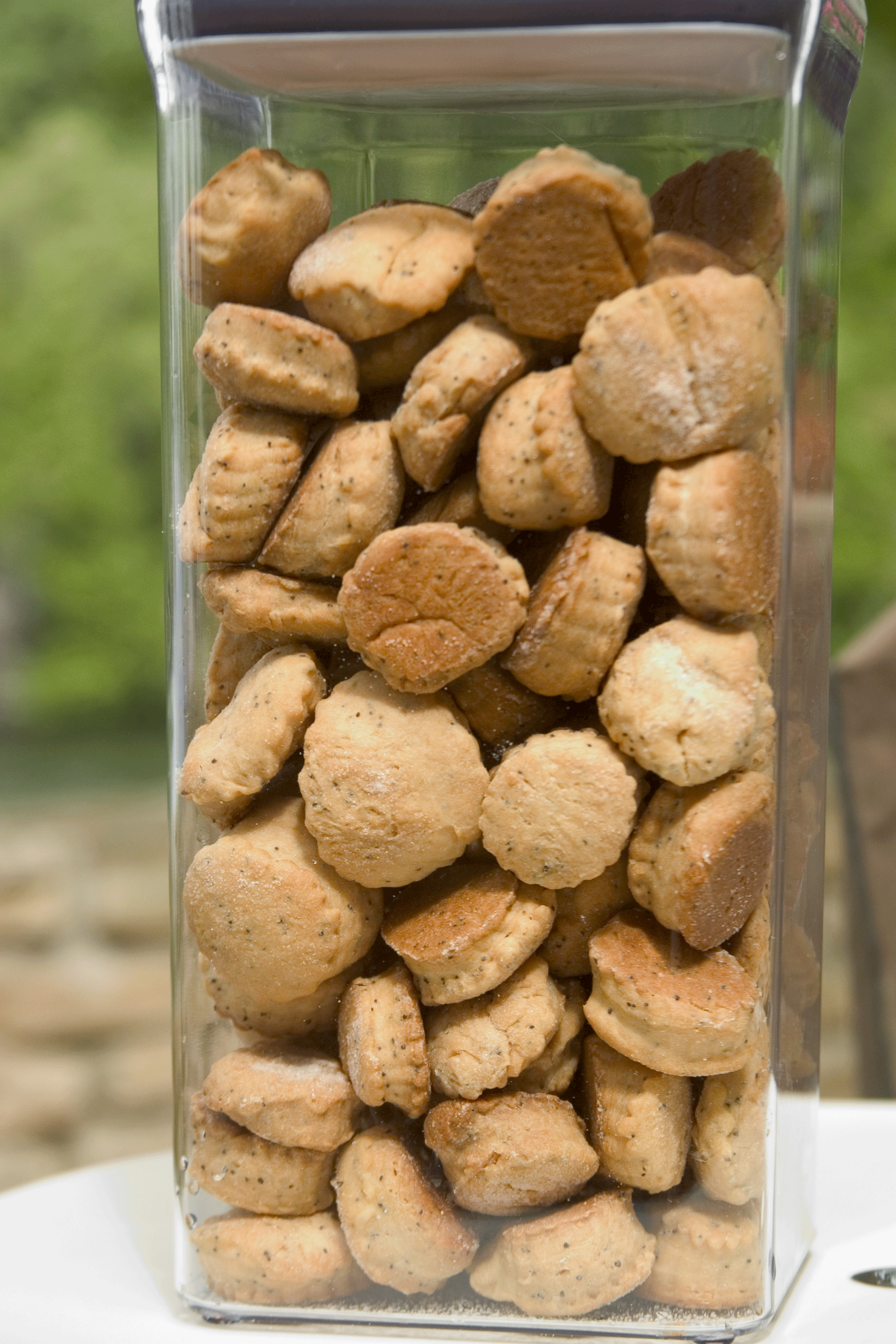
My grandmother made poppy seed cookies. They are not thin delicate poppy seed cookies. They are thick and hard, like little hockey pucks. During the rest of the year she would mail them to us in a shoebox. When that little box would arrive in the mail there was much joy in our house. (Perhaps that explains my shoe addiction!) Saying goodbye at the end of the visit always took at least 2 hours. There were lots of tears and promises to visit again very soon.
As we grew older, the visits were less frequent and once my cousins and siblings and I got married and had families of our own, our lives got increasingly busier. In 1992, two years after my Bubbe passed, a family reunion was planned. We all drove to the Neville Hotel in the Catskills. It was a wonderful weekend. There was lots of talk that this should be an annual event but all the busyness of life got in the way. In early 2000, my husband and I decided to host a family reunion at our cottage that summer. Although it was a Feingold-Gordon (my dad and his sister) family reunion, several other branches of the family were included, namely my mom’s sister, Susie, and her family and my Cousin Bonnie’s mother-in-law, Yetta. Over the years whenever an additional guest was added, the joke became, “Yetta nother guest!!”
That first reunion was a resounding success. (Despite E-Coli in our well, but that’s a story for another time!) Of course I had to bake Bubbe cookies for the reunion. Although it had been 10 years since my grandmother died, luckily my aunt had watched her mom make the cookies and copied down what she observed. When I read the directions I thought there must have been a misprint. It said to bake the cookies for 70 minutes! But that’s correct. The cookies are rolled out to about 1/2 an inch thick so they bake at a low temperature for a long time.
While we have not been holding annual reunions since 2000, we have managed to do them every 3 years. We held one in 2003, 2006 and again this year, last month in August. This summer there were 41 of us. Everyone is better than the last. I feel proud that I am carrying on my parent’s tradition of making memories for their children. Now it’s our generation’s turn to do the same for our kids.
Bubbe Cookies
Makes 125 cookies
6 large eggs
1 ¼ cups granulated sugar
1 cup vegetable oil
1 cup warm water
2 tablespoons Crisco vegetable shortening
2 tablespoons poppy seeds
1 teaspoon baking powder
½ teaspoon salt
8 ¼ cups all-purpose flour
½ cup granulated sugar (for sprinkling on top of cookies before baking)
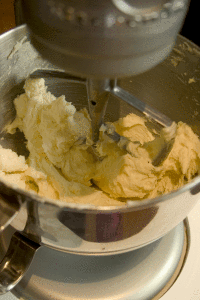
1. Preheat oven to 300 degrees F. In an electric mixer, mix together the eggs and sugar for about 5 minutes, until light and fluffy.
2. Add oil, water, Crisco and poppy seeds and continue to mix for another 3 minutes.
3. Add baking powder, salt and flour and mix just until the dry ingredients are incorporated.
4. Divide dough into 4 sections. Roll out one section at a time, to a ½ inch thickness and cut out cookies using a 1 ½ inch round cookie cutter. A small juice glass works very well for this. (That’s what my Bubbe used, although in her later years, she just used a knife and cut the cookies into squares.) Save the scraps and reroll and cut out more cookies.
5. Place the cookies on parchment lined cookie sheets. The cookies can be placed fairly close together as they do not spread during baking. Sprinkle the cookies with sugar and bake. You can put 2 trays in the oven at once; just switch positions of the trays halfway through the baking time. The cookies will take about 60-70 minutes to bake. They should be golden brown and firm to the touch.
These cookies keep very well for several weeks in an airtight container and travel very well in a shoebox.