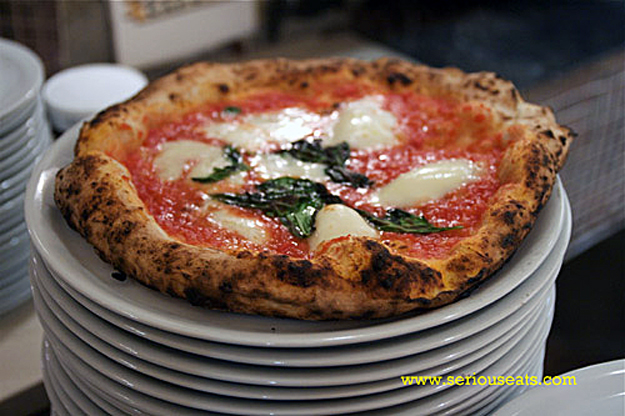
Last Monday morning I woke up with a killer Cronut hangover. For the uninitiated, a Cronut is an amazing pastry from Dominique Ansel Bakery on Spring St. in SoHo. Imagine if you will a cream filled donut hooking up with a croissant, falling in love and mating. (Hey, it could happen, ever watch those eHarmony commercials?) The Cronut would be the love child of that union.They take a croissant type dough and form it into a donut shape. Then they deep fry it and pump it full of a Tahitian Vanilla pastry cream. They enrobe it in a rose flavoured glaze, tint it the palest, prettiest pink imaginable, and then, bedazzle it with candied rose petals.
This creation is based on the traditional Breton butter pastry, known in Brittany as Kouign Amann. People are lining up for them as early as 6:00 a.m., because they sell out so quickly. There are even rumours that Cronuts are being scalped on Craigslist. They just launched a lemon maple variety for the month of June and a Dulce de Leche variety is in the works for July!http://www.youtube.com/watch?v=vswiimBEvCk
I first heard about Cronuts on Serious Eats. I knew that in the wrong hands, (MINE), a Cronut could be a dangerous thing. But I needed to find out if they were really all that and a bag of chips. So, I figured I’d do the next best thing to actually eating it myself. I would get my friend to try them, and give me the lowdown.
My girlfriend Paula and her husband were heading to NYC, so I forwarded the Cronut link to her and asked her to go check them out and report back to me. She e-mailed me back that she would do one better; she would bring me back some to try myself. Apparently they sell out very quickly, so she went online, ordered them and on Sunday afternoon, schlepped her husband down to SoHo to pick them up. He stopped complaining once she shoved a Cronut in his mouth. She managed to get them through Newark Security and even through Customs unscathed, although I suspect a Cronut or two were sacrificed as bribes to ease their entry into Canada. We take Cronut importation seriously in this nation.
Now you may be thinking, “What a great friend Paula is, to bring these all the way back from NYC”. Or you may be wondering if she isn’t just a sneaky closet enabler, trying to fatten up her friend.
Sunday night, around 8:30 p.m., our doorbell rang. It was Paula, on her way home from the airport with the box of Cronuts. She said that we had to eat them right away. I didn’t want to be rude, so I took a small bite. Crispy flaky light layers of buttery croissant gave way to a silky pastry cream filling flecked with vanilla bean seeds.I am sure I moaned as I thanked her profusely. I really was planning to have just a little bite, so I could say I had tried them. However, once she left, an evil voice from somewhere deep inside my head commanded me to finish the entire thing. So I did. And then, once my husband and daughter went upstairs, I scarfed down a second Cronut; hence the Cronut hangover on Monday morning.
I felt vaguely nauseous from all that sugar and butter I had ingested, so I figured that the perfect antidote was something green and acidic. I remember reading somewhere that apple cider vinegar is a great digestive aid. I had some fresh green beans, so I got to creating with what was in my fridge.Cookbook author and griller extraordinaire, Chris Schlessinger, once said, “Green bean recipes are like movies: You always think there are lots of good ones around until you’re ready for one, then you can’t find any you really like.” Here’s a fantastic one for whenever over-indulging makes you feel the need to be virtuous. (At least until the next binge!)
Now that my racy title got your attention, I must fess up and admit that I have not been unfaithful to my husband with another man. However, he has been away for 18 days and I will admit that in his absence I have been gorging on pineapple. But more about pineapple in a moment.
I should explain that my husband and daughter took a “Lord of the Rings” (LOTR) journey to New Zealand. Apparently the movies were filmed there. They are both a little obsessed with all things LOTR! My husband and daughter were whispering just before they left and I suspect they may be coming home with their second tattoo. They bonded last summer when they went together to get their first tattoos!
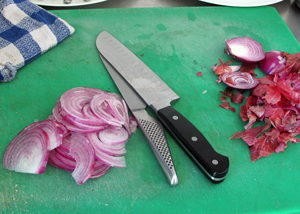
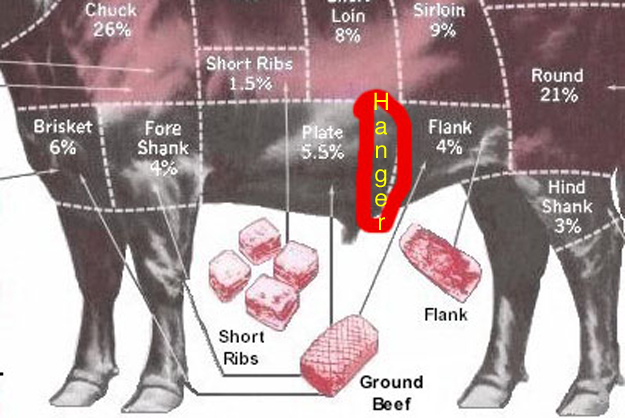
So, back to pineapple. My husband has a food sensitivity to pineapple, so being the kind and considerate wife that I am, I avoid using it in my cooking. However, I love it! So while he has been away, I have probably consumed half my body weight in pineapple. I made an amazing Cuban Avocado, Watercress and Pineapple Salad, a spicy pineapple-jalapeño salsa to eat with halibut, a big batch of tangy pineapple sherbet and lots of fresh pineapple just mixed in with my morning yogurt and favourite granola.
And then, yesterday, as I was flipping through the May issue of Bon Appetit, I came across a recipe for Pineapple Mint Mojitos. Until recently, I was not really a mojito fan. My husband used to accuse me of sucking all the joy out of his love of mojitos by telling him how much sugar was in them. But that nasty habit came to an abrupt halt last December, when we were on holiday and were served an entire pitcher of mojitos. I had my very own Dr. Seuss moment and discovered that, “Saaaay, I do like Mojitos!”
I could only imagine how much I would like a mojito with pineapple in it. Begin heating sugar and water to make a simple syrup. After the sugar is dissolved in the water, add some mint and let it infuse it’s minty goodness for several hours until it cools. Strain the mixture and add it to some pureed pineapple.
Yesterday at spin class, when I climbed down off my bike after an especially gruelling 55 minute class, I noticed a few drops of water under my bike. I checked to see if my water bottle was leaking, but no, the lid was screwed on tight. Suddenly it dawned on me that the liquid on the ground was my own sweat. If you are not a spinner, you may not realize the significance of this discovery. It is the athletic equivalent to a Bar or Bat Mitzvah.
There is a right of passage in the Jewish religion known as a Bar or Bat Mitzvah. When a young boy turns 13 he has a Bar Mitzvah and we say “Today you are a man.” For girls the age is 12 and it is called a Bat Mitzvah (we mature faster!).
Today, after spinning consistently 3-4 times a week, for the past 6 months, I have finally worked hard enough to produce an actual puddle of sweat, albeit small, under my bike. I would have shouted, “Today I am a spinner” but I had not one ounce of energy left to even utter mazel-tov.
When I got home, all I could think of was celebrating with something sweet and salty to replace all those precious calories I sweated away. And then I remembered the “Oh My God” pie recipe my friend Marla had sent me. It seemed a fitting way to commemorate this milestone in my life.
This is a traditional pie, served all up and down the North Carolina Coast. Similar to a key lime or lemon meringue pie, but with a twist. The difference is in the crust. Instead of a traditional pastry or graham wafer crust, this crust is made from saltine crackers. Bill parted with tradition and topped his simply, with whipped cream, instead of the traditional meringue topping.
Bill said that when he was growing up it was common knowledge in his part of the world that you would get very sick if you ate dessert after a seafood dinner. This pie was the only exception and it was served in all the seafood restaurants on the North Carolina coast.
Recently, Katie was dining at Bill’s Chapel Hill North Carolina restaurant, Cook’s Corner. After an amazing dinner of shrimp and grits, fried oysters and hush puppies, Katie says she was stuffed and had no room for another bite. But then Bill brought out a slice of this pie. Katie took one bite and had her “When Harry met Sally” moment. All she could utter, between bites, was “Oh my god, Oh my god, Oh my god!”
What makes this pie so outstanding is the crust. Crushed saltines, a bit of sugar and softened butter are transformed into a thick, dense, crispy, salty crust. No dough rolling, just press it into a pan and pre-bake the shell, while you prepare the filling.
The filling is made with lime (or lemon) juice, sweetened condensed milk and egg yolks.I learned a great trick for whipping cream ahead of time from pastry chef Anna Olsen. Her secret is to add 1 tablespoon of skim milk powder for each cup of whipping cream at any point during the whipping process to stabilize it. She says, “It doesn’t impact the taste or texture, but it stabilizes the whipped cream. You can pipe it, you can dollop it, every swirl and swish will stay in place for a full 24 hours. If you ice a cake you can cut it and you get these clean perfect slices and the whipped cream stays whipped.”I decided to get fancy with my whipped cream and I put it into a piping bag, fitted with a star tip, to top the pie. You could just spread the whipped cream over the pie with a knife, or even serve it on the side, with a slice.
This pie is a study in contrasts. The crispy crust is in perfect balance with the silky creamy filling and the billowy whipped cream topping. The saltiness in the crust is utterly complemented by the tanginess of the lime and the sweetness of the condensed milk. This is beautiful harmony in a pie. Click here to print recipe for Oh My God Pie.
I promise that this asparagus post (unlike my previous one) will not offend anyone by mentioning any bodily functions, so feel safe to read on. This post is all about the unabashed joy of celebrating all things green this spring.
The classic panzanella salad originated in Tuscany. It was a way to use up stale bread and highlight tomatoes at the pinnacle of their summertime glory. Often onions, cucumber and basil are added. The texture of the bread in traditional panzanella is not supposed to be crunchy or chewy or crusty like croutons. If you have ever eaten this salad in Italy, you will recall that the bread is light, a bit wet, airy, just short of mushy. I was shocked when I had it a few years ago on the Amalfi Coast, and to be frank, was less than enthused. It sort of had the texture of fluffy torn-up matzoh balls. There is a very fine line between lightly moistened and unpleasantly soggy. Although I love the classics, in my panzanella salad, I want the bread to have a bit of chew and crunch.
The inspiration for this spring panzanella came from Chef Michael Symon. Asparagus and green peas get top billing in this version of panzanella. Out of season tomatoes need not apply for entry into this salad. Like Michael, I grilled my asparagus, but I also shaved a few raw spears with my vegetable peeler to get some fresh crunch.I used a half a loaf of Ciabatta bread I had in the freezer. I thawed it and then tore it into chunks, rather than cutting it into neat cubes. Tearing it gives a more rustic appearance and all those craggy surfaces have a better chance of soaking up the flavourful dressing.
If fresh peas in a pod are available where you live, go ahead and indulge. I used frozen peas since we are at least a month away from fresh here. I really love frozen peas. It seems to be a family thing. My daughter used to eat frozen peas as her afternoon snack every day when she was about 4 years old. Peas are one of the few vegetables that are actually better frozen. Unless you have green-peas growing in your backyard or access to a Farmer’s Market, you really are better off buying frozen. Cook’s Illustrated explains why this is so:
“Fresh peas have very little stamina. They lose a substantial portion of their nutrients within 24 hours of being picked This rapid deterioration is the reason for the starchy, bland flavor of most “fresh” peas found at the grocery store. These not-so-fresh peas might be several days old, depending on where they came from and how long they were kept in the cooler. Frozen peas, on the other hand, are picked, cleaned, sorted, and frozen within several hours of harvest, which helps to preserve their delicate sugars and flavours “
I finished the salad off with some crumbled Ricotta Salata cheese (a firm ricotta). If you can’t find it, Feta would work just as well. Ricotta salata is a sheep’s milk cheese that has been pressed, dried and salted. It has a dense, slightly spongy texture and fresh milky flavour.
A quick dressing is made with garlic, dijon, sherry or red wine vinegar and olive oil. Fresh chopped mint gets sprinkled over the whole dish. This is a delicious addictive salad. I was home alone the day I made this and polished off the entire platter after photographing it. The contrast of the soft grilled asparagus was really wonderful against the crunch of the fresh shaved raw asparagus ribbons. The peas, barely cooked gave a great pop of green brightness. I mixed everything together and let the salad sit for at least 20 minutes. By the time I ate it the croutons had time to soak up the dressing and they were chewy but still just a bit crunchy. Perfect.
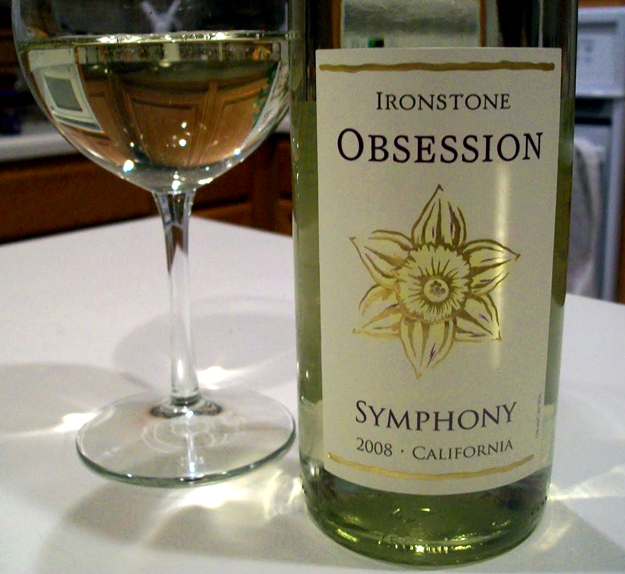
I had a glass of Sauvignon Blanc with this salad. Asparagus is quite difficult to pair with wine, as certain chemicals in asparagus can make your wine taste vegetal, grassy, or just plain rotten. A crisp and refreshing Sauvignon Blanc is a perfect match. I am currently crushing on New Zealand Dog Point Sauvignon Blanc. It has a juicy acidity and crisp finish that pairs perfectly with this salad.
If you are curious about learning more regarding food and wine pairings, check out Natalie MacLean’s Great Canadian Wine Match. Natalie is a certified sommelier and was named the World’s Best Wine Writer at the World Food Media Awards.
This is the first People’s Choice Competition for Canadian food and wine pairings. A real on-line battle of the bottles! The search for Canada’s best wine and food pairings launched on May 8. Wine drinkers from coast to coast are rallying behind their favourite Canadian pairings in this first grassroots, “bottoms up” competition.
Wine lovers can nominate and vote for their favourite Canadian wines as pairings in six Canadian food categories: cheese, chicken, beef, seafood, pizza and dessert. Voting ends May 20 when the top five wines in each category move to the showdown finalist phase. Wines from each region in Canada will vie to be named the best wine with a particular Canadian dish.
“This is a coast to coast toast to celebrate our own wine and food ,” says MacLean. “I think we can all drink to that.”
My baby recently turned 20! Kind of scary and yet also awesome at the same time to realize that I am no longer the parent of teenage children. I have made the exact same Chocolate Cake for him for the past 19 years. To say that he is a child that does not handle change well is putting it mildly. For the first 3 years of his life he cried every year on his birthday when we sang happy birthday to him. The more he cried, the louder his older brother and sister would sing. Whether it was to drown out his crying or antagonize him even further, I am not quite sure, but I have my suspicions!
Thankfully, for the next several years, the crying stopped but he would still get sad on his birthday. We just learned to keep things low key. Finally, on his 9th birthday he said he wanted to have a party with friends, balloons and streamers. I was thrilled and we went all out with the decorations. I even suggested that perhaps we make a special cake, maybe a train cake, or a swimming pool cake or even a rocket ship cake, like I had made for his brother and sister in past years.
Those suggestions were met with a stony stare and then he informed me that he would like his regular chocolate cake with chocolate icing please. Hey, at least he said please! So as the saying goes, “If it ain’t broke, don’t fix it.” So, I continued to make his favourite cake every year. However, as a food blogger, I have found this to be quite frustrating. I needed new material to blog about!
When I saw this photo of Chocolate Cake with Peanut Butter Mousse Filling on Serious Eats, I became transfixed. I could not stop thinking about it and began having serious cravings. This looked like the consummate birthday cake for my son. He loves the combo of chocolate and peanut butter. I showed him a picture of the cake and asked if this could be his birthday cake this year. He shocked me by saying, sure!I adapted the original recipe in several ways. The first thing I did was double the cake recipe. This chocolate cake recipe uses both bittersweet chocolate and unsweetened cocoa powder. Buttermilk and coffee round out the flavours to produce a fantastic moist, rich and fudgy cake. I wanted more cake in relation to the peanut butter mousse filling.The peanut butter mousse filling gets a bit of tang from cream cheese and then the whole thing is lightened with some whipped cream.
The original recipe called for a ganache frosting, but I swapped in my favourite Chocolate Coffee Buttercream instead. The slight bitterness of the coffee was a great counterpoint for the sweet cake. The final change I made was adding a dusting of peanut praline to the outside of the cake. I liked the textural crunch it added to the final bite. Without the praline I found it was just too many smooth textures in your mouth from the mousse and the buttercream.
It’s entirely possible that I may be jumping the gun a bit by writing about asparagus during the end of April. Here in Ottawa we will not be seeing any local crops until mid-May at the earliest. However, given the winter that we recently crawled out of, I hope I can be forgiven for buying California asparagus at Costco last week. I could not wait any longer.
Perhaps like you, I have a love hate relationship with asparagus. I love it when I eat it, but not so much about 15 minutes later when I pee. Up until recently it was believed that everybodys urine has that pungent aroma after eating asparagus, but not everyone can smell it.
It should be noted that the effect of asparagus on urine odour has been around for several hundred years. Apparently one British men’s club is said to have put up a sign reading, “During the asparagus season, members are requested not to relieve themselves in the hat stand.” I would have hoped that men would always have the good sense to never relieve themselves in the hat stand, but perhaps that’s just asking too much of that gender.
More recent scientific studies on what I like to call “The Great Asparagus Pee Mystery” (yes folks, there are some freaky scientists out there actually studying it) have now theorized that there are really two factors at play here; the ability to produce the aroma and the ability to detect the aroma. Both are determined by genetics.
Let’s deal first with the ability to produce the aroma. Asparagus contains a sulphurous compound called mercaptan. Enzymes in your digestive system break down the mercaptan and certain by-products are released that cause the offensive odour. But, here’s where it gets interesting. Not everyone has the gene for that enzyme. If you are part of the 54% of the population whose DNA lacks the gene for this enzyme, then you will not produce smelly urine after eating asparagus.
Now, what about the ability to detect the aroma? It has been theorized that depending on your DNA, you may or may not have the olfactory receptors to detect the scent. Some of us are “super-smellers” and others are just “smell-blind” when it comes to asparagus pee.
To simplify things I have created a chart!
If you are one of those with a malfunctioning olfactory sense, I envy you. Although looking on the bright side, when I am old and my memory is failing, I will always be able to remember that I had asparagus for dinner!
A word to the wise should you happen to find yourself at the Spargelfest (Asparagus festival) in Beelitzer Germany or any of these other Asparagus Festivals, this spring. If you are a super smeller, you may want to hold your breath when you enter the bathroom stalls!
The fact that I am a stinker and a smeller does not hold me back from eating asparagus when it is in season. One of my favourite ways to enjoy it is to simply steam it and serve it with poached eggs. I love to dip the spears into the runny golden egg yolk. Last week, I served the poached eggs on top of Rösti potatoes, with the asparagus dippers on the side. A perfect spring dinner!Rösti potatoes, also known as shredded potato cake, is not the same thing as latkes. Latkes are made with shredded raw potatoes, whereas Rösti are made with shredded par-boiled potatoes. Yukon Gold or Idaho potatoes are perfect for this dish.
Once the potatoes are parboiled, they should be allowed to chill in the fridge for several hours, or even up to a day, before they are peeled and shredded. This is the secret to getting the a crispy golden crust on the outside of the potato cake and having a fluffy and tender inside.The shredded potato is mixed with some salt and pepper and gets pressed into a hot cast iron skillet, with a little bit of both butter and vegetable oil.Patience is required here. Turn the heat down to medium low and let it get brown. This will take at least 15 minutes. When the underside is brown, flip the cake out into a large plate, browned side up. Add more oil and butter to the pan and slide the cake back into the pan, pale side down. Brown the second side.
While the Rösti potato cake is cooking, steam or boil asparagus and poach eggs. If you are at all intimidated about making poached eggs, please know that you are not alone, and there is help. Serious Eats posted a fool-proof method for poaching eggs, that is really quite genius, and actually works! Click on the link above to view the video if you are planning top poach eggs.
I had a friend in seventh grade whose long straight shiny hair I envied. It reached down to her lower back and was a beautiful shade of butterscotch. I had short, wiry, curly black hair and would have given anything for hair like hers. She seemed so exotic to me. As I spent more time at her house I came to appreciate how different our families were. She only had one sibling and her mom was quite involved in all aspects of her life. I had 5 siblings and my mom was busy just trying to keep all our names straight.
One of the strangest things about my friend’s mom was that every week she would buy a huge bunch of bananas and leave them in a pretty bowl on the kitchen table. By the end of the week, they would be ripe and almost black and she would throw the bunch away and buy a fresh one to replace it. No one in their family liked the taste of bananas, yet her mom just loved how they looked, so she continued to buy them.At the time it never occurred to me that you could make banana bread with ripe bananas. In our house, banana cake came from Sara Lee. Oh how I loved the icing on those frozen cakes!I only came to discover the joy of homemade banana bread many years later, during my University years, when I worked part-time as a Cuisinart demonstrator. I was given Noreen Gilletz’s book “The Pleasures of your Food Processor” as a gift. And there on page 208 was a banana bread recipe so perfect that it became my gold standard by which I judged all other banana breads for the next 30 years.
My mom was a student of the “more is more” school, and she revised Noreen’s recipe by using 5 or 6 bananas, instead of the 3 called for in the recipe. We dubbed her version, “Banana Brick.” It was wet and heavy.
Little did my mom know that with her addition of more bananas, she was onto something big here. She wanted to intensify the banana flavour but she just lacked the correct technique to do it without ending up with a sodden heavy mess.
Cook’s Illustrated Magazine figured out a way to ramp up the banana flavour without introducing too much additional moisture. They started with five very ripe bananas (versus the usual three in most typical recipes) and proceeded to microwave them to release their juices. The next step was to drain all the juices that had accumulated during microwaving and simmer that liquid in a saucepan until it reduced.
This reduced liquid is then added to the batter, a sort of intensified banana essence.
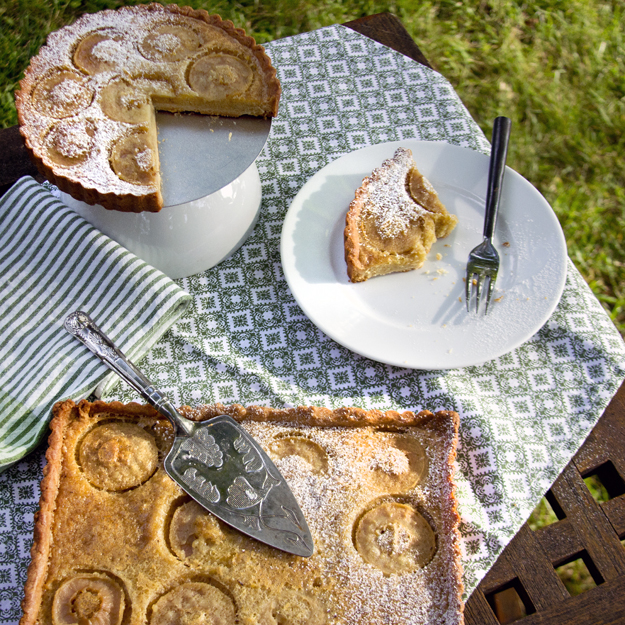
Cooks Illustrated decided to further boost the banana flavour by adding a sixth banana, sliced thin and caramelized on top of the loaf gave this banana bread an enticingly crisp, crunchy top.
I tasted the bread warm from the oven and to be honest, I wasn’t sure I liked it better than my classic recipe from Noreen. But I went back for a second taste after it had cooled for about 6 hours and I was astounded at how different it tasted. All the buttery goodness was now front and center. It was moist, but not wet. The slices, heavy for their size, had the perfect density.
There were several layers of sweetness to this banana bread. It tasted of bananas but the sweetness was not overpowering. The addition of brown sugar to this version added a molasses undertone that helped balance the sweetness. Cook’s Illustrated called for walnuts in their recipe and not being a walnut lover, I hesitated over this addition. In the end, I added them and their slight bitterness provided just the right contrast with the sweet bananas.
The sliced bananas and granulated sugar on top of the bread caramelized and they added a crunch to the top that was such a nice surprise and contrast to the moist interior. This banana bread continued to improve over the next 3 days, much like a fruitcake. Sometimes it does pay to mess with the classics! I think even Noreen Gilletz would approve.
I consider myself to be something of a bagel aficionado. Partly because I have eaten my fair share (and perhaps several others fair shares as well) over my life span, and partly because I have baked hundreds of bagels myself, after learning the craft when I participated in the Bread Baker’s Apprentice Challenge.
I will not delve into the hotly contested debate of New York vs. Montreal style bagels, because really, that argument is laden with trash talking and never ends well. For those not familiar with the difference between the two styles, a little bagel primer here.
Montreal bagels are thin, a little sweet and quite chewy. They are boiled and then baked in a wood fired oven. They are really only good within the first few hours of being baked. After that, they get quite tough and leathery. New York bagels are bigger, doughier and fluffier than Montreal style bagels. They are also boiled first and then baked, but not usually in a wood fired oven.
One’s bagel preference is imprinted on them early in childhood and it’s extremely tough to shake it. Personally, I do not care for either Montreal or New York bagels. I grew up in Toronto, and for me, bagel bliss is a Bagel World Twister. Weighing in at 8 ounces, these behemoths are chewy in the center and heavily seeded with poppy to create an extreme crunch on the outside. Twisters are spiralled by hand; the dough is literally twisted before the loop is closed to form the bagel. The result is that the baked bagels tear apart in beautiful little sections. All the better to slather on salted butter.Bagel World realized that it is a hazard to your health to eat twisters on a regular basis, so they created Twister flagels (flat bagels). I do not care for them quite as much as a regular twister since the chewy middle part has all but been eliminated. Sadly, I no longer live in Toronto and here in Ottawa bagels are made in the Montreal style. Blech!
I’ll be so bold as to bring a different species of bagel into this discussion: The Gluten-Free Bagel. Are delicious gluten-free bagels possible, or is that an oxymoron? Up until about 5 years ago, I would have said that gluten-free bagels should not even be allowed in the same conversation as regular bagels. We put out youngest son on a gluten free diet about 12 years ago, and one of the hardest things for him to give up were bagels. I tried buying commercially made gluten-free bagels and truthfully, they were awful. The vast majority of them were made from a combination of rice flour and tapioca starch. The texture was quite gluey.
Then, a friend of mine, who suffers from Celiac disease, gave me a recipe for gluten-free bagels that he discovered in the magazine “Living Without.” I was sceptical, but when I read the list of ingredients, I was intrigued. These bagels incorporate 6 different types of flour (Garbanzo-fava bean flour, brown rice flour, arrowroot flour, potato starch, tapioca flour and amaranth flour) to create a multi-grain flour blend. In addition, the recipe also calls for flax meal (ground up flax seeds). All these ingredients combine together to create a bagel with some heft and chew. I will be honest and tell you that they are best toasted, but if you are unable to have gluten, these really are a delicious substitute.
I make them regularly for my son and decided to blog about it, since gluten-free diets seem to be gaining in popularity. Today I made a batch of seeded (poppy and sesame) and a second batch of cheddar jalapeno gluten-free bagels. The dough for regular flour bagels needs to spend a night or even two in the fridge to allow the gluten and flavours to develop. Since these are gluten-free, they can be made quite quickly.
This is quite a sticky dough, so it is best made in a stand mixer. Start out with the paddle attachment and then switch to the dough hook after several minutes of mixing. A plastic pastry scraper will make it easier to get the dough out of the bowl and a metal bench scraper makes portioning the dough easier.
The seeds are sprinkled on after boiling and before baking.For the cheddar jalapeño bagels, I mixed in some shredded cheddar and finely diced pickled jalapeño peppers. After 10 minutes in the oven, they get topped with some additional cheddar, for the the last 10 minutes of baking.
One of the best things I ate during my trip to Barcelona was discovered purely by accident. We had just finished our Architectural walking tour of the city and based on a recommendation from our guide we stopped in at La Botiga at 27 Rambla Catalunya for lunch. This was only our second day in Barcelona so we were still learning the ways of the city. Our first mistake was showing up for lunch at 12:45. Talk about looking like tourists! We might as well have shown up wearing baseball caps, white Adidas running shoes and a Canadian Maple Leaf sewn onto our backpacks. They were not even open yet.
We quickly learned that the Spanish are on an entirely different meal schedule than North Americans. Breakfast is usually just a shot of espresso and a pastry or roll. Then around 11 am they may have a cafe con leche (espresso with milk) and a little bocadillo (sandwich). Lunch is typically served between 2:00 and 4:00 pm. Dinner is not usually served until 9:00 pm at the earliest. Sometimes they will eat their main meal at lunch and just have a light snack, (tapas) for dinner, or they may reverse it and have tapas for lunch and have their main meal at night.
We returned to La Botiga just as they were opening. We were starving by this point and quickly perused the menu and ordered a bunch of little tapas for sharing. Several minutes later, the waiter returned and told us that at least half of our choices were “already gone.” Huh? Already gone? How could that be? They just opened. We were the first customers there. Perhaps some savvy Barcelonians have caught onto the North American trend of eating lunch at noon, and snuck in to the restaurant before they were officially opened and ate all the best stuff. Just saying, it could have happened that way.
Since we were not eating meat, our choices were limited. We settled on fried artichokes, butternut squash tortellini with pepitas, mac and cheese (which we discovered they had snuck some ham into) and pan con tomate. Just some light carb loading.
Most of the food was ok, nothing very special. But the pan con tomate, oh my! It was truly one of the best things we ate all week. Pan con tomate, translates into “bread with tomato.” Yawn. Not exactly the most exciting dish you may be thinking. But you would be wrong. Pan con tomate is a Spanish trick that turns simple bread, tomatoes, oil and salt into something insanely delicious.
When it arrived at the table, we were expecting bread with diced tomatoes on top, like you get with bruschetta. This looked like it had barely any tomato at all. When we inquired about this, the waiter explained how this dish, a Catalan specialty, is made. First the bread is toasted or grilled. Then a ripe tomato is cut in half and roughly rubbed over the surface of the toasted bread until all you are left holding in your hand is the skin of the tomato. Then, some fruity spanish olive oil is drizzled over the top and it is finished with a few flakes of sea salt.
As I took my first bite, the crunch on the outside surface of the warm bread and the yeasty scent assaulted my senses. The center of the bread, so chewy, was filled with little nooks and crannies. These little air pockets were bursting with the sweet and fragrant tomato essence and the fruity nutty olive oil. The little crystals of sea salt on top just melted on my tongue. How could something so simple be so good?
From this meal forward, our mission was to order pan con tomate every time it appeared on the menu. Little did we know that the pan con tomate at La Botiga would be the best one we tasted. I would go back for a big plate of that and a bottle of Cava and I would be transported to my happy place. Here is a sampling of some of the pan con tomate we sampled over our week in Barcelona. At the end of the week, we realized that the pan con tomate we devoured at La Botiga, had become our Gold Standard, by which all others were judged. It became apparent that the one variable that was more important than any of the others, was the bread. Without an open crumb structure (i.e.: lots of air pockets and nooks and crannies) on the interior of the bread, the tomato pulp and olive oil have nowhere to soak into. Armed with the knowledge from completing the Bread Bakers Apprentice Challenge, I knew there was one bread that had the ideal structure to create this. Ciabatta bread.
Still obsessing over pan con tomate once I arrived home, I needed to see if I could create it in my kitchen. I somehow doubted that it would taste as good here, as it did when I was on holiday in Barcelona. There is something about eating the food in a spectacular venue that elevates it to mythical status. I went to Art-Is-In Bakery here in Ottawa and bought a ciabatta loaf. I sliced the loaf horizontally into 3 layers. I toasted the bread in my toaster oven. I experimented with 2 different types of tomatoes, kumato and plum. I liked the sweeter, thinner skinned kumatos best.
I drizzled the bread with some olive oil and salt I brought home from my holiday.
The verdict: a perfect crunchy and chewy snack that transported me right back to Barcelona. I can only imagine how good this will taste this summer when I grill the bread and use local vine ripened sweet summer tomatoes.
Regular readers of this blog may know that my drink of choice is Prosecco. However, when in Barcelona, we switched our allegiance and guzzled quaffed Cava. Made in the Catalonia region of Spain, Cava is the generic term for Spanish sparkling wine. I should explain here that Cava and Prosecco are very different from Champagne.
While all Champagne is sparkling wine, not all sparkling wine is Champagne. To be labelled Champagne, the sparkling wine must come from the Champagne region in France. The main difference between Champagne and Prosecco/Cava lies in the method by which each is made.
Champagne is fermented into wine normally, then bottled with a little yeast and sugar, capped, and left to referment. This second fermentation produces carbon dioxide that is trapped in the bottle; the sparkling wine is left to steep with the yeast in it for an additional several years and then the sediment is removed and the Champagne is sold. With Prosecco and Cava, the second fermentation takes place in a specially reinforced tank. Once the second fermentation is complete, the sparkling wine is immediately drained from the yeast and bottled. So the aroma and flavour of the yeast is an integral quality of Champagne, but not of Prosecco or Cava, because the yeast is removed from the tank of Prosecco and Cava as soon as it has done its job.
What this means is that the lack of the yeasty aroma and flavor in Prosecco and Cava allows the varietal characteristics of the grapes to shine through. This is an important difference between Champagne and Prosecco/Cava. I have never really liked the yeasty quality of Champagne. I find it too heavy. I guess I’m just a cheap date, but I really prefer the light fresh quality of Prosecco and now, after my trip to Barcelona, Cava.
Since our knowledge of Cava was quite limited, each night we asked our waiters to recommend a brand. Purely by coincidence, we ended up sampling Cavas alphabetically! The first night we were brought a bottle of Aria, the second night Bertha and the third Colet. We stopped paying attention after that.
.One day we stopped into Tapeo for lunch and we spotted sangria made with cava on the menu. Things were never quite the same after that revelation.
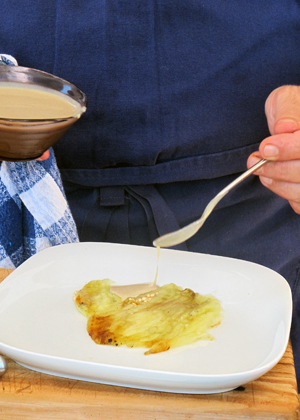
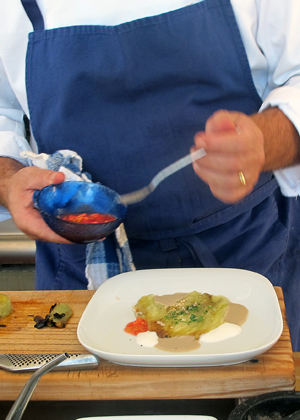
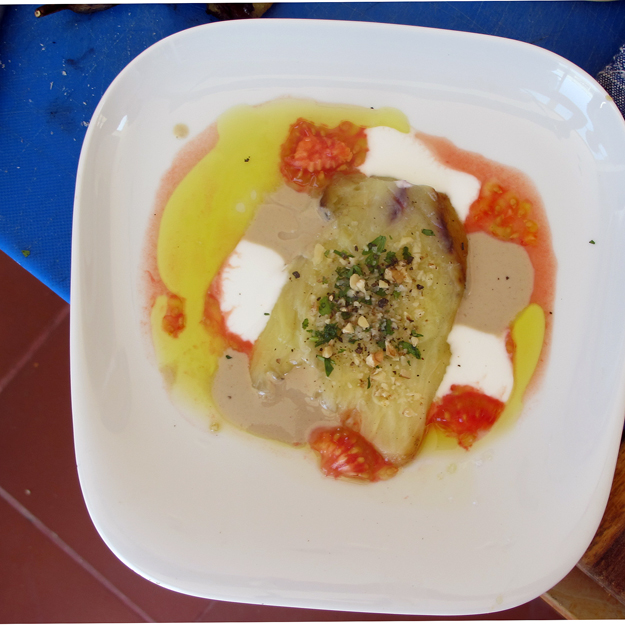
Our lunch at Tapeo was so delicious. We were all quite excited to see a green salad on the menu. After eating fried tapas for several days, we were ready for something fresh and green. The acid and sweet balance in the strawberry and manchego cheese salad was perfect. Although Italian and not Spanish in origin, I can never resist ordering Buratta cheese on a menu when I see it. The rendition at Tapeo, with tomatoes and olive oil was creamy, slightly tangy and perfectly rich and yummy. We also ordered the eggplant fried and dressed in lime and honey. Unfortunately there were only a few little pieces to photograph as we gobbled it up so quickly. We also ordered “pan con tomate”, which translates roughly to tomato bread. I will report more thoroughly on this dish in my next post. Suffice it to say, we all became obsessed with this national dish!
Organized walking tours are one of my favourite ways to explore a new city. I have tried following walking tours in guide books, but I am directionally challenged and always seem to get lost. Plus, I find that seeing the city through the eyes of a passionate local, eager to show off their city to be a wonderful way to really delve into the culture.
Sometimes you want to cover a bit more ground than walking will allow. Several years ago, while visiting Paris I took a Segway tour. We suggested doing a similar tour in Barcelona, but my god-daughter had a better idea! GoCars.GoCars are the latest trend in sightseeing. It’s a city tour, but with a difference. They offer a guided tour using GPS technology. Essentially, these are three-wheeled scooters. There are three different GPS tours to choose from. Your charming GPS guide (I nicknamed ours “Jill”) not only tells you where to go, but she tells you what you are seeing along the way. And the best part was that when I missed a turn, (which I did several times!), Jill did not say “recalculating” in a disappointed tone of voice, but “Oops, you missed a turn. No problem, we’ll get you back on course straight away”, in an ever so encouraging and loving manner. She sang songs to us, told us jokes and even gave us restaurant recommendations.
We arrived at the GoCar garage, just across from the Santa Caterina Market. We had to sign several standard waivers and one special one that said we would be responsible for the fine if we were stopped by the police for not having an international drivers license. Say what??? We didn’t have international licences. The woman told us not to worry. No one had ever been stopped by the police. The chances of that were quite remote.
She gave us our helmets, had us watch a short video and then sent us out into the traffic! I had never driven a scooter of motorcycle before, so the hand controls for accelerating and braking were foreign to me. I was a bit shaky for the first 10 minutes trying to use my feet to press on the non-existent gas and brake pedals. The staff at the store said that other motorists on the road were quite friendly and would honk and wave at us. I accidentally cut off a bus driver and he did indeed honk and give me a special one finger wave. He was not charmed or amused by us. The cars go up to 40 miles per hour and are just a blast to drive.
We chose the Olympic Barcelona tour, which took us through the Gothic Quarter, the Raval District and then up to Montjuic, home to the 1992 Olympic Games. You are able to stop and park your car at any time and get out for pictures or to walk around. After about half an hour I heard a police siren and saw, in my rear view mirror, that our daughters were being pulled over by the police. Apparently, the were driving in the oncoming traffic lane. The officers were quite sweet and patiently explained to them how Barcelona roads worked, and soon we were on our way again.
Check out this you tube video to get a closer look at how these cars operate.