 I recently discovered that the “Miracle of Chanukah” story, is just a legend. You know the one I’m taking about, where Judah and his merry band of Maccabees go into the destroyed temple and discover just enough oil to keep the menorah’s candles burning for a single day. But somehow, miracle of miracles, the oil lasted for eight days and the flames of the menorah burned for eight nights. When I discovered that the long lasting oil is not really at the root of the Chanukah commemoration, I felt gutted. Kind of reminiscent of coming home for winter break in first year university to discover that I was the last one in the family to find out that our dog, Heidi, had died!
“Truth” is a word to be avoided when discussing history and religion. Since the victors of a battle often write the history, the facts of what happened in the past depend very much on whom you ask and when it comes to religion, everyone has a different truth.
Chanukah is the only major Jewish holiday not explicitly mentioned in the Torah (Judaism’s written law), since the events that inspired the holiday occurred after it was written. The Rabbis wrote about Chanukah in the Talmud (Jewish oral law and tradition), but that was written over 600 years after the Maccabees revolt. Their version of Chanukah differs markedly from The Books of Maccabees written in the 2nd century B.C.E.
So we have here two versions of the Chanukah story: one from the Book of Maccabees and the other from the Talmud. Both versions agree on the first part of the story. Around 200 B.C.E., Judea (Israel) came under control of the Syrian King, Antiochus III. He was a benevolent fellow and allowed the Jews to continue practicing their religion. Things changed drastically when his son, Antiochus IV, took over.
This evil king outlawed the Jewish religion and ordered the Jews to worship Greek gods. In 168 B.C.E., his soldiers marched into Jerusalem, exterminated thousands of people and desecrated the holy Second Temple by constructing an altar to Zeus and commanded the Jews to sacrifice a pig upon this alter.
The Jewish priest Mattathias and his five sons led a large-scale rebellion against Antiochus and his army. When Mattathias died in 166 B.C.E., his son Judah Maccabee took over. Within two years, the Jews, relying on Guerrilla warfare tactics, defeated the Syrian Greek army and drove them out of Jerusalem.
The Maccabees cleansed the Second Temple, rebuilt the altar, lit its menorah and celebrated the rededication (the word Chanukah means dedication). And thus the eight-day festival of Chanukah was born. Why eight days? Well, here’s where the story begins to diverge. According to The Book of Maccabee II, while the Maccabees were fighting, they had missed the eight-day holiday of Sukkot, (celebrated in early fall) and so to celebrate the Second Temple rededication, they declared a “better-late-than-never” celebration of Sukkot.
Version 2, as written in the Talmud gives us this spin on the eight-day festival. Judah Maccabee and his team, who took part in the rededication of the Second Temple, witnessed what they believed to be a miracle. Even though there was only enough oil to keep the menorah’s candles burning for a single day, the flames burned for eight nights. This wondrous event inspired the Rabbis to proclaim a yearly eight-day festival.
The Rabbis barely mentioned the battle between the Maccabees and the Greeks in the Talmud. The reason for this is unclear. Perhaps they did not want to encourage the celebration of a military battle, or perhaps, as pacifists, they did not want to encourage the Jewish people, who at that time, were living under Roman rule, to be inspired by revolt.
Rabbi Andrew Jacobs, on “Blog Shalom” explains the miracle of Chanukah this way,
“…even without the oil, .Chanukah is still a miraculous story. The Maccabees were a tiny group of Jews who should not have been able to defeat the powerful Greeks. But they did! And because of this miracle, Judaism survived and did not become consumed by Greek culture. This story of miraculous survival repeats itself many times throughout Jewish history. Despite tremendous powers that have raged against us, nothing has stopped the Jewish people. This is a miracle.”
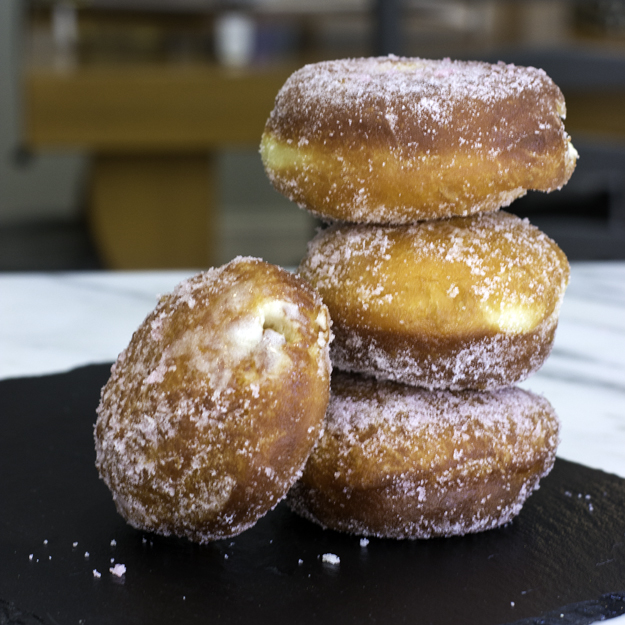
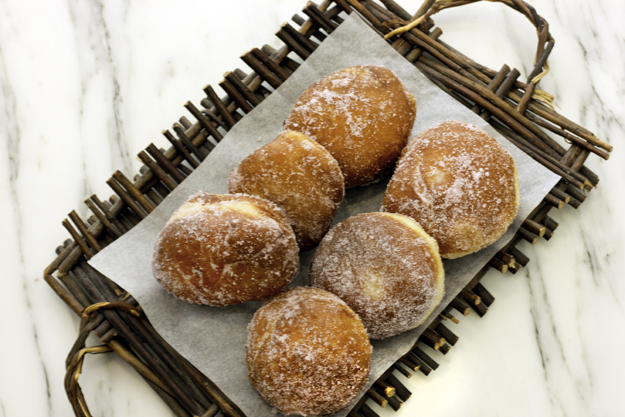
Although the miraculous oil story may be just a legend, I refuse to give up food fried in oil on Chanukah! To celebrate my newfound knowledge, I am going to go all out this year and celebrate Chanukah with these decadent Pomegranate Sugar-Dusted White Chocolate Doughnuts.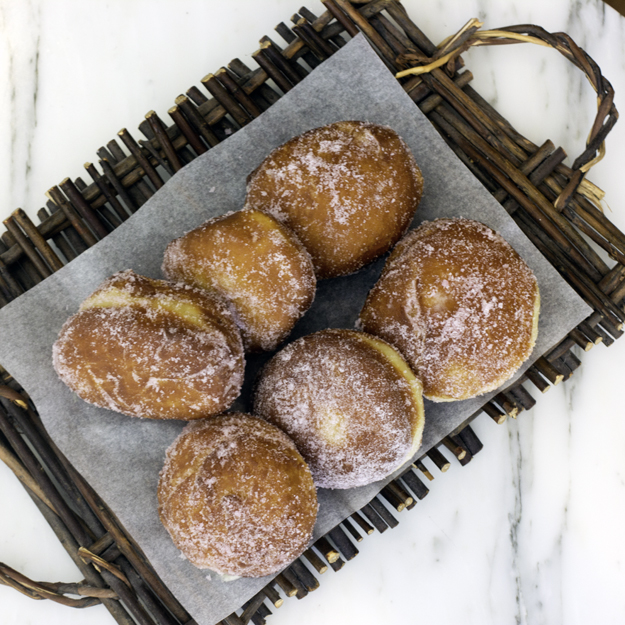 The idea behind these doughnuts comes from the genius mind of Chef Lynn Crawford. However, after discovering that her recipe called for a pound of butter in the doughnut dough, I decided to use her white chocolate filling and pomegranate sugar coating, but looked elsewhere for the actual doughnuts. Anna Olsen‘s recipe used only a 1/4 pound of butter. So while these doughnuts are not exactly light fare, they are lighter than originally intended by Chef Lynn!
The pomegranate sugar and white chocolate ganache filling can be prepared a day ahead.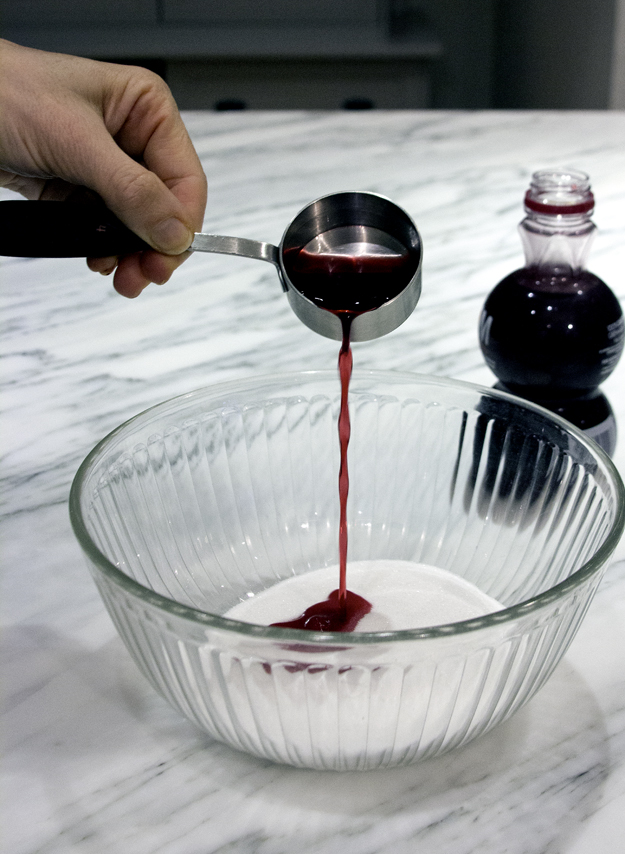
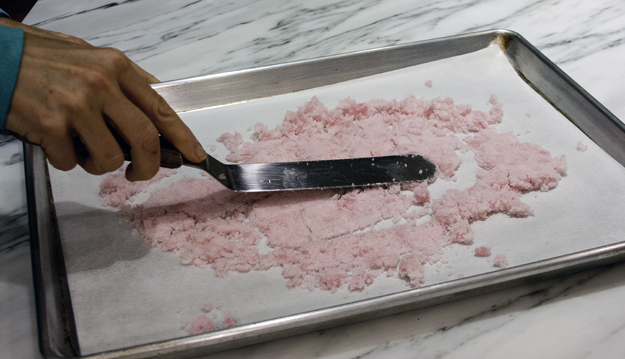
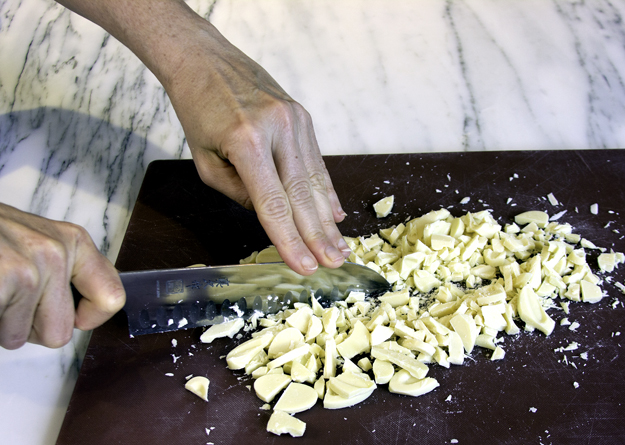
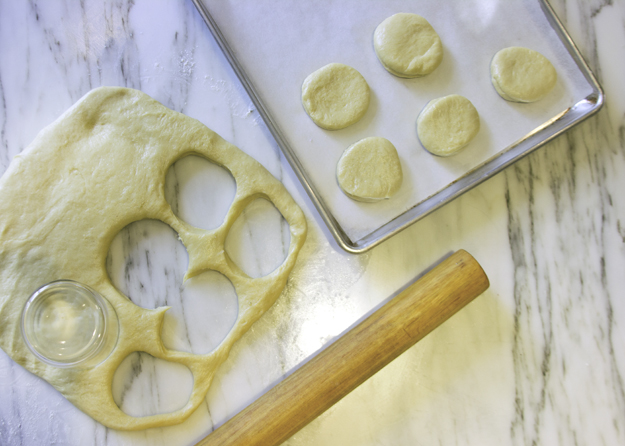
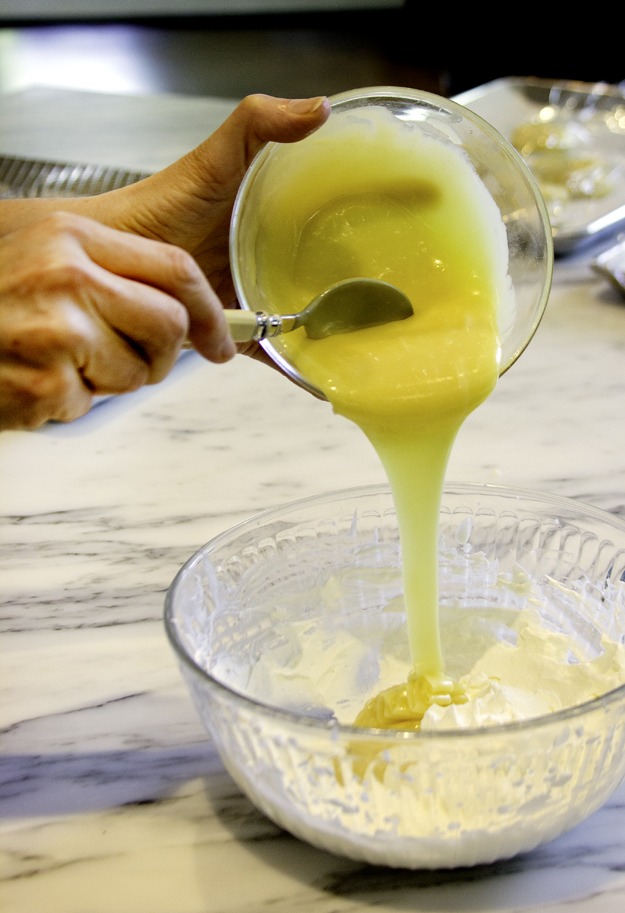 These are yeast raised, not cake doughnuts. The dough comes together in about 5 minutes if you have a stand mixer. Thanks to a quarter pound of butter this brioche-like dough has an amazing silky texture.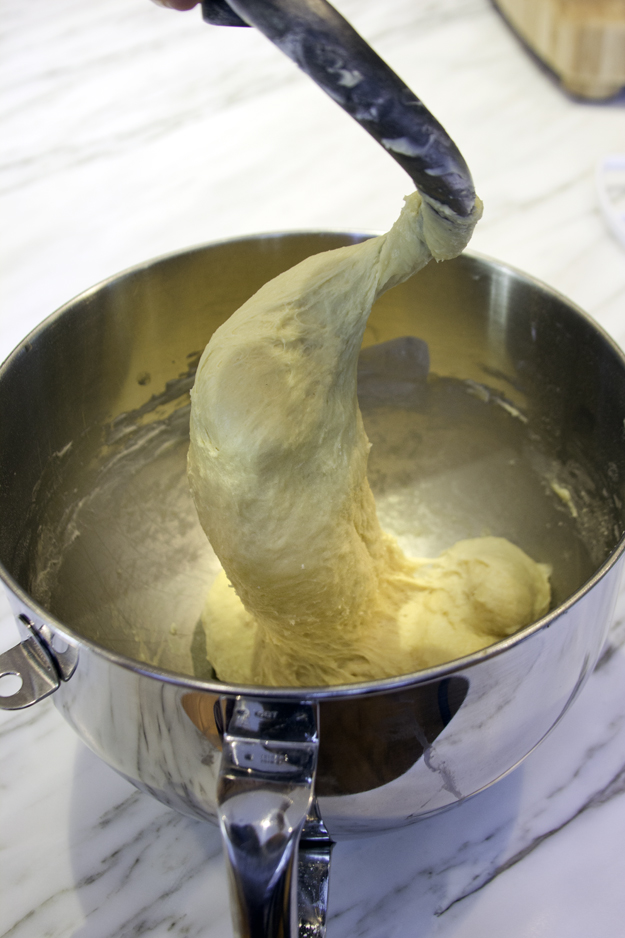
 My deep fryer, which normally only gets pulled out once a year to make french fries takes all the guess work out of deep frying. You can of course use a deep pot with a candy/oil thermometer to regulate the temperature.
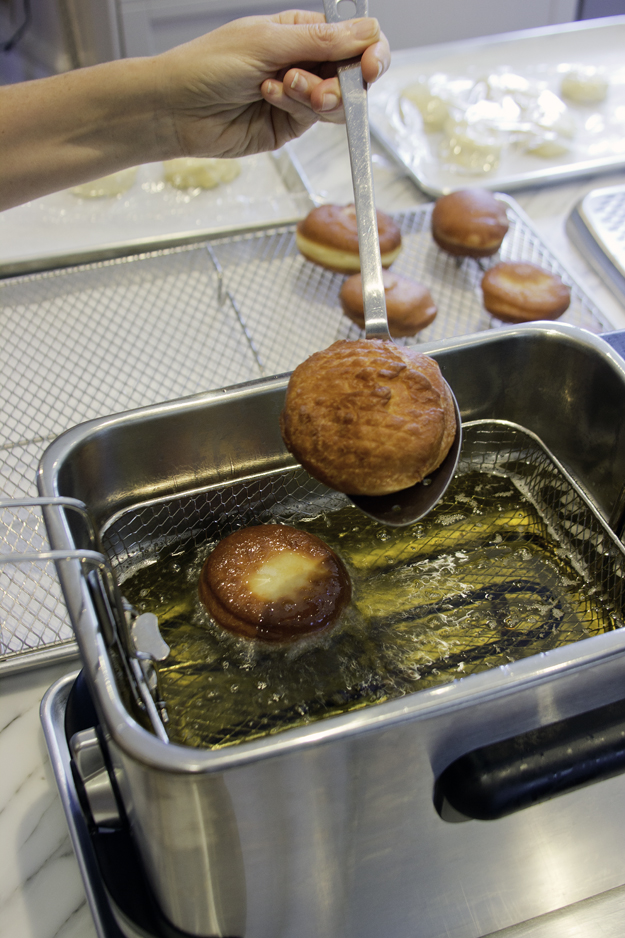
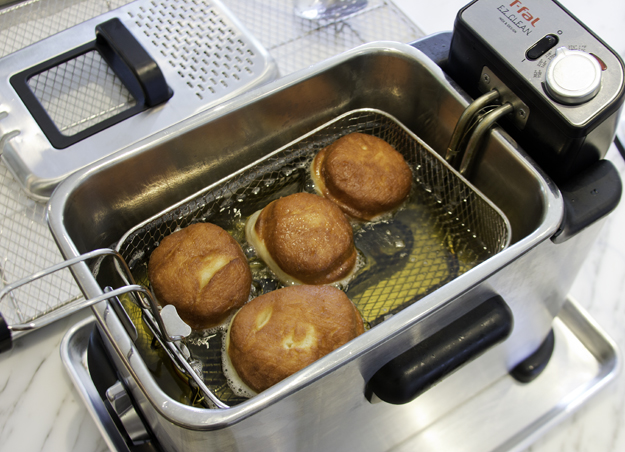 These babies puff up like little pillows. I can not accurately express the joy I experienced watching my own little miracle here in the deep fryer!
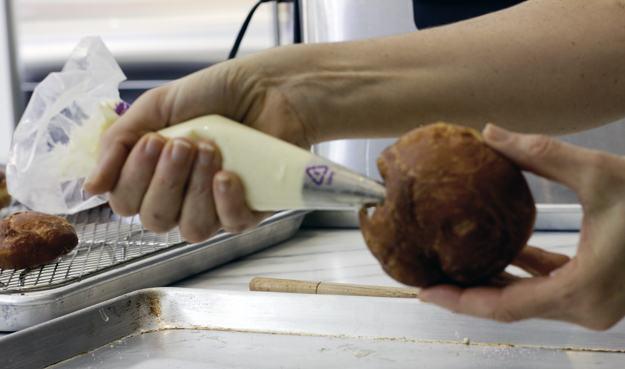
 Filling the doughnuts with the white chocolate ganache whipped cream is quite simple. A plain piping tip, inserted into the side of the doughnut makes easy work of the job.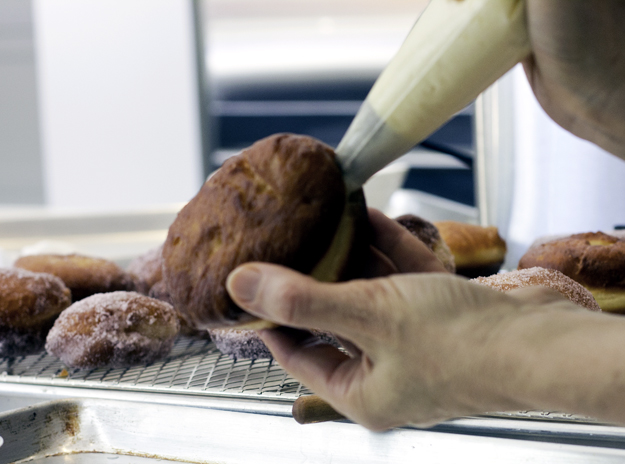
 These doughnuts are really best eaten the same day they are made. I sent 16 of these beauties off with my husband to share with his hockey team after I made them one Sunday afternoon. He said that they were inhaled very quickly and that they actually brought a few of these strong burly hockey players to their knees as they gushed at how good they were.

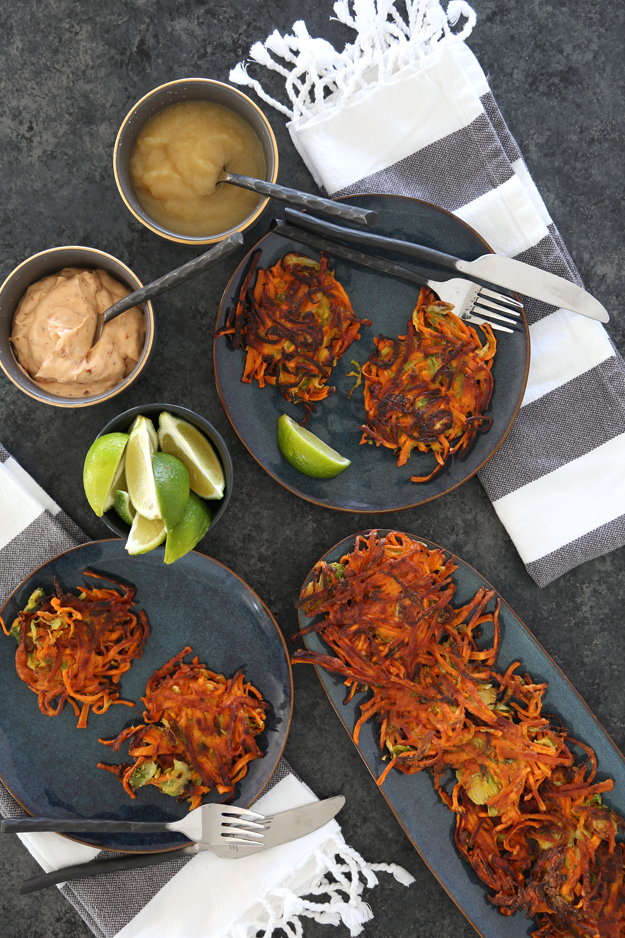
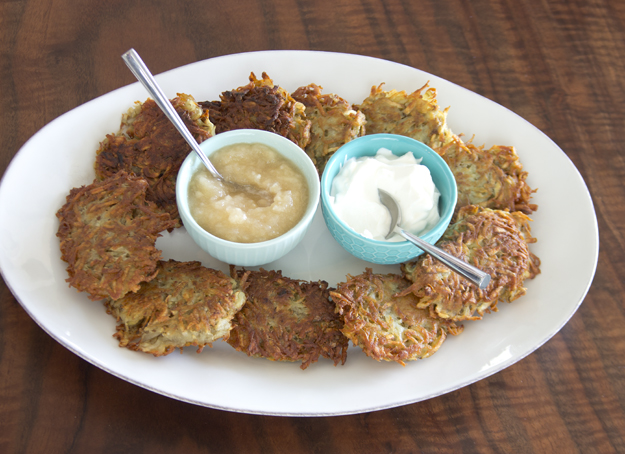
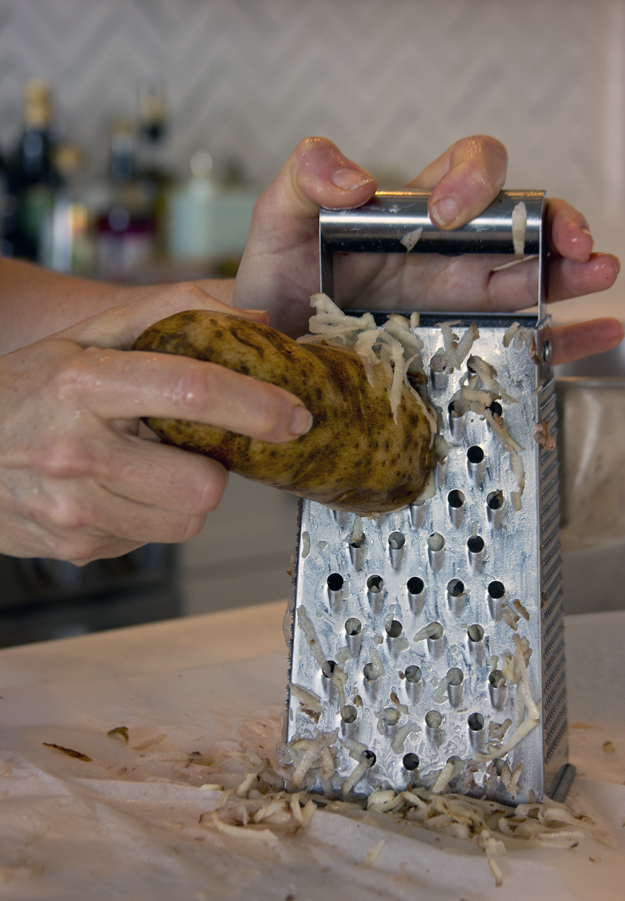
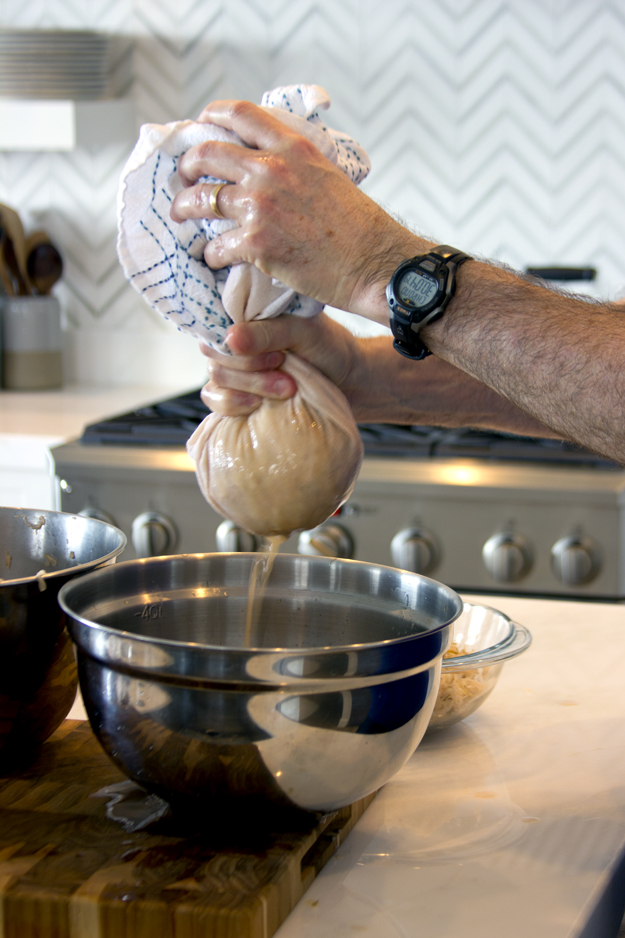
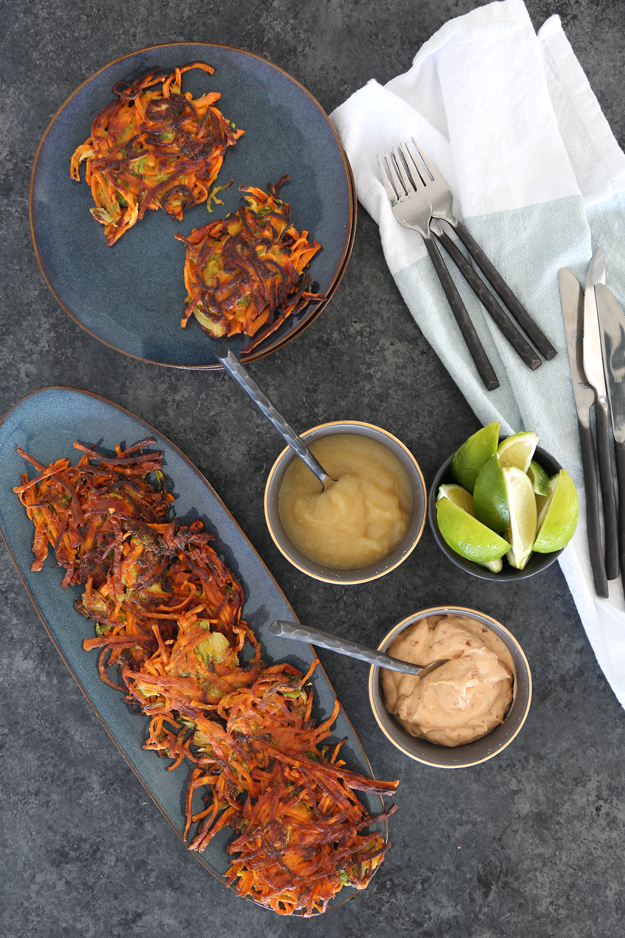 On the 6th night of Chanukah I made Sweet Potato and Brussels Sprouts Latkes. I could never make these on the first night of Chanukah. They would not be well received by my family. On the first night our family insists on traditional latkes. (I think it might actually written in Jewish Law somewhere!!). But feel free to let your freak flag fly and make these unorthodox latkes when Chanukah is almost over and everyone has had their fill of classic potato latkes.
 These latkes are based on a Japanese savory pancake called Okonomiyaki. I learned about them in the November 2016 issue of Bon Appetit magazine. As I read the recipe I was inspired to adapt it and create latkes using these ingredients.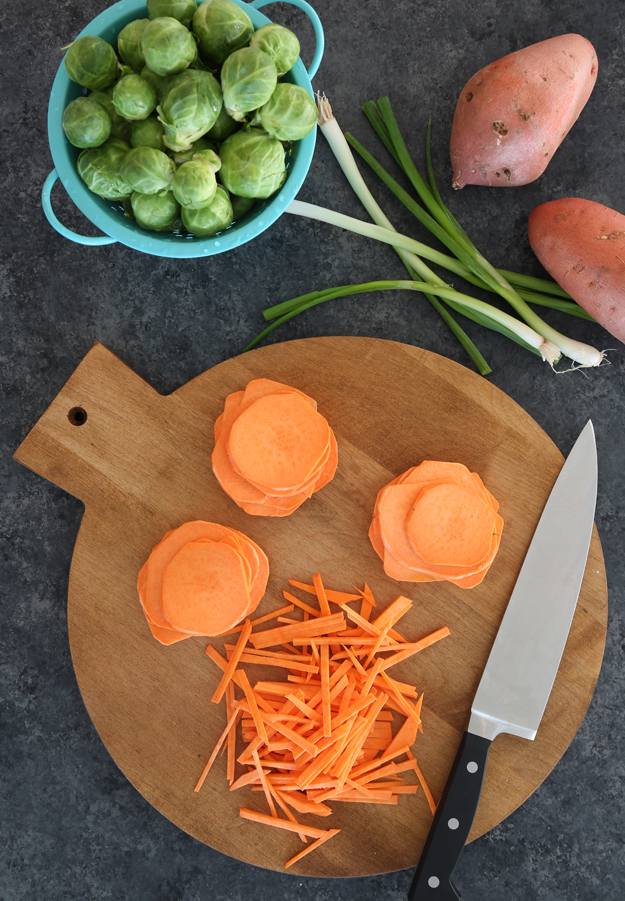
 The Brussels sprouts must be thinly sliced. The thin slicing blade of the food processor will do the job quickly. A sharp knife will also work. The sweet potatoes need to be cut into 1/8 inch thin matchstick pieces. A mandoline will do this quickly. If you don’t have one, cut the potatoes to fit the feed tube of the food processor and thinly slice potatoes first. Then stack them up and cut across with a sharp knife into matchsticks.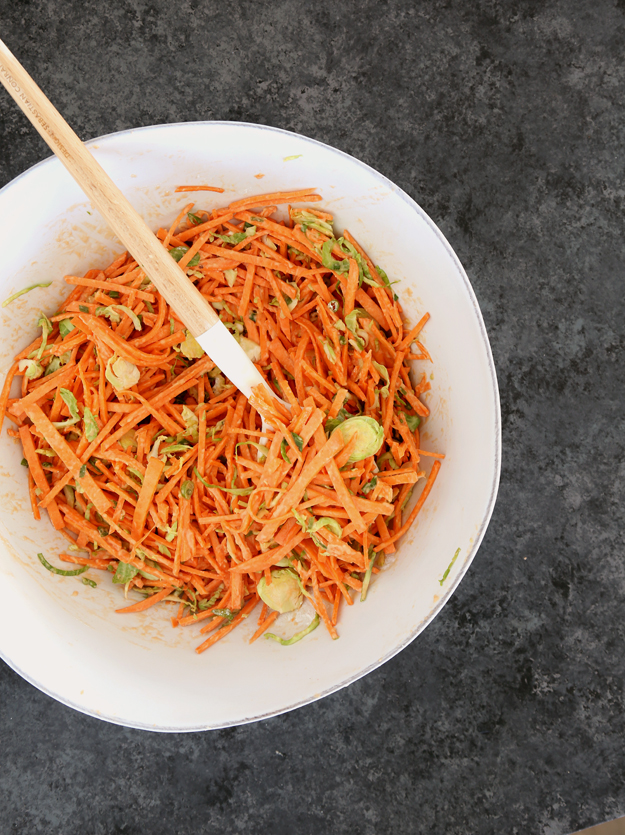
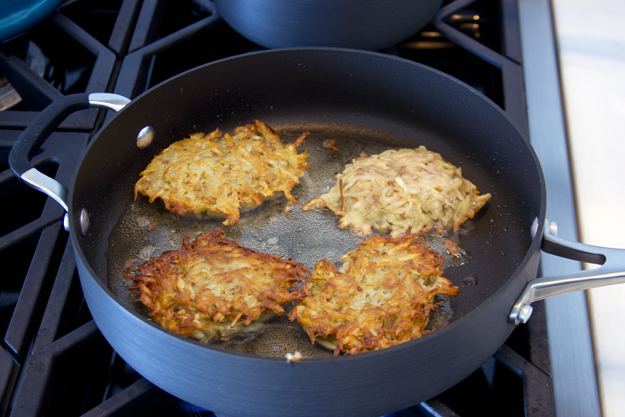
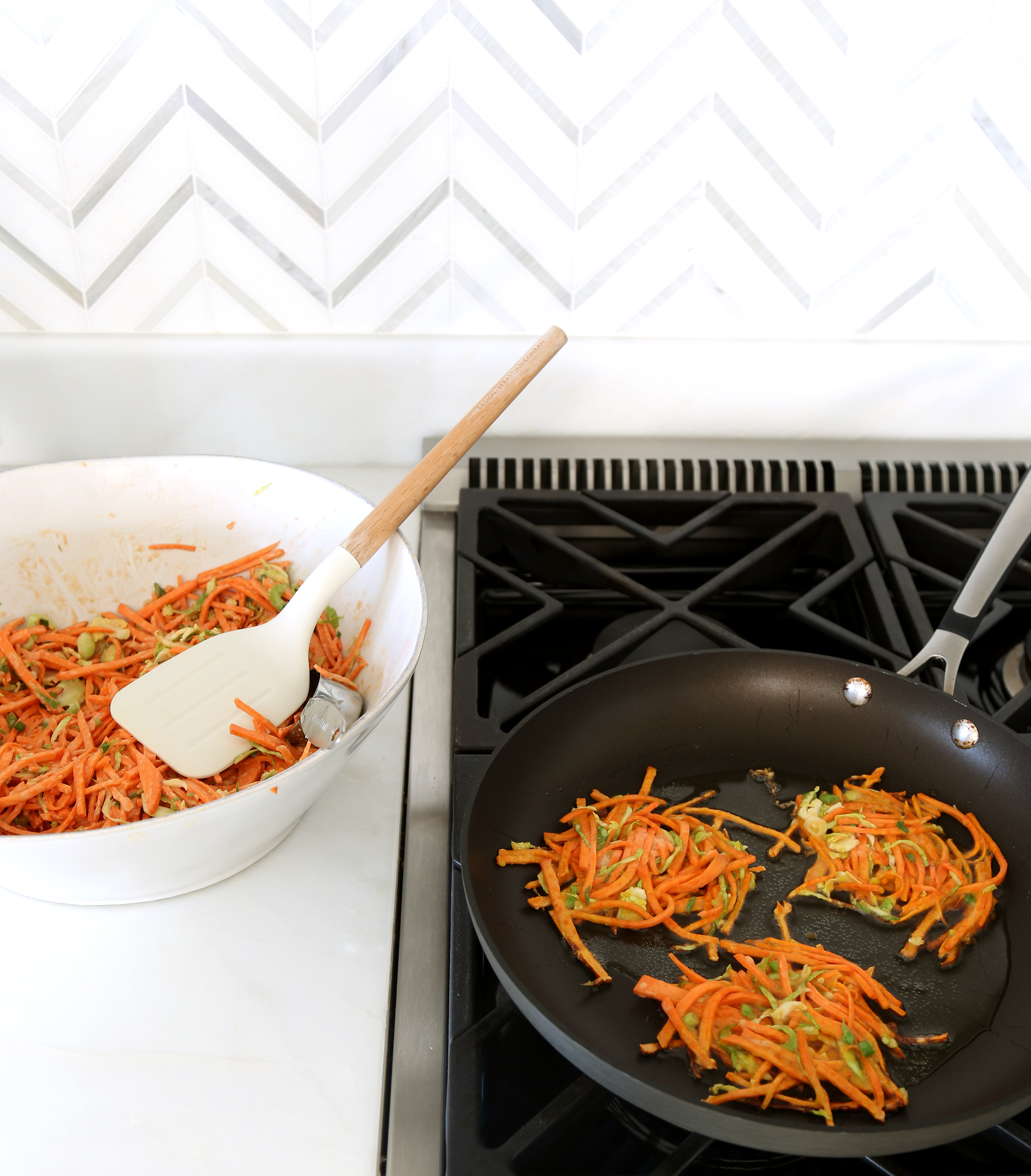 Fry until deeply golden brown and crispy.
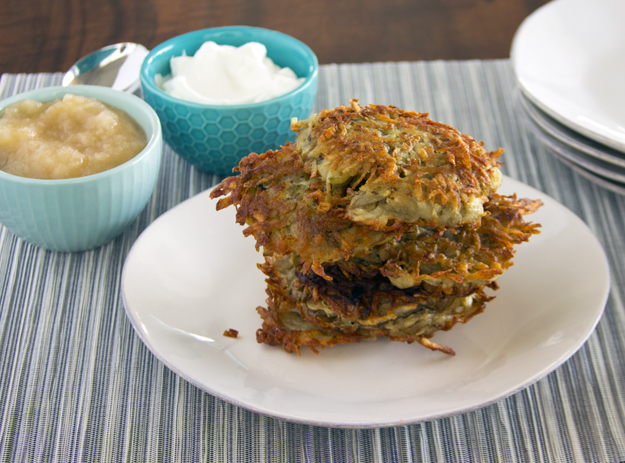
 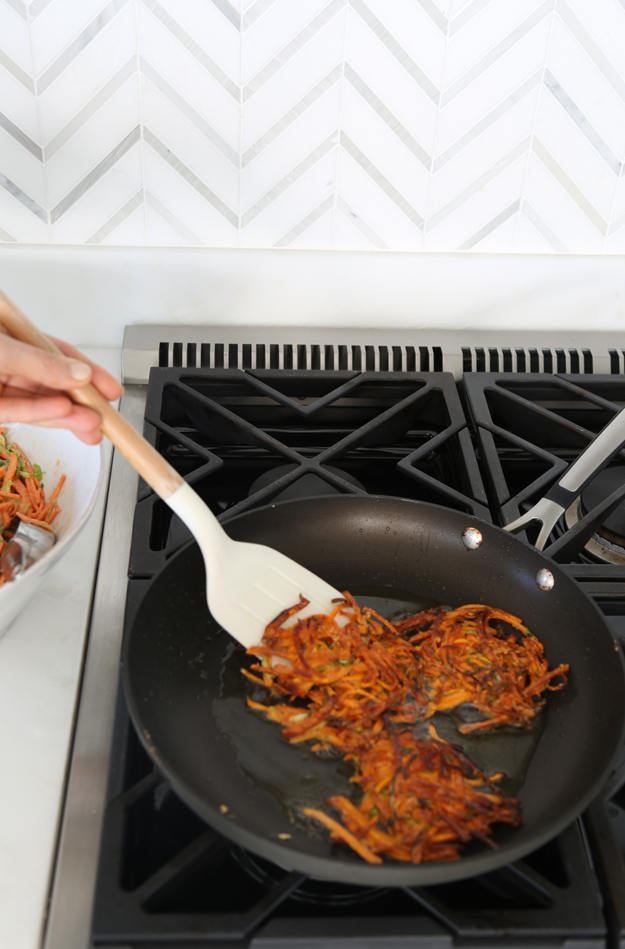 Serve them with some chipotle mayo and a squeeze of lime or go traditional and top with applesauce. Savory, deeply crispy and very delicious, these latkes are sure to please even the most die-hard traditionalists.