
Author Archives: saltandserenity

Vanilla Bean Ice Cream with Blood Orange Caramel Sauce


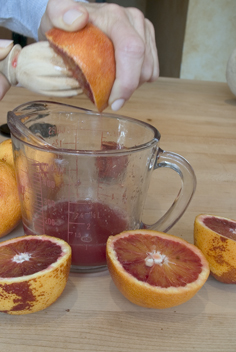
The inspiration for this dessert came about while I was cleaning my fridge. Underneath some slimy pears and moldy strawberries I unearthed six slightly wrinkled, but still perfectly serviceable, blood oranges. They were left over from my recent obsession two weeks ago.

Now before you go feeling sorry for me because I had to deal with mold and slime, I should reveal the view from where I am sitting right now, as I type this post:

So cleaning out the fridge before I left for Paradise was motivated primarily by the desire to avoid having my post holiday bliss balloon burst any sooner than necessary. Nothing like slime and mold to greet you upon return.

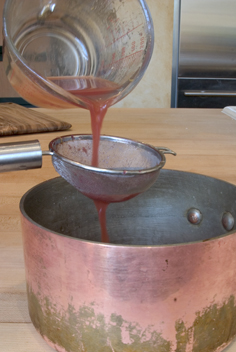
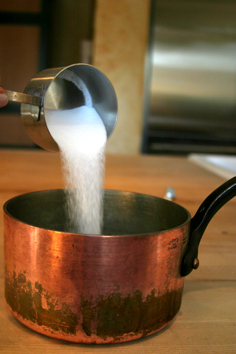
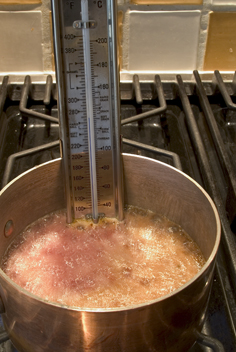
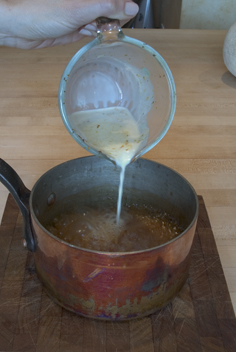
I was inspired by Bobby Flay (not for the first time, and I’m certain the last either!) to create a caramel sauce with the blood oranges. I watched him make a tangerine caramel sauce on the Cannoli episode of Throwdown.  Bobby put his twist on cannolis by tarting up the ricotta filling in the cannolis with some tangerine caramel. Instead of using water, he added tangerine juice to the sugar, caramelized it and added some cream. Such a brilliant idea, I decided to steal it! Of course, I would add my own twist and use blood oranges instead of tangerines.

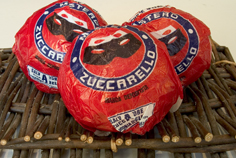
I love how the Italians package things. They have such a wonderful sense of humour and don’t take anything too seriously. Last time I bought blood oranges they came all wrapped up in Ninja Turtle paper. This time the wrapping paper was decorated with Mardi Gras Masks. The colour variation inside the blood oranges was once again surprising! Some were pale orange and others deep blood-red.

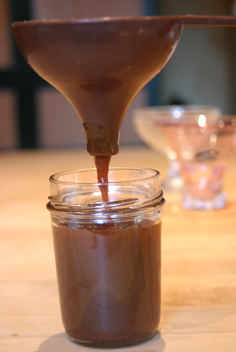
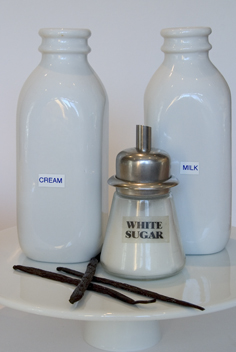
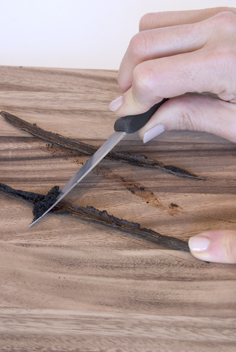
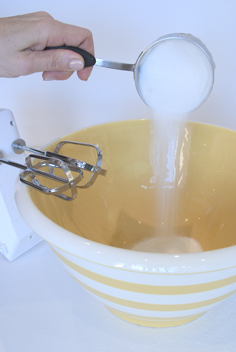
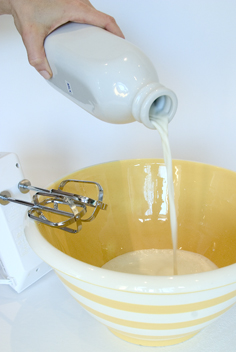
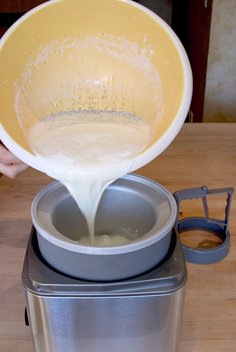
As soon as I tasted the cooled Blood Orange Caramel Sauce, I instantly knew it was destined to be paired with vanilla ice cream.  I decided to kick it up a notch and use fresh vanilla beans in the ice cream.

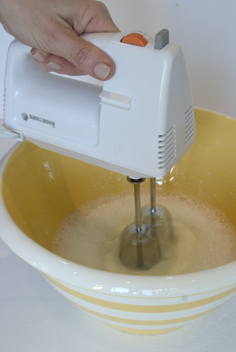
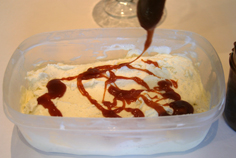
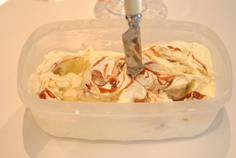
After about 25 minutes the ice cream had a soft consistency, much like a Dairy Queen Blizzard. At this point, you have two options. You can transfer the soft ice cream into a wide rectangular plastic container and drizzle the caramel sauce right onto the ice cream, and then use a knife to swirl the caramel sauce into a beautiful marble pattern. Then cover the swirled ice cream and chill several hours until firm.

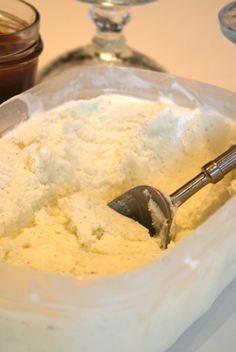
The second option would be to leave the ice cream plain, freeze and then scoop and drizzle sauce on top for a sundae.  Either way you make it, this ice cream will transport you right back to childhood. Remember Creamsicles from the Ice Cream Truck? That’s exactly what this sundae reminded me of. Topped with toasted chopped hazelnuts, this is a very grown-up dessert!

To print recipe for Blood Orange Caramel Sauce, click here

To print recipe for Vanilla Bean Ice Cream, click here.

Homemade Ricotta Cheese


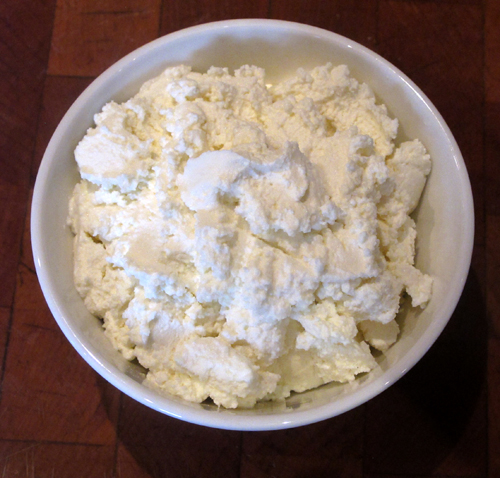
The other day I told my husband I was planning to make my own ricotta cheese. He looked at me like I was from another planet and said, “why?” As in why bother making it when you can buy it? I would have asked the same question 2 weeks ago, but recently, on a trip to South Beach with my daughter and two of her friends, I had dinner at Michael’s Genuine in Miami. One of the appetizers we ordered was homemade fresh ricotta cheese, served on toasted baguette slices with a dollop of blueberry jam. The slightly salty, creamy ricotta contrasted so beautifully with the sweetness of the blueberry jam.  Since my first bite, I have become obsessed with learning how to make my own ricotta. Fresh ricotta has a rich and milky sweet taste and moist texture. Most ricotta from the supermarket is made with gums or stabilizers to prevent the ricotta from weeping. These additions often make for a gummy and grainy ricotta.

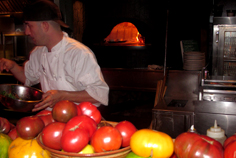
Unfortunately we gobbled it all up before I had a chance to take a picture of it. I did manage to take a picture of the tomato display and our wood fired oven pizza (caramelized onions and mushrooms). One of the chefs came over when he saw me shooting the tomatoes and told me very proudly that they were all local, from Homestead Florida. They are passionate about everything to do with food-from the growing and harvesting, to the preparation, serving, and eating. The menu changes daily because they start with what’s in season and arriving on their doorstep from local farmers, fishermen, ranchers, and artisans.

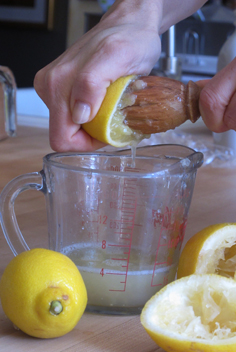
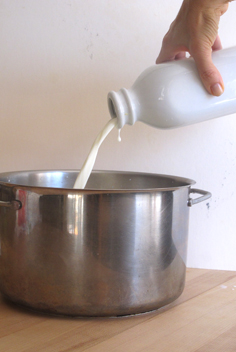
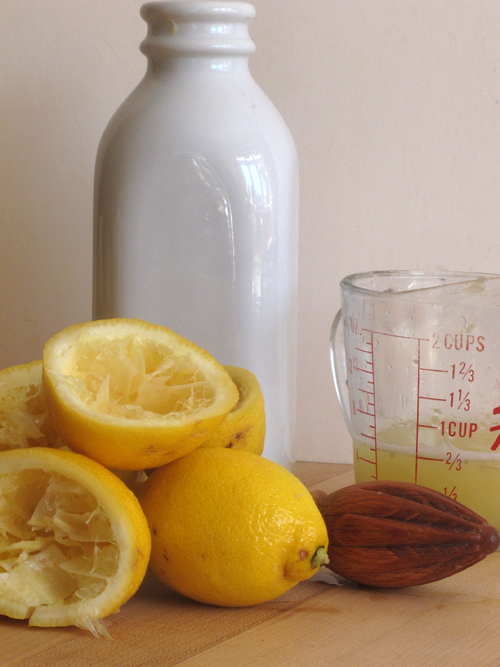
Once I got home, I looked up fresh ricotta on the Cook’s Illustrated web site and sure enough, there were detailed instructions showing me exactly what to do. All you need is whole milk, lemon juice and salt.

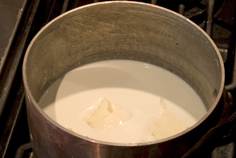
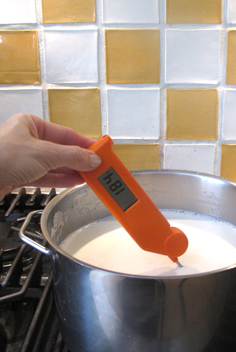
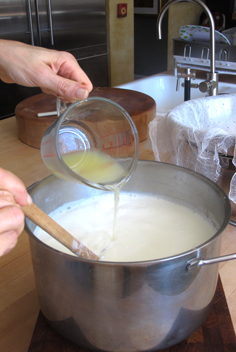
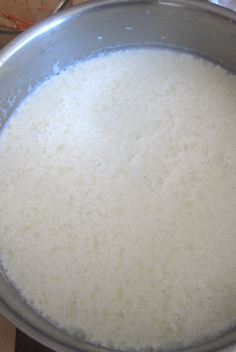
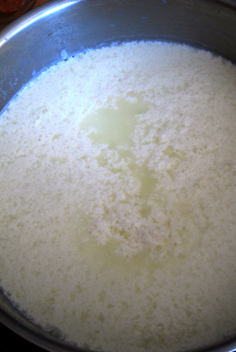
The milk is combined with the salt and then heated to 185ºF. Take it off the heat, stir in the lemon juice and let sit for 5 minutes. At that point you should see curds beginning to form. Let it sit for another 20 minutes and then spoon off the curds and discard the whey. Just like Little Miss Muffet. I am always so awed by chemical reactions like this. Basically the acid in the lemon juice and the heat cause the proteins in the milk to clump together forming curds that separate from liquid whey. I was quite blown away at how easy this was to make.


To print the recipe for Fresh Ricotta, click here.

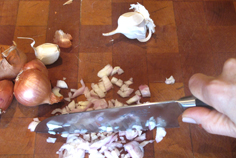
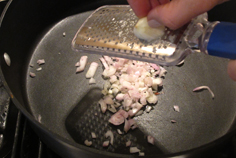
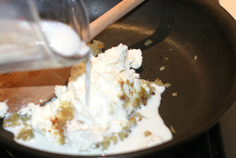
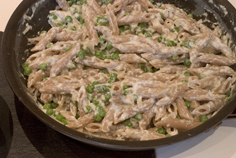
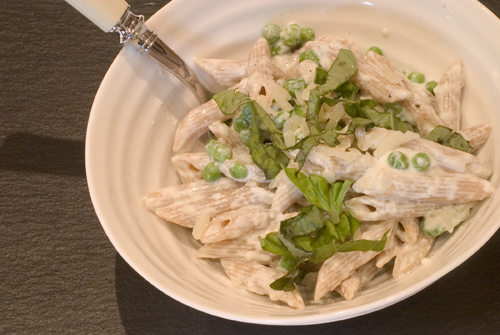
There are a million different ways you can use up your ricotta. That night I sautéed some shallots and garlic and whisked in ricotta, milk and pecorino romano cheese. I mixed it with some whole wheat penne and green peas. It was quite yummy. It would be great on pizza, in lasagna, or even in cheesecake. Check out this chowhound link  for lots of other great ideas.

To print the recipe for Penne with Ricotta and Peas, click here.

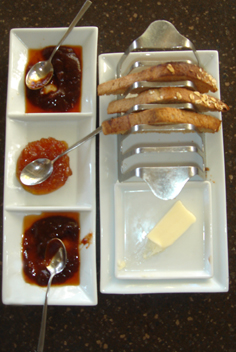
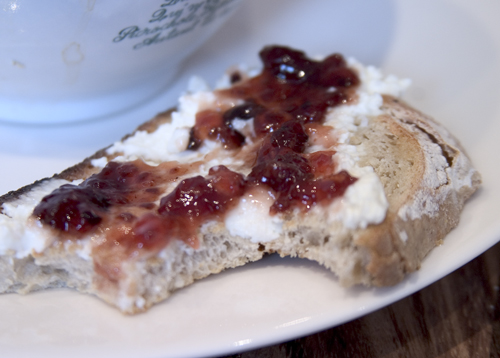
I had more of my ricotta for breakfast today, spread on rye toast, with a sprinkling of coarse salt and some Triple Berry Jam.

Blood Orange and Green Bean Salad with Hazelnuts and Sherry Vinaigrette

For those of you who live in a place where the daffodils and crocuses are popping through the earth and spring is just around the corner, I say, how lovely for you. Well, I may add a few more descriptive words than that, but I prefer to keep this G-rated. If, like me,  you are suffering through a long and snowy winter and the end seems very distant, and the view outside your front door or bedroom window looks something like this, well, let’s all chant together… #@*&@!!

From my above rant, you can clearly tell I do not embrace winter. When I first moved to this winter wonderland we call Ottawa, many well intentioned people advised me that the best way to get through the long winter was to pick a winter sport and embrace it. After all, in the Nation’s Capital we have hundreds of miles of trails for snowshoeing or cross country skiing, not to mention the world’s longest (7.8 kilometers) skating rink, once the Rideau Canal freezes up. I have tried it all and to be honest, I just hate being cold. I prefer to spend my winters indoors. But I will admit to going a little stir crazy by mid-March. Just when you feel there is no end in sight and you can not look at another root vegetable or cabbage, these appear in the market.

These beauties are blood oranges. They typically appear in my market late February-March. Once I see them, hope blooms in my heart and I know that asparagus and strawberries will surely follow soon. Sometimes the blood oranges come wrapped up, like a present in colourful Ninja Turtle wrapping paper and sometimes they come unwrapped, naked for all the world to see. Mine came from Italy. They also grow them in Texas and California.

I am reminded of a line from the movie Forest Gump when I slice into a blood orange. You never know what you’re gonna get when you slice into a blood orange. The flesh can range anywhere from a blush coloured pink all the way to a profoundly deep crimson. Sometimes the flesh can will appear mottled, partly orange and partly red. I find those scariest of all, they sort of look diseased. The flavour is slightly less acidic than regular oranges. The colour variance inside the 3 oranges I sliced up was very surprising. I got orange, pale red and deep red flesh. Blood oranges have this unique color because they carry anthocyanins, which are powerful flavonoid pigments that exist in red and purple fruits and vegetables. These pigments are very effective in protecting the body from many diseases.

Blood oranges look especially pretty when you take the time to segment them into little wedges. I made a video demonstrating how to do that.

I paired the blood oranges with green beans, frisée, radicchio and belgian endive for a gorgeous salad. I tossed everything with a sherry vinaigrette and sprinkled on some toasted chopped hazelnuts. A few pomegranate seeds on top would really gild the lily!

I defy anyone to feel sad after feasting your eyes on this salad.

To print recipe, click here.


Peruvian Garlic-Lime Chicken

If you are a vegetarian, or at all squeamish about handling chicken, this post is not for you. I went to cooking school with this woman who was terrified about shoving her hand inside a chicken or turkey. She used to have nightmares about it. If that sounds like you, avert your eyes now and perhaps check our some of my gentler, kinder cookie posts.

I went through a phase where I bought just about any cooking/baking gadget available. My sister-in-law and I would spend many happy hours wandering up and down the aisles of Williams Sonoma, fondling all the new gadgets.  Sort of the way I scrutinize the anti-aging aisle at the drugstore these days. During one of those shopping trips, I bought a vertical roaster for chicken. The advantage of this gadget is that the chicken roasts standing up so you do not have to turn it while it is roasting, and it gets evenly browned all over.

It gathered dust in my kitchen cabinet and then I relegated it to the storage room in the basement and forgot all about it. That is, until I read the March/April 20111 issue of Cook’s Illustrated. They featured a recipe for Peruvian Roast Chicken, cooked on one of those vertical roasters.  Apparently, Peruvian Chicken joints are popping up all over the States.   They have yet to make it up here to Ottawa!   Reading the Cook’s Illustrated description of this chicken sent me scurrying down to my storage room to find my vertical roaster.

“The rotisserie bird that they serve, known as pollo a labrasa, in the mother country, is deeply bronzed from its slow rotation in a wood fired oven and impressively seasoned with garlic, spices, lime juice, chiles and a black paste made with huccacatay, or black mint. Off the spit, the chicken is carved and served with a garlicky, faintly spicy, mayonnaise like sauce.”

Leave it to Cook’s Illustrated to come up with a way to recreate this in your own kitchen. And that’s where the genius of the vertical roaster comes into play. Since we don’t have a rotisserie in our kitchens to turn the chicken, so that it roasts evenly, they suggest placing it upright on a vertical roaster. But, don’t despair if you don’t have one. Apparently, excellent results can be had using a half filled can of beer to stand the chicken on. Just don’t use a beer bottle. The smokiness that they achieve in Peru, from using a wood fired oven is replicated using smoked paprika to give you that smoky taste.

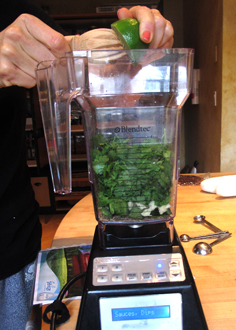
Most of the ingredients needed to make the marinade are fairly simple to find. Most specialty food shops carry smoked paprika these days. I substituted a serrano chile for the habanero pepper called for in the original recipe. Everything gets thrown into the blender and whizzed into a smooth paste.

If I may just say a few words about my new blender. If loving an appliance is wrong, I don’t want to be right. I just bought myself a new blender, “The Blendtec HP3-A” to be specific. The jar on my old container cracked and they stopped making that model, so no replacement parts were available. Everytime I blended soup, it leaked all over the counter. I ordered the Blendtec on the advice of my little sister. Her husband is the king of blended drinks, so he had researched blenders very thoroughly and this was what he chose. It really is an incredible machine.

They call it the The Blender with Brawn and Brains!” The blender’s microprocessor will do the work. The microprocessor automatically changes the blade speed drawing ingredients into the blade, giving it a smooth, consistent blend. One touch operation and automatic shut off will allow you to multitask in the kitchen.”  Peruvian chicken marinade was its maiden voyage and the marinade was smooth in about 1 minute and 28 seconds. No scraping down or shaking the blender was necessary. Okay, blender bragging over.

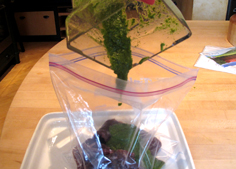
Then comes the fun part, getting the marinade under the chicken’s skin. I found myself humming this song as I worked! They suggested using the handle of a wooden spoon to loosen the skin from the meat. I abandoned this method in about 30 seconds and went straight to using my hands. After getting the marinade under the skin, massage the remaining marinade all over the chicken. Then it rests in a zip loc bag in the fridge for 6-24 hours.

To print the recipe for Peruvian Garlic-Lime Chicken, click here.

In Peru, this chicken is accompanied by a spicy garlic mayonnaise. I never ended up making it, as I found the chicken wonderful without it, but if you want to try it the authentic way, here is a recipe to make the mayo..

I was so enthralled with this chicken that I made it a second time about a week later. I could not stop giggling when my second attempt came out of the oven. It looked like she needed an accessory to complete her outfit. A purse to hang on her wing would have been just the thing!

The Case of the Disappearing Oreo

A few weeks ago, my daughter sent me a BBM from her dorm room at College, asking me to please buy a bag of Oreo cookies for when she came home for the long holiday weekend. Huh???  Usually she asks me to bake some decadent cookie, so the store-bought request was odd. When I asked her why she wanted Oreos she said her roommate had seen something unbelievable, using Oreos, on a food blog and wanted my daughter to bake it for her when she went home.

The next day, while surfing food blogs, I came across this and this and this and this, well, you get the idea. Apparently this is the new food blogging darling. Everyone’s doing it! I sent the links to my daughter and asked her if this was what she planned to make. Her reply was an effusive “YESSSS!!” She went on and on about how amazing these looked and yada yada yada.

My first reaction was, “This, in a nutshell, is what’s wrong with America (and Canada too) these days. Supersizing everything. As if a double stuffed Oreo isn’t gluttony enough, now we’re shoving an Oreo inside a huge ball of chocolate chip cookie dough and baking it. No wonder our kids are obese and diabetes and heart disease are killing us.” Then I got off my high horse, and of course, went out and bought a bag of Oreos – not the double stuffed ones though, I have my limits.

I have to admit, the baker in me was very curious to see how this was actually done and what exactly would happen when you stuff SUGAR, ENRICHED FLOUR (WHEAT FLOUR, NIACIN, REDUCED IRON, THIAMINE MONONITRATE {VITAMIN B1}, RIBOFLAVIN {VITAMIN B2}, FOLIC ACID), HIGH OLEIC CANOLA OIL AND/OR PALM OIL AND/OR CANOLA OIL, AND/OR SOYBEAN OIL, COCOA (PROCESSED WITH ALKALI), HIGH FRUCTOSE CORN SYRUP, CORNSTARCH, LEAVENING (BAKING SODA AND/OR CALCIUM PHOSPHATE), SALT, SOY LECITHIN (EMULSIFIER), VANILLIN – AN ARTIFICIAL FLAVOR, CHOCOLATE. CONTAINS: WHEAT, and SOY  inside chocolate chip cookie dough and bake it.

For this post, I had two guest bakers, my daughter and her best friend, who is may as well be my second daughter, as she spends a lot of time at our house. I was just documenting this experiment with the camera. The pictures are less than my usual stellar quality as the girls decided to begin baking at 9:00 pm, and I was lacking daylight, which I like to shoot with.

We thought about substituting our favourite chocolate chip recipe, but we thought they might spread too much and the Oreos would ooze out and make a mess. So we stuck to Jenny’s (The Picky Palate) original recipe, since she created them, she ought to know best.

We made a little video to demonstrate how to form these cookies. It’s not rocket science, but we were on a bit of a sugar high and having a little fun, so we made a video.

We had a bit of a debate on whether or not to flatten out the Oreo balls after they were formed. We took a vote and flattening won by a 2:1 margin.

We waited a few minutes and then we cut one open. The chocolate chips were warm and gooey and the Oreo filling had melted slightly. I have to say, I didn’t like them very much. Part of the reason was that I do not like warm chocolate chip cookies. I like them to be totally cooled so the chocolate is not at all melted anymore. I like them even better frozen. I know, I am strange. The girls declared them, not bad and continued to nibble away at them. I went to bed, secretly glad I didn’t love them because I was not really tempted to eat anymore.

When I got up in the morning, I cut another one open, so I could photograph them in daylight. They had totally cooled by this point and the cookies lost their chewiness. To be fair, I think we overbaked them. The recipe said to bake 9-13 minutes but we went longer, about 16 minutes. They were more crunchy now. I took a bunch of shots and then decided to taste them again. Not bad! Damn!!! I quickly wrapped the remainder up and made my daughter pack them in her bag to take back to school that afternoon. I’m looking forward to seeing what Jenny of the Picky Palate comes up with next.

To print the recipe, click here.


Wheat Berry Salad


Like most of you, I suspect, I sometimes fall into a rut and eat the same things over and over again. It’s just easier that way sometimes. But, this year I have decided to try cooking with a new grain every month. Sort of expand my culinary horizons. However, that goal kind of runs counter to a second goal of mine, to eat my way through my pantry, without buying any new staples.

I was inspired in this second goal by a good friend. Last time I visited her at the cottage she shared with me, that for the month of August, she was planning to empty out her pantry. On days when she had company, everyone usually gathered on the dock around 5 pm for drinks. Instead of agonizing over what to serve with drinks, she would just use whatever she found in her pantry cupboard. One day, she confessed, she opened up a can of chickpeas, rinsed and drained them and served them with a sprinkling of black pepper. Along side this she served some dried apricots she spied lounging at the back of the shelf in a plastic bag. Apparently these offerings were gobbled up quite happily with a glass of chilled Prosecco.

So here I was with the good angel on one shoulder, whispering in my ear, “Come on, clean out the pantry. You have 5 different kinds of grains here. Eat us!”. On the other shoulder I had the devil, tempting me to be wasteful and go out and seek a new grain.  Most of you know I have very little willpower, so it should come as no surprise to you that I went out and bought some wheat berries. I had never cooked with them before and a recipe by Globe and Mail nutrition reporter, Leslie Beck, caught my eye.

Wheat berries are essentially whole unprocessed wheat kernels, containing all three parts of the grain (germ, bran and endosperm). Only the hull is removed. They sort of look like barley but have 75% more protein and 40% more fibre than barley. All in all, a nutritional powerhouse.  Wheat berries need to be rinsed and then they are cooked in simmering water, about a 2:1 ratio, like rice. They take about 40 minutes to cook and have a wonderful nutty taste and chewy toothsome texture. I added some french green beans to the original recipe as I happened to have some wilting in my fridge!

The other ingredients are arugula, pomegranate seeds and diced red apples. The dressing is made from olive oil, cider vinegar, apple juice, maple syrup and grainy mustard.

Chewy, crunchy, tangy and sweet. And healthy too! Feel free to substitute whatever grain you have languishing on the shelf of your pantry. This would be great with Farro as well.

To print the recipe, click here.

Smoky Corn Chowder

Warning… I’m going to rant like an old person, about the good old days, when you could count on certain things to same. When companies built things to last and when product consistency was a highly regarded value.  Don’t you just hate it when companies change a product, when it was perfect already. Then they go and slap a “new and improved” label on it and when I try it, I discover that the improvement has actually made the product worse, not better. Why do they insist on tinkering with something when it isn’t broken. I am referring, specifically, to Imagine Organic Creamy Sweet Corn Soup.  It used to have a mild corn flavour that I used as a base for corn chowder. I am not sure what they changed but it now has a nasty chemical aftertaste. I stopped making corn chowder after this.

But then I found a recipe in Chatelaine Magazine that uses canned cream style corn to give the soup thickness and body. I had always thought that cream style corn was corn puréed with cream, but it turns out it contains corn, water, sugar and cornstarch. It is low in fat and works beautifully to thicken a corn chowder with very little effort. The original recipe used bacon to get that smoky flavour. We keep kosher, so bacon was out of the question. For a cold winter day (like every day this winter!) I wanted to have the heaviness of a smoky soup. I decided to experiment with smoked turkey breast. I chopped up a few slices and sautéed them in some vegetable oil. Instead of onions, I opted to use leeks.  Sometimes leeks can be quite sandy, so I quarter them, slice them and then soak them in a bowl of cold water.
This is one of those simple chop and dump soups. It simmers for 20 minutes and you have a thick and hearty chowder. A bowl of this is like a big hug, warm and comforting. Add a slice or two of no-knead bread and dinner is done.

I also popped in a finely diced jalapeno pepper when I was sautéing the leeks to wake things up a bit. You could use sweet potatoes instead of white potatoes for a pretty colour contrast and to up the vitamin content. Make it today, you’ll thank me.

To print this recipe, click here.


You’ve Stolen a Piece of my Heart!

This week I discovered something not very nice about myself. I get cranky if I don’t bake something every few days. I don’t necessarily have to eat it, I just have to bake and create something. I was feeling extra cranky on Friday so I pulled some butter out of the freezer, and already I felt a little nicer. I decided to bake something for Valentines Day. We’re not big on celebrating the holiday in our house, but as an excuse to bake, it’s a good one. I  decided to bake sugar cookies in the shape if, what else, hearts! While I love the look of iced sugar cookies, I don’t love the taste. I find them too cloyingly sweet with all that royal icing.

Leaving the cookies plain just didn’t satisfy my creative needs, so I pulled out my heart cookie cutters and inspiration struck. I would cut little hearts out of the big hearts and fill them in with different coloured doughs. The tiny cookie cutters on the left are really aspic cutters, left over from my cooking school days when we had to make gross things like aspic. For those not familiar with this culinary delight, aspic is a jelly made from meat or fish stock. Often the fish one was poured into a fish mould and then decorated with little aspic shapes.

I knew I wanted to make my favourite sugar cookie dough, from Bon Appetit’s December 2000 issue. It is the only sugar cookie recipe I have seen that uses brown sugar instead of white sugar, and it gives the cookies a depth of flavour that white sugar cookies are missing. I decided to try out a new idea I recently learned from Alice Medrich in her book “Chewy Gooey Crispy Crunchy Cookies”. Alice suggests grinding whole vanilla beans in a spice grinder and using it in place of vanilla extract. I was intrigued. Once all ground up, I have to admit it looked like something you might roll and smoke. 3/4 of a teaspoon of ground beans is the equivalent of 1 teaspoon of extract. It looked so cool in the dough, and the aroma and taste were so authentically vanilla.

I knew I wanted to have chocolate dough and some pink dough as well. The Bon Appetit recipe isn’t great for adding colouring to as the brown sugar muddies the colours. I made the Simple Sugar Cookies from my latest obsession, Karen DeMasco’s “The Craft of Baking.” I added melted bittersweet chocolate for the chocolate dough and pink paste food colouring for the pink dough. I made two versions of pink, one pale and the other shocking fuchsia .

After making the dough, I roll it out right away, between 2 sheets of parchment paper, and then chill it in the freezer for 20 minutes (or the fridge for about an hour). Then the artistry begins. I felt like I was playing with Play-Doh.

The finished cookies were just adorable and way less work (and way more delicious) than iced cookies. How could anyone feel cranky after receiving these cookies?

To print recipe for Brown Sugar Cookies, click Here.

To print recipe for Simple Sugar Cookies, click Here.

Of course, in keeping with my promise to eat healthier, we kept a few cookies to eat and packaged the rest of them up to give away. If my children are reading this, I have stashed a few away in the freezer for you when you come home!


No Knead Bread


After reading the title of this post you may have either one of two reactions. If you are a fellow bread freak you may be saying to yourself, “What?? Who is she kidding?  That is so last decade. Mark Bittman wrote about Jim Layhey’s revolutionary no-knead bread in 2006! Every food blogger worth her salt has reported on this bread.” If you are not a bread freak, you may be saying, “What?? No knead bread. She’s been inhaling too much bleached bread flour.  How could that be possible?” So, to the bread freaks reading this, I apologize for reporting on something you have already heard about ad nauseam. To the rest of you, I say, yes, this is possible and it’s spectacular. (sorry, couldn’t resist that link!)

Although I first heard about this no-knead bread over two years ago, I only just tried it for the first time last week. I then made it a second time, 4 days later because I just couldn’t get over how simple it was to produce such amazing bread. There are 2 major factors at play here that help create this wonderful bread. The first is mixing up a very wet dough and letting it sit, at room temperature for 18 hours. Food scientist, Harold McGee, explained it like this, to Bittman,

“It makes sense. The long, slow rise does over hours what intensive kneading does in minutes: it brings the gluten molecules into side-by-side alignment to maximize their opportunity to bind to each other and produce a strong, elastic network. The wetness of the dough is an important piece of this because the gluten molecules are more mobile in a high proportion of water, and so can move into alignment easier and faster than if the dough were stiff.”

The second major factor involved in making this bread is where Jim Lahey’s real genius comes into play. He discovered that by baking the bread in a covered preheated cast iron or enamel pot (like a Le Creuset), you mimic the steam ovens that professional bakers use to develop that crisp crackling crust so desirable on artisan breads. During my 18 month journey through the Bread Baker’s Apprentice Challenge, I tried all sorts of methods to produce steam in my home oven. I put a pan of hot water at the bottom of the oven, I sprayed the sides of my oven wall with a plant mister during baking, I added ice cubes to the oven during the baking process and I even tried adding lava rocks to the pan of hot water, to mimic a sauna. I never did achieve that holy grail of crackling crust.
I discovered a version of the original recipe with some wheat bran added to the dough. (Chatelaine Magazine Feb. 2011 issue)  I really loved the addition of the wheat bran. Truly, the only thing difficult about making this bread is remembering to start the night before you want to serve it. It had been awhile since I last baked bread so I was excited to get back to it again.

Over the past two years I have accumulated quite a bit bread making paraphernalia, so it was great to use some of it again. In Jim Lahey’s video he says to just use your hands to mix up the dough but I was excited to use my special King Arthur bread whisk again. If you plan to make lots of bread, get one of these. If not, your hands work just fine.

Once mixed, the dough will appear quite shaggy and rough-looking. That’s ok, it’s supposed to look that way. Just cover the bowl with plastic wrap and leave it on the counter for 18 hours. It is a big leap of faith to take, I know, but trust me, it works. After 18 hours, it will have all smoothed out and the surface will have fine bubbles on it.

In the original recipe, Jim says to just form a ball and place it on a cotton towel, cover it and let rise. Since I had a special bread rising basket in my cupboard (a banneton) I decided to use that. A banneton is woven bread mold, usually made of made of cane and is used to form and shape artisan loaves during the proofing/raising stage. The basket imprints its shape and ribbed design on the finished loaf. They can be ordered online from Brotform (U.S.) or Goldas Kitchen (Canada). You can also just line a colander with a clean cotton towel, although you won’t get the cool design on your bread.
I found it best to lightly flour the counter and then wet my hands to scrape the dough out of the bowl. I did not want to add too much more flour as the high hydration level of the dough is what gives you the big open crumb structure (ie: big holes) of the finished bread. Bread freaks aim for big holes in their finished bread. If you are at all interested in reading more about this subject and finding our why big holes are desirable, visit The Fresh Loaf’s website. A very animated discussion on this very topic has been raging for the past week. Yes, bread freaks are a strange and wonderful breed!

Once the dough is dumped out onto the counter, just fold it over itself, sort of like a business letter. Then, cover with plastic wrap and let rest for 15 minutes.

Then you want to shape the dough into a ball.

After dough is shaped you can just place it on a floured towel and cover it with a second towel, or you can put it in a basket or colander to let it rise for about 2 hours. I heavily floured my banneton with rice flour and then dumped out the excess, and set my dough in there to rise. You will notice I put the dough in seam side up. That is because after it has risen, I will dump it into the hot pot for baking and the top (with the pinched seam) will hit the pot first and become the bottom and then my pretty ribbed design, from the basket, will become the top.

A few words about the pot to cook the dough in. Just about any covered 6-8 quart covered pot will work here. Cast iron or enameled cast iron (like Le Creuset) work very well for this job. I have also read that ceramic and Pyrex would work also, but have not tried them. These are the kind of pots I am talking about.

The pot with lid must be preheated in a 450º F oven for at least 30 minutes before baking the bread. It is a bit scary dumping the bread into the hot pot, but just wear oven mitts and dump quickly. If it goes in a bit uneven, just wiggle the pot back and forth a bit to straighten it out. It will all turn out fine.

Resist all temptation to slice the bread as soon as it comes out of the oven. It continues to cook a bit more as it cools. It will be gummy in the centre if you slice right away.

To print recipe for No-Knead Bread, click here.

Mushroom Barley Soup


Let me begin by saying, very unapologetically, this is not a vegetarian soup!  I have made this soup, for many years, with vegetable stock, and it was quite delicious.  But this time I made it with homemade beef stock. This soup was savory and meaty, with a richness, fullness and complexity of flavour that I had not tasted in a very long time. I had forgotten how good soup made with homemade beef stock could taste.  About 9 years ago my daughter announced she was going vegetarian.  I thought it was a phase, but by year 3 I finally wised up to the fact that she meant business. As a result, I vegetarianized all my soup recipes. And I just got used to them that way. It’s amazing how you can get stuck in a culinary rut this way and not even realize it.

It was only after volunteering at a Soup Sisters event last week that I was reminded of how much I loved soup made with beef and chicken stock. I used to make chicken stock weekly and beef and veal stock once in a while. With my daughter is away at university and I decided to embrace the beef. I got some beef bones at the butcher and roasted them with aromatic vegetables until they were all golden brown. I have to admit, I sort of felt like I was cheating and as the aroma of roasting beef bones was wafting out of my oven, I worried she would come in at any moment and catch me in the act of infidelity. I simmered everything for about 5 hours, strained the broth and chilled it overnight. The next day I spooned off the hardened fat, and heated up the stock. It was gorgeous.

I found this recipe for mushroom barley soup in Gourmet magazine (a moment of silence please)   many years ago (September 1998 issue).  The original recipe comes from Zingerman’s Deli in Ann Arbor Michigan. I have adapted it slightly. If you plan to make it with homemade beef stock (and I implore you to try it, just once, you’ll be hooked!) start a day ahead of time.

Just a few words about mushrooms. I had always been taught that mushrooms should never be washed under running water as they act as a sponge and will become waterlogged. I was instructed to just wipe them with a damp cloth or paper towel. What a tedious task. Well, Cook’s Illustrated has dispelled the washing myth. They did a test (of course they did, you gotta love Cook’s!) where they soaked 6 ounces of mushrooms in a bowl of water for 5 minutes.  Then they drained the mushrooms and weighted them again. They only absorbed 1 1/2 teaspoons of water. So go ahead and rinse your mushrooms under cold water. I used regular brown button mushrooms (called crimini) in my soup.

Regarding dried mushrooms, they should be soaked in boiling water for about 10 minutes. Sometimes there is grit in dried mushrooms. If you want to use the flavourful soaking liquid in the soup, strain the liquid through a paper coffee filter if you don’t have any cheesecloth.


I added about a tablespoon of tomato paste to the original recipe. Tomato paste is one of the several foods that contribute to umami. Umami (pronounced oo-mommy) is known as the 5th taste. We all learned about sweet, sour, salty and bitter when we were in school. Turns out the Japanese discovered a 5th taste our tongues could recognize. They maned it umami. It is best described as a savoriness. Simply put, it just makes food taste more delicious. Other foods that contribute to umami include Parmesan Cheese, anchovies, mushrooms, soy sauce and, brace yourself, breast milk. No wonder humans crave this 5th taste!

I finished the soup off with some freshly chopped dill and parsley as well as a spoonful of sherry vinegar. I remembered making beef consommé in culinary school. It was an all day affair involving ground beef and egg whites. Really gross but kind of cool to watch it being made. We finished the consommé off with some dry sherry. I had none in the house so I tried a splash of sherry vinegar and really liked the brightness it added to the soup.

The day I decided to make this, I had no barley so I substituted farro. I really loved the chewy texture of this grain in the soup.

Click here to print recipe for Mushroom Barley Soup.

Click here to print the recipe for Beef Stock.