Author Archives: saltandserenity

Cocktails at the Cottage

I think I have a special fondness for these recipes because the last time I  had them was at my friend Sandy’s cottage.  Sandy and her husband are the ultimate hosts.  After almost 3 weeks of rainy July weather, upon our arrival, they arranged for the sun to come out and there it stayed for the entire 3 days of our visit. Each day, at precisely 5:15 p.m., drinks and hors d’oeuvres were served on the dock.  There we were, lounging by the lake in our comfy Muskoka chairs and Sandy appeared with a bowl of this tapenade and flatbread crackers.  I think my love of this tapenade may also have something to do with the fact that she served it with these ice cold pomegranate martinis. 

Any left over tapenade keeps well in the fridge for weeks.  It is also wonderful in sandwiches and tossed with hot pasta.

Sandy’s Green Olive Tapenade

2 cups green olives with pimentos, drained of brine
1/3 cup Italian parsley leaves
1 large clove garlic
¼ cup extra-virgin olive oil
2 tablespoons lemon juice
¼ teaspoon freshly ground black pepper

 1.  Place green olives and parsley in the bowl of a food processor fitted with the metal blade.  Turn machine on and drop garlic clove through the top while blade is spinning.  Pulse mixture about 10 times until olives are coarsely chopped.

 2.  Add olive oil, lemon juice and black pepper and pulse 2-3 more times.  You want a chunky mixture.  Do not process until smooth.

 3.  Transfer mixture to small serving bowl and serve with crackers or slices of toasted baguette.

Frozen Pomegranate Martinis

This recipe is adapted from a July 2000 recipe in Gourmet Magazine.  In the original recipe they used frozen chunks of watermelon instead of the pomegranate ice cubes.

You can actually feel virtuous drinking this cocktail.  The antioxidants in pomegranate juice have been shown to be beneficial to heart health by breaking down fatty deposits on the artery walls.  This drink requires some advance planning as you need to make POM ice cubes from the juice.  Once frozen, they will keep in a zip-loc bag in your freezer for several months.  It’s always good to have a bag of POM cubes on hand.  You never know who will show up.  Serves 4

2 small bottles POM wonderful pomegranate juice (each bottle is 473 ml)
zest from 1 lime
¼ cup granulated sugar
¼ cup lime juice
½ cup Vodka  (regular, raspberry, lemon, mandarine) use whatever you have

1.  Pour 2 bottles of pomegranate juice into ice cube trays and freeze for several hours, until solid.  If not using right away, frozen juice cubes can be kept in a zip-loc bag.

2.  Zest Lime and add to sugar.  Juice limes.

3.  In a blender, combine half the juice ice cubes, lime zest, sugar, and vodka.   Blend until almost smooth and add remaining juice cubes, a few at a time, blending until totally smooth.

3.  Pour into martini or wine glasses and serve with a straw.  Beware of a brain freeze if you slurp too fast.

#37. Swedish Rye Bread and memories of an awkward teenage date.

In week 37 of the Bread Bakers Apprentice Challenge we tackle Swedish Rye bread. How, you may ask, does Swedish Rye differ from the regular rye bread we are all familiar with?  This bread is flavoured with licorice flavoured aniseed and fennel seed and a pinch of cardamom.  It also calls for dried orange zest.  Fellow challenger Janice, of “Round the Table” is so dedicated, she dried her own orange zest from oranges growing  in her own yard.  Her own orange trees!  I am more than a little envious.


 To be honest, I’m not much of a black licorice lover. I’m more of a Twizzlers girl! 

My dislike of the licorice flavour probably goes back to when I was 18 years old and went out on my first real “grown up” date.  You know, dressing up and going to a nice restaurant, not just “hanging out” at his parents place or yours!  Things were going well until after dinner when the waiter brought 2 flaming liqueurs to the table.  I had no idea what you were supposed to do.   Should I blow out the flame or wait until the flame burned out and then drink it.  It was all just so awkward.  We  just stared at the drinks and then at each other, both too embarrassed to ask what to do.  Eventually the flame burned out and we drank the liqueur.  It was awful.  Eventually the romance also burned out (OK, full disclosure here, he dumped me!) I guess ever since then, licorice flavoured things have left a bitter taste in  my mouth. 

 Since then I have learned that right after the drink is lit you are supposed to blow it out and then down it.  For the more adventurous, you can take the shot and hold it in your mouth and then light the sambuca from your mouth and let the flames light up momentarily before swallowing the shot.  And then in the “don’t try this at home kids” category, you can let the flame keep burning and down the shot while still on fire. I think the logistics of this would be quite challenging and I can only imagine setting myself on fire if I tried to do this.

Whoops, I digress.  Back to Swedish Rye Bread.  To say that I was not looking forward to this bread was an understatement.  I was telling my friend Ross about this bread and he mentioned that he loved licorice flavoured foods.  I promised  I’d bake it for him.  This bread takes 2 days to make.  On day 1 the starter “sponge” is prepared.  It contains some of my sourdough starter, molasses, orange peel, aniseed, fennel seed, cardamom amd some white rye flour.  The next day the sponge is mixed wth yeast. salt, brown sugar, shortening and bread flour.  After a quick 6 minutes of kneading, I had a smooth dough.

After the bread is allowed to rise for the first time the loaves are formed.  I opted for batards (free form ovals) as I would get a chance to practice my slashing skills.

 After slashing, the loaves rise for another 90 minutes.  They are egg washed and baked.  I have to admit they looked quite beautiful.  I sliced off a small piece to try and it was not as bad as I feared.  I guess my tastebuds as well as my taste in men have grown up a bit.  My friend Ross loved the bread.

P.S.  I have now gone through my second 10 kilogram sack of bread flour.  Had anyone told me that at the beginning of this challenge, last May, I would have found it hard to believe.  Here is a photo of my empty bag!

Bobby Flay’s Peanut Butter Caramel Swirl Brownies


Okay, I have become a little bit obsessed with Bobby Flay’s show “Throwdown” on the Food Network.   It might be the catchy theme song that I just can’t stop singing, or maybe it’s just Bobby’s curls that I am obsessed about.  I used to have curls just like that before I discovered the CHI flat iron.  For those not familiar with the show,  here’s  The Food Network’s summary of the main plot :

“Flay is on a secret mission: to challenge the absolute masters in different kinds of cooking – award-winning BBQers, bakers, pizza makers and more. In each episode, one of these cooks thinks Food Network is shooting their profile for a show. What they don’t know is that Bobby is going to drop in for a surprise visit and challenge them to an unexpected cook-off.”

In 91 episodes so far Bobby has won 28 challenges, tied one and lost 63.  In baseball parlance he’s batting 307 which for a major league ball player is pretty respectable.  The latest episode I watched was a brownie throwdown.  Shawna Lidsky and Katherine Hayward of The Vermont Brownie Company prepared their famous goat cheese (chevre) brownies.  Bobby challenged with his Peanut Butter Caramel Swirl Brownie. 

 I was actually shocked that the judges chose the chevre brownie as the winner.  I am not a chevre lover.  I find the taste a bit cloying but perhaps the chocolate helps to temper that tang.  I was mighty pleased, however,  to see that Shawna and Katherine top their brownies with a pinch of sea salt.  Ever since watching that episode last week I have been unable to think about anything other than Bobby’s brownies.  I had to make them.

The original recipe instructs you to line  a 9 x 13 inch pan with foil.  My sister Bonnie has brainwashed me into believing that foil should never come into contact with food as studies have shown that Alzheimer’s sufferers have a high concentration of aluminum in their systems.  Although cooking in aluminum pots or using aluminum foil has not yet been scientifiacally proven to cause Alzheimers, my sister is adamant in her belief.  

Besides, the foil does not usually peel right off the baked goods and someone always ends up biting into a brownie with foil stuck to one corner.  In my family, that someone is my Uncle Stephen.  He always gets the bone in the boneless chicken, the olive pit in the pitted olive salad and the foil on the brownie.  So now I line my baking sheets and cake pans with parchment.  Here is an easy way to line a square or rectangular baking dish that I learned many years ago when I worked at Dinah’s Cupboard in Toronto.

You begin by making a caramel sauce.  Water and sugar are combined in a small pot and cooked without stirring for several minutes until it caramelizes and becomes amber in colour.  Then whipping cream is whisked in.  Next a half cup of peanut butter is mixed in. Here’s a great tip: spray the measuring cup with Pam and the peanut butter will slide right out, without sticking.  Transfer to a bowl and let mixture cool for about 30 minutes.

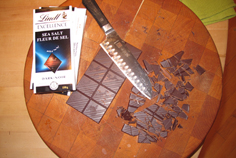
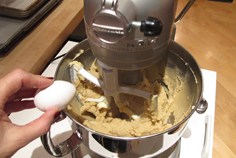
 Chop the chocolate. Then melt with butter over a double boiler.  While the chocolate mixture cools, break some eggs, whisk them with brown and white sugar and combine with the melted chocolate.  add some salt, flour and chocolate chunks.


 Then comes the fun part, making the peanut butter caramel swirl.

As promised, the parchment peels right off once the brownies have cooled.  Because of the high percentage of unsweetened chocolate in these brownies, they are not too sweet.  The taste of peanut butter is pronounced and the hit of caramel is a perfect background note.  Only one small complaint:  Making these dirties a lot of bowls and pots!


With a glass of milk, they are the perfect snack for watching an episode of Throwdown.

Peanut Butter Caramel Swirl Brownies

Ingredients

1/2 cup heavy cream
1/4 cup sugar
1/4 cup water
1/2 cup smooth peanut butter
1 tablespoon corn syrup
Pinch sea salt
1/8 teaspoon vanilla extract
1 cup (2 sticks) unsalted butter, cut into chunks
6 ounces high-quality unsweetened chocolate, coarsely chopped
2 ounces bittersweet chocolate, coarsely chopped

1 teaspoon espresso powder
4 large eggs
1 1/2 cups granulated sugar
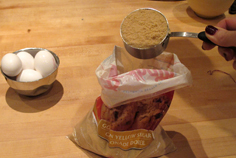
1/2 cup packed light brown muscavado sugar
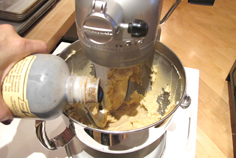
2 teaspoons pure vanilla extract
1/4 teaspoon fine salt
1 cup unbleached all-purpose flour
4 ounces bittersweet chocolate, coarsely chopped

Directions

  1. Bring the cream to a simmer over low heat in a small saucepan. Combine the sugar and water in a small saucepan over high heat and cook, without stirring until amber brown. Slowly whisk in the warm cream until smooth and let cook for 1 minute. Remove from the heat and whisk in the peanut butter, corn syrup, sea salt and 1/8 teaspoon of vanilla extract until smooth. Transfer to a bowl and let cool until thickened at room temperature, about 30 minutes.
  2. Put a rack in the middle of the oven and preheat the oven to 325 degrees F. Line a 9 by 13-inch baking pan with parchment paper..
  3. Combine the butter, unsweetened chocolate, 2 ounces bittersweet chocolate and espresso powder in a medium bowl set over a pot of simmering water. Let the chocolate melt over low heat, stirring frequently until smooth. Remove from the heat and let cool slightly, about 5 minutes.
  4. In a large bowl, whisk the eggs, both sugars, vanilla and salt until smooth. Whisk in the melted chocolate mixture until combined. Scrape down the sides of the bowl. Beat in the flour in 2 additions (the batter will be thick). Stir in the remaining 4 ounces of chopped bittersweet chocolate.
  5. Scrape half of the batter into the prepared pan and smooth the top. Using a tablespoon, drop dollops of half of the peanut butter caramel every 2 inches over the top of the batter. Carefully add the remaining batter and smooth over the caramel. Smooth the top and dollop the remaining caramel over the top. Use a butter knife to swirl through the batter to get a marbleized effect.
  6. Bake until the top is set but still soft and the edges are puffed and just beginning to pull away from the sides of the pan, about 23 to 25 minutes. A toothpick inserted in the center will come out still gooey (be brave!–underbaking the brownies is one of the secrets to their fudgy texture). Transfer the pan to a wire rack to cool completely.
  7. For the neatest cuts, refrigerate the pan for about 20 minutes before cutting the brownies. Using the foil, lift the brownie slab out of the pan. Carefully peel off the foil and put the brownie on a large cutting board. With a large sharp knife, cut the brownies into 48 squares. (The brownies can be stored in an airtight container, at room temperature, for up to 3 days; they can also be frozen, well wrapped, for up to 2 weeks.)

#36. Stollen and the visual learner.


Who knew that a German fruit filled bread could demonstrate my learning deficiencies so clearly?  As I read through the recipe for Stollen,  this week’s bread in Peter Reinhart’s The Bread Baker’s Apprentice, I knew that I had a real challenge on my hands.  I could not, for the life of me, figure out how to shape this loaf.  I read through the directions at least 4 times and it just didn’t make any sense to me.  There were even some pictures to demonstrate the method but I still could not figure it out. 

Full disclosure here, I am not really great with written instructions.  (I can see my husband laughing his head off right about now as he reads this).  I never the read instruction manuals that come with anything new I buy.  I believe that things should be designed so that they are intuitive.  Usually I end up breaking something before I give in and pull out the manual.  I have never assembled anything from Ikea where I did not have at least 3 or more extra bolts or screws left over, leaving me wondering about the stability of whatever I just put together. 

Sorry, got a little off track there.  I proceeded to make the dough for the Stollen, without a clear plan on how I was going to shape it.  I figured that I’d just wing it when I got to that part.  The recipe begins with mixing some warm milk with flour and instant yeast to make a sponge.

This mixture is set aside for about an hour, to get all bubbly.  The recipe called for golden raisins and candied fruit mix to be soaked in brandy or rum and orange or lemon extract.  I remembered  my experience with the Panettone bread I made back in November.  I hated that bread with the dried fruits soaked in alcohol so I decided to forgo this step.  As well, I decided to leave out the citrus extract.  I figured I’d get enough citrus flavour from orange and lemon zest.  I decided to skip the candied fruits as well and went with a combo of golden raisins, sultana raisins, dried cherries and dried apricots. 


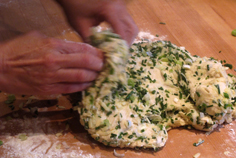
Once the sponge was all bubbly, it is added to all-purpose flour, sugar, salt, orange and lemon zest and cinnamon.  Butter, an egg and a bit of water are added until a sticky dough is formed.  Then about 3/4 of the dried fruit is added. The remainder gets added during shaping. I was feeling a bit lazy and decided to knead the fruit in by machine but it soon became apparent that hand kneading was in order.  I dumped the mixture onto the counter and kneaded for about 5 minutes until I had a silky dough and all the fruit was evenly incorporated.

Then the dough was set aside to rest, covered for about 45 minutes.  At that point I figured I’d better do some research to figure out what I was going to do about shaping this bread.  I googled Stollen and came up with several variations and shaping suggestions. 

There was a wreath shaped stollen from Martha Stewart’s mother. David Lebovitz formed his stollen into simple batards (oval-shaped loaves).   My favourite, however, was the stollen shaped like Mick Jagger’s lips from Philadelphia Chef John Gallagher.  Once baked, his version is dipped in melted butter and then rolled in a sugar-cinnamon mixture. 

I was just about to make the Mick Jagger version when I decided to read the shaping instructions in the Bread Baker’s Apprentice book one last time.  Eureka!  After my 5th read through I thought I finally understood how to do this.  It seemed that the shaping instructions were describing a simple letter fold.  Because I am a visual learner, I videoed myself shaping the bread for all you other visual learners out there.

I was quite proud of myself for figuring out how to shape this bread, and I only had to read the instructions 5 times.  I was just about to slide the stollen into the oven when a phrase in the instructions caught my eye, “Turn the dough seam side up….”  Huh?? I read it one more time and it was on my 6th read through that I finally understood that Peter Reinhart was describing an accordion style fold.  So I opened up my stollen and reshaped it.

Although the recipe called for brushing the baked bread with vegetable oil, I opted for melted butter.   Then 2 coats of icing sugar and it’s done.

 As I baked this bread on Friday, I used it as our Sabbath challah stand-in.  I believe that the finished loaf is supposed to symbolize the blanket of baby Jesus.  Oh well, the world needs a little more culinary coexistence.  It was delicious and a nice change from our usual challah.  It was even better toasted with butter for breakfast the next day.

P.S.  I just discovered that fellow BBA challenger Kelly of Something Shiny figured out the accordian fold about a month ago and posted about it on her blog.  She also originally thought it was a letter fold and only after making it a second time worked out the proper shaping technique.

Marble Matzoh Crunch

This week in the Bread Baker’s Apprentice Challenge I am scheduled to bake Stollen.  However, it’s Passover this week and I’m not eating bread.  So in honour of this holiday I offer my favourite Passover treat, “Marble Matzoh Crunch.”  The original recipe comes from Montreal baker extraordinaire Marcy Goldman.  Her cookbook Better Baking.com is one of my go to standards.

For those unfamiliar with matzoh, it is a cracker-like unleavened bread made of white plain flour and water. The dough is pricked in several places and not allowed to rise before or during baking, thereby producing a hard, flat bread.  Matzoh is the substitute for bread during Passover, when bread and other leavened products are not permitted. There are two major explanations for eating matzoh. One is historic and the other is symbolic.

Historically, Passover is a commemoration of the exodus of the Jewish people from a life of slavery in Egypt. The Israelites left Egypt in such a hurry, they could not wait for their bread dough to rise. The resulting product was matzoh.  The other reason for eating matoh is symbolic.  On the one hand, matzoh symbolizes redemption and freedom, but it is also known as poor man’s bread.  So it serves as a reminder to be humble, and to not forget what life was like as slaves of the Egyptians. Also, leavening of the bread symbolizes corruption and pride as leaven “puffs up”. Eating the “bread of affliction” is both a lesson in humility and an act that enhances one’s appreciation of freedom.

All that history and symbolism for a little cracker!  There are those that compare eating matzoh to cardboard.  I wholeheartedly disagree.  I love Matzoh.  Perhaps it’s because the rest of the year, for health reasons, I spread butter and jam so thinly on my toast  I can barely taste it.  However at Passover I spread both butter and jam on with reckless abandon.  Passover is my excuse to consume butter and jam and matzoh is the perfect vehicle for allowing me to do it.

Marcy Goldman’s Matzoh Crunch is guaranteed to convert any matzoh hater into a matzoh worshipper.  You don’t even need to be Jewish to love this treat.

Ingredients:

6 slices matzoh
1 cup (2 sticks) unsalted butter or kosher for Passover margarine
1 cup firmly packed brown sugar
2 generous cups finely chopped bittersweet chocolate or semi-sweet chocolate chips (about 12 ounces)
1 1/2 cups white chocolate, finely chopped (about 8 ounces)
1 teaspoon sea salt or kosher salt

Directions:

1.  Preheat oven to 350º F.  Cover an 18 x 13 inch rimmed cookie sheet with foil and then cover the foil with a sheet of parchment paper. Do not leave this step out or you will be cursing me when it comes time to cleanup!  Cover the parchment paper evenly with the matzoh.  You will have to trim some of the matzoh with a sharp knife to make it fit into a flat even layer.  You will have some matzoh scraps left over.  Slather with butter and jam and eat.

2.  In a large heavy bottomed saucepan, add brown sugar and butter or margarine.  Cook over medium heat, stirring constantly with a wooden spoon, until the mixture comes to a boil.  This will take about 2-4 minutes.  At one point it will look like the butter is separating from the sugar and it will appear to be an oily mess.  Just keep stirring, it will come together again.  Once mixture comes to a boil, keep stirring for about another 3 minutes.   Carefully pour caramel onto matzoh.  Using a metal spatula, spread it out into an even layer.

3.  Place baking sheet into oven and bake for about 12 minutes until the caramel topping is golden brown and bubbling.

4.  While caramel is baking chop white chocolate into small pieces.  Place in glass measuring cup and microwave on medium power for 2 minutes.  When you remove chocolate from microwave, it will look like the chocolate is not finished melting.  Take a clean dry spoon and stir white chocolate.  It will continue to melt as you stir.  Pour melted white chocolate into a disposable plastic piping bag.  The easiest way to do this, if you are alone, is to place the piping bag in a large glass or pitcher and fold down the top.  Pour in white chocolate and let sit until you are ready to use it.


5.  Remove caramel covered matzoh from oven after about 12 minutes when it is golden brown and bubbly.  Place pan on a wire cooling rack on the counter.  Immediately sprinkle caramel matzoh with chopped bittersweet chocolate or chocolate chips. 


6.   Wait for a few minutes until chocolate has a chance to soften.  Then, using a metal spatula, spread chocolate into an even layer.

7.  Now comes the fun part!  Making a marble design with the white chocolate.  Twist the top of the piping bag closed and using a sharp scissors, cut a small tip off the end of the bag.  Starting in one corner of the pan, pipe white chocolate in a zig zag pattern.  Then starting in the opposite corner, pipe a zig zag pattern in the opposite direction.  Using the sharp tip of a wooden skewer, drag it through the wet white and dark chocolate making a nice design. You can either drag skewer in a circular pattern or go in straight lines.  Below is a video of me demonstrating the process:

8.  While chocolate is still wet, sprinkle with sea salt.  Chill pan for several hours until chocolate is firm.  Peel off foil and parchment paper and place marble matzoh crunch on a large cutting board. Using a very large sharp knife, cut matzoh into large squares.  For an 18 x 13 inch pan, I usually get about 18 pieces.  Store matzoh crunch in an airtight container in the fridge.  It keeps well for about 5 days. (That is as long as no one else in the house knows it’s there!)
For an equally delicious variation, instead of marbling with white chocolate,  sprinkle dark chocolate with toasted chopped unblanched almonds (about 1 1/2 cups).  Or try milk chocolate and almonds, or dark chocolate and dried cherries, or white chocolate and chopped pistachios or macadamia nuts.  The possibilities are endless.  Have fun!


#35. Confessions of a Bulk Food Store Snacker and Sunflower Seed Bread.


This is the last bread in the sourdough section of the Bread Baker’s Apprentice Book.  I will be a little sad to say goodbye to the sourdoughs.  Baking them has been a new and thrilling experience for me.  I must admit, sunflower seed bread did not really sound like a loaf you want to go out on a bang with.  No offence but sunflower seeds are not exactly exciting.  Well that is until I remembered that I had honey roasted sunflower seeds in my freezer.  I had bought them a few months ago to make a Crunchy Coleslaw recipe from my friend Lanie. 

When I went to the bulk food store to buy the ingredients, I saw that right next to the bin of regular shelled sunfloweer seeds was a bin of honey roasted sunflower seeds.


 Of course I had to taste them.  I don’t believe that those “NO SNACKING” signs really apply to me anyways. 
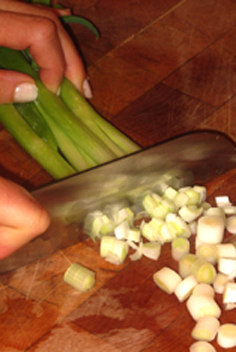
 

Besides, I put on one of those plastic gloves they supply before sticking my hand in, so it’s okay, (isn’t it?)  I was blown away by the sweet and salty crunch of these little seeds.  They made a wonderful addition to the coleslaw and I thought they’d really wake up this sleepy little bread.
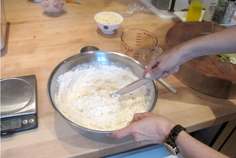
The day before making this bread you mix up a “soaker” containing pumpernickel grind rye flour and water.  This is left to sit out on the counter overnight. 

We are also instructed to make a “firm starter”, which just means adding some bread flour and a touch of water to some of the sourdough starter (barm) you have in fridge.  I only just discovered that there are firm and wet starters.  My starter (Phyl) is a wet starter.  I have not quite learned all the differences and advantages of one type over another (that topic could cover several volumes according to what I have uncovered in my rudimentary research!).  Suffice it to say that Peter Reinhart assured me I could substitute my wet starter (which he calls a Barm) for the firm starter and just use less water in the final dough.  That’s what I decided to do. 

Day 2 I mixed the soaker with my wet starter and the other dry ingredients (high gluten bread flour, a touch of instant yeast and salt).  No addditional water was needed.  I was careful when kneading this dough as overworking it could cause the rye flour to go gummy.  After about 4 minutes the sunflower seeds were kneaded in .  Another 2 minutes of hand kneading and the dough was ready for proofing.

After about 90 minutes, the dough was ready for shaping.  The dough is divided into two and each piece is shaped into a boule. 

Then you poke your thumb through each boule and stretch it out into a big bagel shape. Unfortunately the video does not show the stretching process as my video skills need some work!

Finally, a chopstick is used to create indentations in the dough to form a design.

Into a hot oven for about 15 minutes and they were done.  Gloriously brown on top.

And beautifully browned and crisp on the bottom:

I was not prepared for how much I would love this bread.  It was chewy and slightly sweet from the honey roasted sunflower seeds.  I will be visiting this one again very soon.

Lanie’s Crunchy Coleslaw


My friend Lanie served this delicious salad to me, last summer.  The original recipe comes from Susie Fishbein’s book, “Kosher by Design”. This is my adaptation.  The recipe makes more dressing and crunch mixture than you will need.  Extra dressing keeps well in the fridge for 2 weeks.  The extra crunch mixture will keep well in an airtight container at room temperature.

Crunch mixture
1 package of Ramen noodle soup (discard spice packet)
½ cup sesame seeds
½ cup slivered almonds
½ cup honey roasted sunflower seeds

Dressing
1 cup vegetable or canola oil
2 tablespoons soy sauce
¾ cup sugar
½ cup red wine vinegar
1 teaspoon kosher salt
¼ teaspoon pepper

Coleslaw
½ purple cabbage, thinly sliced
½ Savoy or Napa green cabbage
3 green onions, thinly sliced
2 celery stalks, diced
½ cup dried cherries

1.  Preheat oven to 350 degrees F.  Break the Ramen noodles into small pieces and place in a large bowl.  Add sesame seeds and slivered almonds  to bowl and toss to mix.  Transfer contents of bowl to a large baking sheet and bake in oven for about 8-10 minutes, until golden brown.  Remove from oven and set aside to cool. When cool mix in the honey roasted sunflower seeds.

 2.  Place ingredients for dressing in a large jar and shake well to combine.

 3.  Place cabbages, green onion, celery and dried cherries in a large serving bowl.  Toss to combine.  Just before serving, add about ¼ cup dressing and 1 cup of crunch mixture to coleslaw.  Toss well to combine.  Taste and add additional dressing, salt and pepper, if desired.

#34. Memories of Open Window Bakery


 The 34th bread in the Bread Baker’s Apprentice Challenge is Pumpernickel Bread.  I just love saying “Pumpernickel”. The word always makes me smile .  It makes me remember Saturday night dinners when I was growing up.  We would have sliced Pumpernickel Bread from Open Window Bakery (in Toronto),  creamed cottage cheese and several different types of smoked fish (which I never would eat).  My mom would have a big platter of sliced tomatoes and cucumbers, a bowl of tuna salad and sliced cantelope.  I would eat one slice of pumpernickel with tuna, cucumber and tomato and a second with creamed cottage cheese and jam.  Sometimes she would get the Pumpernickel rye rolls which I really loved.  Oh my!! I haven’t thought of those pumpernickel rolls in years.  I just did a google search to see if they still make them and YES, they do.  They also make a light rye roll that is killer with butter and jam.  Here is a picture of both of them. 

I just want to get in that car right now and drive to Toronto to buy some.  But it’s a 4 1/2 hour drive from Ottawa and probably by the time I got there my craving would be gone, or possibly, even worse, I’d eat too many and go into a bread coma. 

Peter Reinhart’s pumpernickel bread begins with a rye starter, made up of some of my sourdough starter, pumpernickel grind rye flour flour and water.  This is mixed up and left out on the counter for several hours until bubbly.  Then into the fridge for an overnight rest.  The addition of the rye flour to the starter creates an acidic environment which helps to make the final bread more flavourful and more easily digested.

One of the ingredients called for in this recipe is bread crumbs made from rye bread.  Kind of an unusual thing to add to a bread dough.  Peter Reinhart promised that it adds wonderful texture to the final bread.  I had some rye bread in the freezer so I defrosted a few slices and put them into the food processor to produce rye bread crumbs.

Next all the dry ingredients are dumped into a big bowl.  These include clear flour, brown sugar, caramel powder, salt, instant yeast and rye bread crumbs.  In case you were wondering, clear flour is not transparent flour.  This is the flour that clears the first sifting (to separate out the bran and germ), still retains some of the finer bran fiber from the outer endosperm of the wheat berry and is thus coarser and contains higher levels of ash. This is the flour New York City bakers have always used for their signature Jewish-style rye breads.   The caramel powder gives the bread it’s dark brown characteristic colour.  It looks a bit like like instant coffee granules.

The rye starter, vegetable oil and water are added to the dry ingredients and mixed up to make a tacky but not sticky dough.  As with all doughs that contain rye flour, great care has to be taken not to overmix or else the dough will get gummy.  The dough was dumped out of the bowl onto the counter and then hand kneaded for about 5 minutes until the dough was smooth and supple.

After that the dough is left to rest in an oiled container for about 2 hours until doubled in size.

Once the dough is doubled, it is divided in half and formed into 2 boules.  They are covered and left for about 90 minutes for the final proofing. 

 Then I scored them.  I think I got the timing just perfect for the scoring as there was almost no drag to the lame (scoring tool).  It was very smooth!

  Into a hot oven they went.  I baked them on a preheated baking stone and had a pan of water below the breads to create steam in the oven.   

Fresh out of the oven:

We had the bread for dinner that night.  I have to admit that while the flavour was great, the texture was not what I was expecting.  It was a little light and fluffy.  I was hoping for a denser, chewier bread, like what I remember from my childhood. Looks like a trip to Toronto is in order!

#33. Poilâne-Style Miche

This week in the Bread Baker’s Apprentice Challenge we tackle Poilâine-Style Miche.  When it comes to artisan bread, the name Poilâine is synonomous with excellence.  Bread freaks from all over the world travel to Paris to purchase bread from the Poilâne family.  Pierre Poilâne started a baking business in 1932 in Paris, creating bread using stone-ground flour, natural fermentation and a wood-fired oven. His son, Lionel took over the bakery in 1970, continuing the traditional methods.  Sadly, Lionel died in a plane crash in 2001.  His daughter, Apollonia now runs the business.  Lionel’s brother, Max, branched out on his own and opened his own bakery.  As in all families, there are squabbles about whose bread reigns supreme. 

Poilâine’s most famous bread is a 2 kilogram (about 4.4 pounds) round country sourdough loaf, called Pain Poilâine.  Lionel simply called it a miche.  The bread is made from a sourdough starter, grey stone-ground flour (whole wheat flour with about 10-20% of the bran removed) , water and sea salt from Guérande.  There are about 20 trained bread artisans baking at the family factory in Bievres, outside of Paris.  Although the dough is now machine kneaded, all other aspects of creating the bread are done by hand in the time honored method established by Pierre Poilâne. 

Peter Reinhart gives a wonderful detailed description, in his book, on how the bread is created.  It is indeed a labour of love.  The amazing thing about this bread is that is keeps for about a week, at room temperature.  It is a dense and chewy bread and as Peter Reinhart says, “the flavours change in the mouth with each chew.”  The Poilâne family says that the flavour peaks on day 3. 

If you can’t get to Paris, they will ship you a loaf.  I went to their web site , created an account for myself and put 1 loaf into my shopping basket.  For 37.10 Euros ($52.30 Canadian Dollars) they will send me my very own loaf!  I have not yet clicked on confirm order but I am thinking about it.    If I do go through with it then I really will classify for “Bread Freak ” status.  I’ll keep you posted.

So, onto my attempt at creating this magical miche.  Day 1 we make the firm starter, mixing up some whole wheat flour, some of our sourdough starter and water.  This gets refrigerated overnight.

On Day 2, the final dough is made.  In order to replicate the “grey flour” used at Poilane, Peter Reinhart suggests we put our whole wheat flour through a sieve to extract some of the bran. 
 

I was very excited to finally open up the jar of Grey Sea salt that has been sitting in my cupboard for over a year now.  I’m not quite sure why I hadn’t used it yet, but here was the perfect opportunity.

 The starter is mixed up with the sifted whole wheat flour, grey sea salt and more water.  This is a big mass of dough, way too big for the Kitchenaid, so hand kneading was necessary.  Here is the dough just after I began mixing.

After about 15 minutes of hand kneading, I had a beautiful supple silky dough.

Once the dough is kneaded, it gets placed in an oiled bowl, covered with plastic wrap and ferments at room temperature until it doubles in volume, about 4 hours.  At this point it is formed into a boule and placed into a linen towel lined bowl.  So that the dough will not stick, the towel is sprayed with a bit of oil and then dusted with flour.  The boule should be placed seam side up, then covered with the towel and refrigerated overnight. 

As you can see from the photo below, I screwed up and placed the dough into the bowl, seam side down, so that the smooth side was on top.  You might say, big deal, so what?  The big deal is that the bottom of the dough (where the seam is) becomes the top of the loaf and then your seam turns into some unsightly cracks.


The next morning the dough is removed from the fridge and allowed to sit at room temperature for about 4 hours.  Then the dough is gently turned out onto a baking peel, lined with cornmeal and is scored.  At the Poilaine bakery they score it with the letter P in a gorgeous font.  I wanted to score mine with S&S (for Salt and Serenity) but my fine motor skills are sorely lacking for artistry of that caliber!  I decided to go with a square design with an X in the center.  Unfortunately, I also had the cracks from the seam of the boule to contend with so it looks a bit strange artistic.  But that’s the wonderful thing about Artisan bread – each loaf is hand made and no two are identical. 

The bread goes onto a baking stone in a hot oven and is baked for about 45 minutes.  Here is is my loaf on and below it the Poilâne loaf.  I can’t tell the difference, can you? (Can you say denial?)

I sliced into the bread after about 2 hours.  I thought the taste was good but a little “whole wheaty”.  I closed my eyes to see if the taste changed with every chew, as Peter Reinhart promised, but I don’t think my palate is that highly developed.   I did notice that I liked the bread a little better on day 2.  It seemed a bit more mellow, and not as earthy.  It lasted very well in a paper bag for almost 5 days and then we sliced what was left and froze it for toast.

I will try this one again, next time using a recipe for Whole Grain Sourdough  passed on to me by Sally of Bewitching Kitchen.  It uses whole wheat flour only in the starter and a mixture of white bread flour, rye flour and spelt in the remainder of the dough.  Sally promises that it is more like the real Poilâne.

32. 100% Sourdough Rye

I KNOW THAT WHEN YOU ARE SHOUTING ONLINE YOU TYPE ALL IN CAPITAL LETTERS.   How do you whisper online?  I need to know because what I’m about to say should be whispered.  “I loved this bread!”  I am whispering it because I am afraid I may be drummed out of the Bread Baker’s Apprentice Challenge.

Most of my bread freak friends who have already made this bread absolutely hated it.  Many of them threw it out.  Some turned it into croutons and others into breadcrumbs. Someone (I won’t mention any names) called it play-doh with caraway seeds.  The main complaint was that it was way too dense and chewy.  This is precisely why I loved it.  This was no spineless bread.  It had guts and personality and wonderful flavour.

The last rye bread we made (New York Deli Rye) was about 1/3 rye flour and 2/3 white bread flour so it had a mild rye flavour.  This bread was 100% rye flour.  The thing you need to know about rye flour is that it contains pentosan, a gum protein that causes the dough to become gummy if mixed for too long.  Extra care has to be taken with kneading this bread.  Rye flour has a very low gluten content so we are warned that a 100% rye bread will not have the same soft and high crumb that a bread made with wheat flour will have.

The bread begins with mixing about 1/2 a cup of Phyl (my starter) with rye flour and water.  It is just mixed until all the flour is hydrated.  No need for it to be smooth.  Then this is left on the counter until it doubles in size and this put in the fridge for an overnight rest.

You also prepare a “soaker”.  This is a mixture of pumpernickel grind flour and water.  it is covered and left out on the counter all night.

 The next day the soaker, the starter, white rye flour, salt, caraway seeds and water are mixed for about 6 minutes to form the dough.  Then the dough is put into an oiled glass container, covered and left to rise for almost 4 hours, until it doubles in size.  Usually this step takes about 1-2 hours.  The longer rising time is due to the lower gluten content in rye flour.

After the dough has doubled, it is gently divided into 2 pieces and then formed into batards (oval shapes).  Since it was quite late by this point, I covered the loaves and refrigerated them overnight.  The next morning  I took them out of the fridge and let them sit on the counter for about 4 hours, covered with plastic wrap.  You can see that they expanded widthwise, but not very much in height.

 Then they were scored and baked in a very hot oven.

Indeed the crumb on this bread is not very open, quite dense.  And true, the bread did not rise very much, so my loaves were quite flat.  But I loved the true rye flavour of this bread and the chewy texture.

The bread was great with Le Blackburn cheese, grapes and a glass of Syrah wine.  I had it again this morning toasted for breakfast and loved it even more.