Author Archives: saltandserenity

Dulce de Leche and Gingerbread Ice Cream Sandwiches


I love it when a product delivers as promised.  My friend Brigitte introduced me to a mirror that has changed my life.  This little mirror magnifys to the power of 15 making it unnecessary for me to wear my reading glasses when tweezing my brows. (wearing glasses while tweezing your brows is next to impossible because the frames get in the way of your brows)  I now have impeccably groomed brows. Should you decide to get this mirror do not use it for anything other than tweezing.  Step away immediately after tweezing.  Because this is one scary mirror.  Everything on your face is super magnified and it’s not a pretty sight.  Don’t say you weren’t warned.

One product that didn’t deliver as promised was my Donvier Ice Cream machine.  This is a manual machine with a hand crank. Purchased many years ago I thought it would be a fun activity for my dinner guests.  I thought wrong!  After a few spins, people got bored so I was left alone in the kitchen turning the handle myself.  The ice cream was ok, not great.  The machine quickly got relegated to the basement storage room.

Then 3 years ago, I decided to purchase an electric ice cream machine.  I planned to take it up to the cottage and amaze my family and friends with imaginitive flavour combinations.  I decided on the Cuisinart machine because you could make 2 flavours at the same time.  And the price was great.  (In the States and in Canada too!!)  The first summer was so cold I never wanted to make ice cream.  Last summer I was baking my way through Peter Reinhart’s Bread Baker’s Apprentice Book, so I never had time for ice cream.  But this summer, aaah, this summer is going to be the “Summer of George”  Oops!  Sorry, I mean the summer of ICE CREAM.

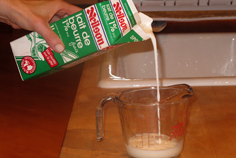
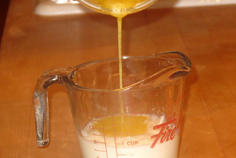
I decided to begin with a vanilla base and add flavours from there.  The process is very simple.  Whole milk and sugar are whisked together until the sugar dissolves.  Then you add heavy cream and vanilla.  The mixture gets poured into the chilled cylinder and you hit the on switch and stand back and watch the magic happen. 

It has a clear lid so you can see the mixture freezing.  After 15 minutes you can add your mix ins.  I added Skor bits and dulce de leche sauce.

At this point it has the consistency of a Blizzard.  If you want firmer ice cream, transfer it to a container and let it freeze for a few more hours.

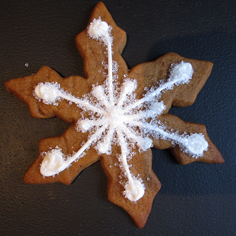
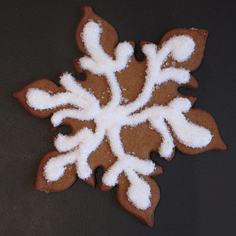
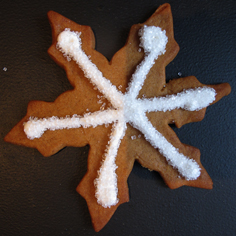
The texture was silky smooth and the addition of the Skor bits gave a great crunch.  The dulce de leche added an amazing deep caramel flavour.  All in all a resounding success.  But, it was a touch too sweet. It needed something to temper the sugar.  All of the sudden it came to me. I would make gingerbread cookies and create ice cream sandwiches.  I’m not sure what I was thinking, turning on my oven at the cottage when it was sweltering (31 degrees C/91 degrees F) outside but once I started thinking about that flavour combo I had to bake the gingerbread cookies.  Inside my kitchen it smelled like December but felt like hell.  It was so wierd.

Of course I had to gild the lilly and roll the outside of the ice cream sandwich in more skor bits.  It was so good!!

Dulce de Leche Ice Cream

(adapted from basic vanilla ice cream recipe in Cuisinart recipe booklet)

Ingredients:

3/4 cup whole milk, well chilled
2/3 cup granulated sugar
1 1/2 cups 35% cream (heavy cream). well chilled
1 teaspoon pure vanilla extract
1/2 cup skor bits
1/2 cup dulce de leche (President’s Choice makes a great one)

Directions:

1.  In a medium bowl, use a whisk to combine milk and sugar, whisking until sugar is dissolved.

2.  Whisk in heavy cream and vanilla.

3.  Pour into ice cream machine and let mix until thickened, about 20 minutes.

4.  Add skor bits and dulce de leche.  Mix for 5 more minutes.

5.  Transfer ice cream to an airtight container.  Cover surface of ice cream with plastic wrap and then put on lid container.  This will help prevent the formation of ice crystals.  Freeze for an additional 2 hours.

Thick and Chewy Gingerbread Cookies

 This recipe comes from Cook’s Illustrated Magazine.  It makes about 18 large or 30 small gingerbread cookies. 

Ingredients:

3 cups unbleached all-purpose flour
¾ cup firmly packed dark brown sugar
¾ teaspoon baking soda
2 teaspoons ground cinnamon
2 teaspoons ground ginger
½ teaspoon ground cloves (totally optional – I leave it out as I hate cloves)
½ teaspoon salt
12 tablespoons (1 ½ sticks) unsalted butter, softened but still cool, cut into 12 pieces
¾ cup molasses
2 tablespoons milk

Directions:

  1. In a food processor, process the flour, brown sugar, baking soda, cinnamon, ginger, cloves and salt until combined, about 10 seconds.  Scatter the butter pieces over the flour mixture and process until the mixture is sandy and resembles very fine meal, about 15 seconds.
  2. With the machine running, gradually add the molasses and milk.  Process until the dough is evenly moistened and forms a soft mass, about 10 seconds.
  3. Scrape dough out onto a work surface and divide it half.  Working with one piece at a time, roll the dough, ¼ inch thick, between 2 sheets of parchment paper.  Leaving the dough sandwiched between the parchment layers, stack on a baking sheet and freeze until firm, 15-20 minutes.
  4. Adjust the oven racks to the upper and lower middle positions and heat the oven to 350 degrees F.  Line 2 baking sheets with parchment paper.
  5. Remove 1 dough sheet from the freezer; place on work surface.  Peel off top parchment sheet and gently lay it back in place.  Flip the dough over; peel off and discard second parchment layer. 
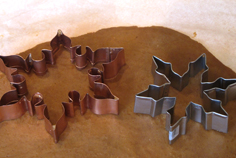
  6. Cut the dough using cookie cutters of your choice.  Transfer shapes to prepared baking sheets, using a wide metal spatula, spacing them ¾ inches apart.  Set scraps aside.  Repeat with remaining dough until baking sheets are full.
  7. Bake the cookies for 8 – 11 minutes, until they are set in the centers and the dough barely retains an imprint when touched very gently with a fingertip. The baking sheets should be rotated from front to back and switching positions top to bottom, halfway through the baking time.  Do not overbake.  Cool cookies on the sheets for 2 minutes, then remove the cookies with a wide metal spatula to a wire rack to cool completely. 
  8. Gather the scraps; repeat rolling, cutting and baking.

Confessions of a Bread Baker’s Apprentice

I am feeling a little lost after finishing the Bread Baker’s Apprentice Challenge. My last post just seemed so final and shockingly, I still have things left unsaid.  So here, in no particular order, are the final thoughts/reflections/confessions of this Bread Baker’s Apprentice.

10.  When the number of  mail order parcels arriving from King Arthur Flour began to rival those from J Crew,  I knew I was a true bread freak.

9.  I spent $30.25 on a 4 ounce bottle of Fiori di Sicilia . No, that’s not a fancy perfume. It’s an aromatic essence of Sicilian flowers.  It is the flavouring used in authentic Italian Panettone bread.  The recipe uses 1/2 an ounce.  I discovered that I hate Panettone bread.  I still have 3.5 ounces left.  Oh well, the bottle is pretty!

8. I still have not mastered the “windowpane test”.  For the uninitiated, this is a test to determine when the dough has been kneaded enough.  After kneading for awhile, you cut off a small piece of the dough and gently stretch and pull it to see if it will hold a paper-thin translucent membrane, without ripping or falling apart.  Every time I tried this test, my dough ripped.  I continued kneading for several more minutes, but my dough still ripped.  TxFarmer, a fellow BBA Challenger,  achieved perfect windowpanes with every loaf she produced. (see the photo below)  She also produced drool worthy photos and gorgeous breads.  I am more than a little envious!

100%全麦面包 <wbr>– <wbr>取长补短

7.  I speak to the woman on the order desk at King Arthur Flour more often than my own mother.

6.  On of my fellow challengers, named Susie, made many of her breads in the shape of the letter S.  She baked 22 of the 43 breads and hasn’t been heard from since last November.  I’m a little worried about her.

5.  I’m thinking it of requesting the Poilâne Miche pillow for my birthday this year. Bread #33 in our Challenge was the Poilâne-Style Miche.  Poilâne is a bakery in Paris famous the world over for their bread. They make a cushion in the shape of their most famous bread.  It is only $82.23 (that includes shipping).  I can have a loaf of the real bread shipped to me for $62.30, but I figure the pillow will never get stale!

4.  I still have not mastered my slashing skills.  Slashing (also known as scoring) the bread prior to baking is done to allow some of the trapped gasses to escape. The tool I bought to slash with is called a lame but it does not work very well.  Someone told me to try a straight edge razor blade (the old fashioned kind) but I can’t find them at my local pharmacy.  I found a web site that will ship me 1000 of them for 2 cents a blade but I worry that my name will be placed on a “persons of interest” list since I am stockpiling dangerous weapons.

3.  I have bought Peter Reinhart”s new book Artisan breads and am considering baking my way through that one!!

2.  Peter Reinhart  may have replaced Nick Malgierei in my baker fantasy dream.

1.   I  don’t even bat an eyelash when the lady at King Arthur Flour tells me that shipping to Canada is a $25.00 flat fee and all I am ordering is a $5.99 bag of Sir Lancelot High Gluten flour because I need a bagel fix bad!

Thanks again to Nicole of Pinch my Salt for organizing this challenge and of course to Peter Reinhart for writing such a wonderful book.  It truly is a fantastic tutorial for anyone interested in learning to bake their own bread.  I am grateful for all the new bread freak friends I have made along the way.

#43. The End! (Roasted Onion and Asiago Miche)

I waited to make the last bread in the Bread Baker’s Apprentice Challenge until all my children were home and the whole family was under one roof again.  It only seemed fitting that we should end this together as we were all home together last spring when I began my journey.  So finally, the planets were aligned and we were ready for a family dinner.  It turned out that my nephew was in town visiting, so we invited him to join us.  Only one hitch in the plan.  My nephew’s mom was visiting with him.  It had been a long time since I had seen my (ex) sister-in-law, as she and my brother-in-law were divorced over 12 years ago.  But in the spirit of, “the more the merrier”, we invited her to join us as well. 

I have to admit that it was a bit strange at first, but once I pulled this bread out of the oven, and sliced it up there was no need for any more awkward conversation.   I poured some wine, sliced more bread, served dinner and soon we were all laughing and telling stories about when the kids were little and reminiscing about family holidays of years gone by.  Before I knew it, over 4 hours had flown by.  It was really nice to catch up and have a visit.  I do believe that this is a magical bread, able to bridge any gap and smooth out any awkwardness that life has thrown in your path.

The recipe makes such a huge amount of dough that it has to be kneaded by hand as it will not fit into the mixer.  I began with roasting the onions in the oven and ended up burning them.  I put a second batch in the oven and proceeded to burn them! again!  So then I sliced them thinly and caramelized them on top of the stove where I could keep an eye on them.

I sliced the green onions and chives and grated some Asiago cheese.

 Once the dough is mixed, the green onions and chives are kneaded in and then it’s shaped into a boule and placed in the fridge for an overnight rest to allow the flavours to develop.

The next day, the dough is brushed with olive oil, dimpled and covered with a thin layer of Asiago cheese, the caramelized onions and more cheese.  Into a hot oven and 20 minutes later, golden perfection.

The crust was crunchy on the bottom, chewy on top from all that cheese and the bread had a beautiful open crumb.  A perfect ending to the Bread Baker’s Apprentice Challenge!!

#42. Cheesy Goodness!

With only 2 breads left to go in this challenge, I have been dragging my heels somewhat.  I sort of feel a bit sad that the end has come.  I have come to love hearing from my fellow Bread Baker’s Apprentice Challengers and feel like they have become my new friends.  It will be a bit lonely around here without their feedback and support.  Aggh!! I’ve become my own worst nightmare, “A group person!!”  In school, I always hated group projects.  I’m a bit of a loner and prefer to work in isolation.  However, having cyber friends is the perfect solution for me.  They are around when I want them and then gone when I click my heels! (well, not quite my heels but my computer mouse).

This week’s bread is Potato, Cheddar and Chive Torpedos.  The dough is made with a bit of my wild yeast starter as well as some commercial yeast.  The addition of boiled potatoes and some potato cooking water make a silky dough.  When I first started adding the chives I thought I’d never get them all incorporated into the dough, but after a few minutes of hand kneading, mission accomplished.


Once the dough rises, it’s time to add the cheese and shape the loaf into torpedos.

 The dough is left to rise a second time and then it’s scored right through to the cheese layer.  Into a hot oven to bake.

Once we sliced into this loaf,  it disappeared very quickly.  A little chewy and crusty on the outside and soft and gooey inside.  A perfect loaf.  Damn these caloric little torpedos.

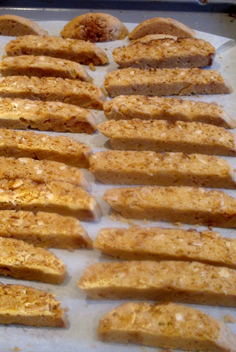
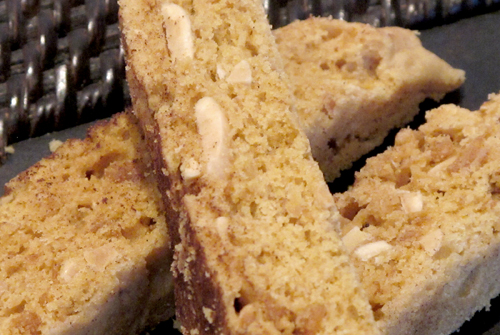
White Chocolate Cranberry Coconut Biscotti

Yesterday morning at 5:45 am I received an e-mail request to bake for a charity auction/fundraiser being held this Saturday night.  You may be wondering why I was awake so early. It wasn’t on purpose.  It’s just that I keep forgetting to put my blackberry on “silent” mode before I go to sleep, so the beep of an incoming message woke me.  The request was from the Lanark County Therapeutic Riding Program.  I immediately hit reply and said YES!!  My speedy, enthusiastic (well, as enthusiastic as I can be at 5:45 am) reply was due to two reasons.

The main reason I replied yes is that my son, who has cerebral palsy, has been riding with them for over 6 years.   When he began he could not even sit up on the horse.  Now he is trotting.  He has developed increased balance, flexibility and coordination over the years.  But more importantly, he has gained a feeling of great independence and freedom as well as tremendous pride in his accomplishments.  I never could have imagined a day when I would see him trotting down a country road on a horse.  It is a joy to behold.

The second reason for my speedy acquiescence is that I love any excuse to bake, especially when I know the baking will be leaving my home and moving out of harm’s way (Harm in this case, being my mouth!)

I knew right away what I wanted to bake.  I was planning to bake on Thursday and the event was not being held until Saturday, so it had to be something that didn’t get stale quickly.  Biscotti would be the perfect thing to make.  They keep well for several weeks, although they never seem to last that long around here.  The inspiration for this biscotti recipe came from the now defunct Gourmet Magazine (a moment of silence here please!!).  The original recipe was for cranberry biscotti dipped in white chocolate.  I decided to add white chocolate chunks to the dough instead of dipping them.  I also added coconut to the dough because coconut makes everything taste better!   Unbeknownst to me, my sister Bonnie made the exact same changes to the recipe.  We laughed when we discovered what the other had done.

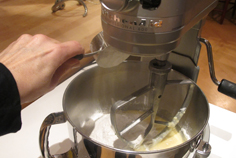
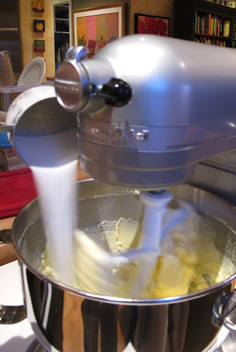
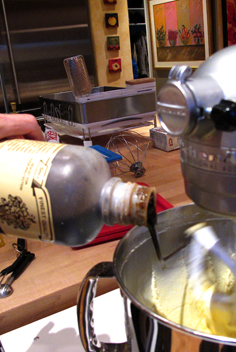
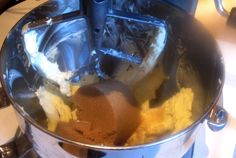
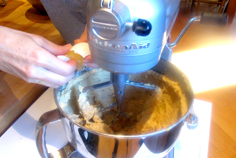
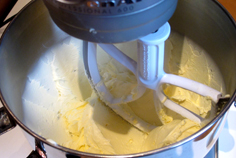
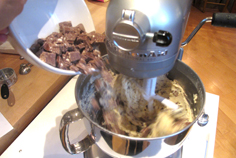
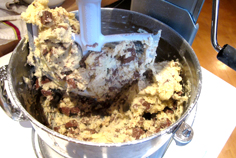
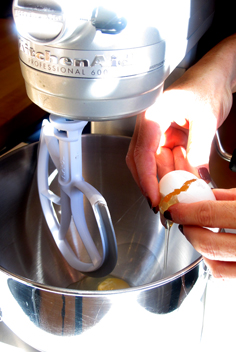
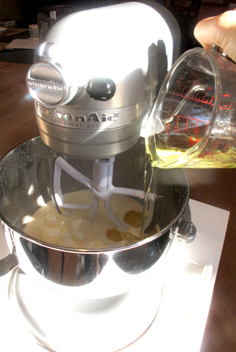
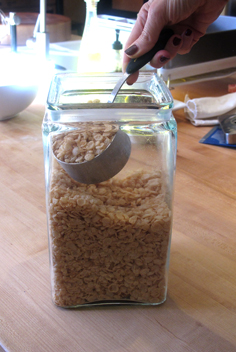
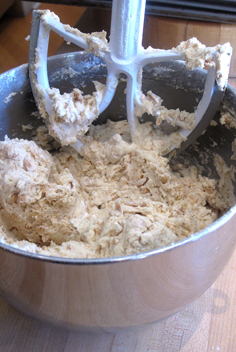
Oh, and I had a third reason to be excited to bake today!  I would get to try out my new Beater Blade for my Kitchenaid mixer.  The company claims that this blade, ” … virtually eliminates hand-scraping the bowl and batter build-up on the blades. Ingredients are thoroughly incorporated ensuring foolproof mixing and baking preparation.” After softening the butter, I set to work creaming the butter and sugar.  I was very impressed with the new blade.  No scraping down was needed.  I love it when a product delivers like it promises.

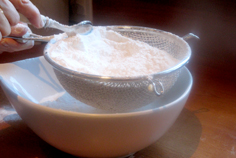
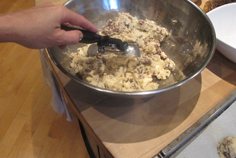
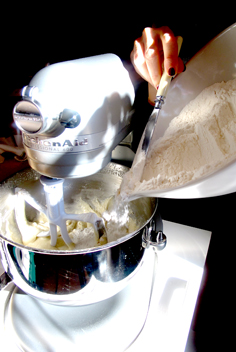
Then time to add the rest of the ingredients.

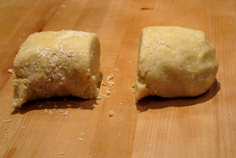
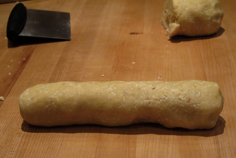
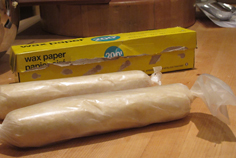
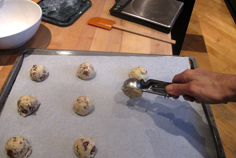
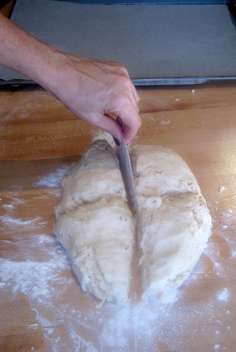
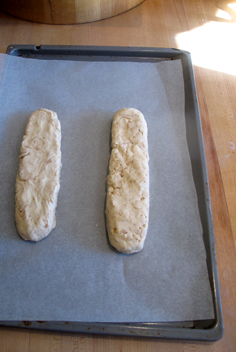
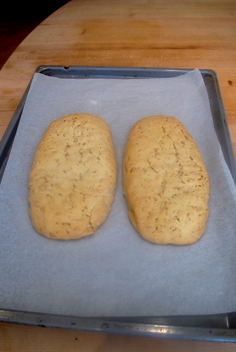
Biscotti is Italian for “twice baked”.  First the dough is formed into logs and baked.  Then the logs are sliced and put back into the oven for a second baking.  This is a wonderful dough to work with, so pliable and malleable.  Forming the logs is simple.

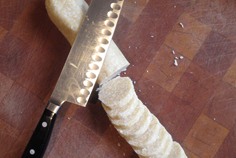
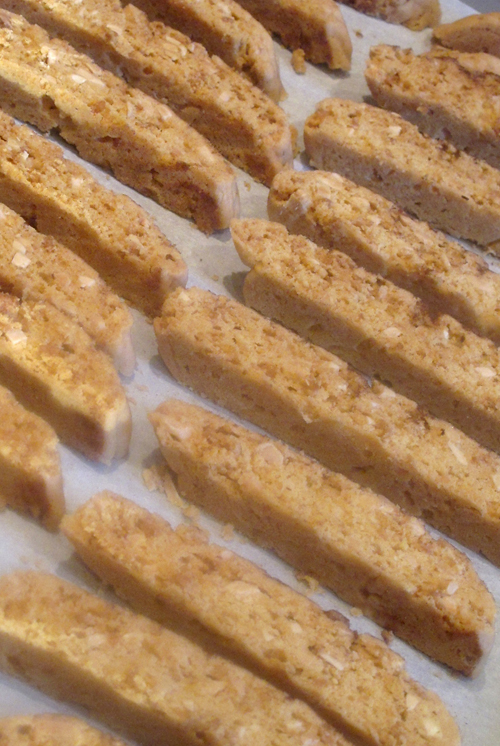
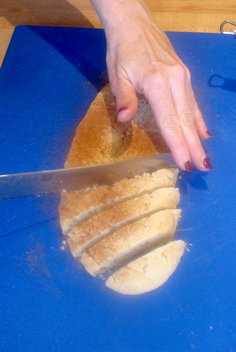
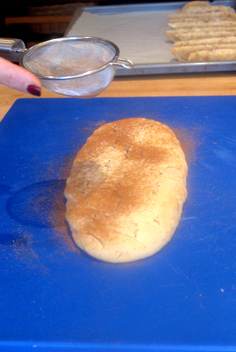
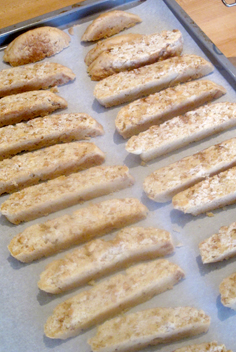
The logs are brushed with beaten eggwhite and baked for about 25 minutes.  Then they cool for about an hour.  I discovered that using a cleaver works really well for slicing the logs.  I got an inexpensive one from Ikea.  I like to slice them on the diagonal for really long biscotti.  They go back into the oven for a second baking.  They will be a bit soft when you remove them from the second baking but will firm up as they cool.

Click here to print recipe for White Chocolate Coconut Cranberry Biscotti.


#41. Whole Wheat Bread gets rescued!


This week in the Bread Baker’s Apprentice Challenge we tackle whole wheat bread.  I had been warned by fellow challengers that this bread was not a favourite.  One of the best things about participating in this challenge is the fraternity we have created.  We share our successes and failures (not that we have had too many of those!) as well as our knowledge.  I have discovered that bread bakers are a very generous people by nature.  They are willing to help one another and share what they have learned along the way. 

Mags shared her tip of adding vital wheat gluten to the dough to improve it.  Txfarmer shared 6 wonderful tips (including a longer autolyse time, double fermentation as well as longer kneading times) with us on how to improve this bread on our google group page.  As I read these helpful hints, I felt grateful to belong to such a giving group of bread freaks. 

Of course, by the time I actually got to baking this bread, several weeks later, my aging brain completely forgot about these helpful hints.   So I have no one to blame, but myself,  for my less than stellar results.  

Although this was the 41st bread in our challenge, this was actually the first time I had formed my bread into a “sandwich loaf” and baked it in a loaf pan.  Although this had been suggested as an option for many of the breads in this  book, I had always resisted, thinking that using a loaf pan made the bread look a little too uniform in shape and thus institutional and not artisnal or homemade.  My misshapen wonky hand formed loaves were made with love and no one could mistake them for factory bread!  However, I figured that shaping into a loaf to be baked in a loaf pan was another skill I should master before this challenge was over, so I went for it.

My little institutional bricks needed about 90 minutes of proofing before they crested up over the sides of the pan and were ready for baking.

The loaves baked for about 40 minutes and then I patiently waited the requisite 2 hours for them to cool so I could slice and taste.

Oggi was right.  This bread was dry and crumbly.  And it was bland too, just like Sally said.  I was planning to serve this bread for dinner but was not exactly thrilled with the results.  This bread needed something to wake it up!  I whipped up a batch of smoked paprika mayo (garlic, lime juice and smoked paprika mixed with plain light mayo).   I sprinkled some chicken breasts with chipotle chile powder and grilled and sliced them up.  I caramelized some onions in olive oil.  I sliced some Kumato tomatoes and washed some leaf lettuce.

Killer chipotle chicken sandwiches with smoked paprika mayo!!

#40. White Bread Makeover – from Drab to Fab!!

As I turned the page to our next challenge in the Bread Baker’s Apprentice cookbook I was a little disappointed to discover that we would be making white bread.  Now don’t get me wrong here.  I’m not one of those nutrition nuts who never lets anything put whole grains pass her lips.  And I’m not such a food snob that I would never eat regular packaged white bread.  I happen to believe that certain foods call for squishy white bread.  When it comes to a peanut butter and jam sandwich, the softer the bread, the better. 

No, my disappointment stems from the fact that we are nearing the end of the book and it seems kind of anti-climactic to be making  simple white bread so close to the end.  However, the breads are listed alphabetically in this book and so thrilling brioche, ciabatta, cinnamon buns and cranberry walnut celebration bread were at the beginning of the book and white bread comes near the end.  Perhaps Peter Reinhart should have called it Basic White bread?

As I stood at my kitchen counter, trying to muster up the enthusiasm to tackle white bread, my beautiful rosemary plant caught my eye and I had divine inspiration.  I was going to give my white bread a makeover.  You know, like on the cover of all those beauty magazines, where they promise that you can go from drab to fab in 10 minutes! My plain Jane white bread would be transformed into little buns in the shape of knots and topped with poppy and sesame seeds and  coarse salt.  I also planned to make a second batch using buttermilk instead of water in the dough.  These would become rosemary and roasted garlic cloverleaf rolls.

Most white bread recipes are enriched with milk of some sort, as well as egg, butter or oil and some sugar.  I used skim milk powder and water in my first batch.  The added fat came from butter and an egg. 

The dough comes together very quickly in the mixer.  Then it is allowed to ferment for until it doubles in size.  This happened in an hour.  I weighed and divided the dough into 18 equal pieces and formed rolled out 8 inch ropes.  After a 10 minute rest the ropes are twisted into knots.

Making knots is a simple way to dress up plain dinner buns.  Think of it like taking your everyday ponytail and twisting it up into a french knot.  Although my hair is never as cooperative as this dough was.  These knots were a joy to make!

After an hour of proofing time the knots received a thin layer of egg wash and a sprinkling of poppy and sesame seeds and some coarse salt. Fifteen minutes in a hot oven and they were done.  Crunchy on the outside from the seed topping and soft on the inside. 

For my second batch of white bread, Peter Reinhart offers a buttermilk variation.  He admits to being a “buttermilk guy”.  My kind of guy!  And while we’re on the topic of buttermilk, I have a bit of a pet peeve.  Why is buttermilk only sold in 1 litre containers?  I use a cup in the recipe and the rest just goes bad in my fridge.  That is, until I discovered that you can freeze the leftover buttermilk.  So now I can be a buttermilk girl whenever the whim strikes.

To create my little garlic rosemary cloverleaf rolls, I roasted some garlic for about 45 minutes until it was nice and squishy.  I mashed it with a fork and kneaded it into the dough, along with some chopped fresh rosemary.

Once the buttermilk dough had proofed, it was divided into 18 equal pieces.  I used a scale to save my sanity.  Each piece is further divided into 3 and then each little piece is rolled into a ball.  Then the little balls go into greased muffin cups and are set aside for final proofing.

Another hour and they had swollen to fill the pans. I sprinkled them with a bit of chopped rosemary and coarse sea salt.  Into a 400 oven for 12 minutes and they emerged golden brown and adorable.  Almost too cute to eat, but the aroma was too intoxicating to resist.  They were pillowy soft and melted in your mouth.  I really loved them! 

Makeover mission accomplished.  I think our girls were really glamorous!

#39. Vienna Bread

[]

I was surprised to learn that Austria was the center of the bread universe hundreds of years ago.  These days French and Italian breads hog all the glory, but in fact, these wonderful artisan breads came to France and Italy courtesy of the Austrian-Hungarian empire.  It was there that the technique of adding steam to the ovens was developed.  The French have taken this method and developed, arguably, some of the best breads in the world, but it is the Austrians, specifically, Vienna bakers that we have to thank for this idea.

So this week, in the Bread Baker’s Apprentice Challenge, we pay tribute to Vienna Bread.  What makes Vienna bread different from French or Italian breads is the enrichment of the dough.  A little sugar and malt powder are added to help brown the bread and some butter and an egg to help tenderize the loaf.  I decided to make little pistoles (hoagie shaped buns) with my dough.

I also decided to treat the buns to a little Dutch Crunch topping. Made popular in Eastern Europe by Dutch bakers, this topping is a paste made of rice flour, bread flour, instant yeast, sugar, salt, vegetable oil and water.  You brush it on the dough before baking and the paste dries and cracks during baking, giving the surface  of the bread a mottled appearance and a crunchy texture.  Ever since I read fellow BBA Challenger Phyl’s post of his Vienna bread, I have been dying to try this topping.  It reminds me of my dry scaly dragon skin in the winter.  Not a very appetizing comparison, I realize, but kind of cool to look at.

The day before making the dough a pate fermente is prepared.  This is a starter, made with  flour, water, salt and yeast.  Peter Reinhart promises that this pre-ferment adds so much character to the finished bread.  On day 2 the dough is mixed up until satiny smooth and supple.  It rests for about 2 hours, until doubled in size and then is divided into 12 equal sized pieces.


Each lump of dough is formed into a little round ball.  This is so much fun to do!

Then after a 20 minute rest, the little balls are formed into pistolets (hoagies).

At this point, the dutch crunch can be mixed up and brushed onto the rolls, or you can wait about 90 minutes  until the rolls have proofed and are almost doubled in size and brush just before going into the oven.  If you brush them before proofing you get a more dramatic mottling effect.  I decided to brush half the rolls before proofing and the other half just before baking so I could compare.  The paste reminded me of a papier mache art project.


The buns proofed for about an hour and then into the oven, with a steam pan underneath to help enhance the crunchy topping.  The buns which were brushed before proofing (at the bottom of the photo) had a much more pronounced mottled appearance.  The mottling was much more subtle on the ones where the dutch crunch was brushed on just before baking (top of photo).

One bite through the brittle crackling topping yielded a soft pillowy interior.  These were fantastic.  Although I generally like my bread with a bit of chew, the salty/sweet crunchy topping and the fluffy tender inside were addictive.

Asparagus Milanese French Toast for Dinner

Tonight’s dinner was inspired by a long ago and almost forgotten memory.  My daughter is spending the year travelling the globe and early this morning she texted me from Berlin. “Apparently it’s white asparagus season here.  It lasts for 3 weeks then goes away.  It’s a big deal.  Thought you’d like to know.”   Believe me, I know what a big deal white asparagus is! 

I was so traumatized by white asparagus that I am unable to eat or prepare it ever again.  In between my first and second year of culinary school I worked at a restaurant in Toronto called Orso.  I was the garde manger chef.  Garde manger means “keeper of the food”.  In short, I was the salad and cold appetizer chef.  It is an entry level position. The executive chef was named Helmut, an school stern German chef.  Kind of scary.  One of my jobs was to peel the white asparagus stalks. I was given a peeler and set to work.  Everytime I tried to peel them, the stalks would snap in half.  The chef kept yelling at me that these were very rare and expensive asparagus and they were only available for a few weeks every year.  I brought in my colorful peelers from home which were way easier to use.   But the chef yelled at me for using the wrong peeler.  I was never so happy to see white asparagus season come and go! 

In case you were wondering, how white asparagus differs from the more common green variety, here’s the explanation.  White asparagus comes from the process of etiolation, which is the deprivation of light.  While the asparagus grows, farmers mound earth uparound  the beds to keep the vegetable completely covered. This prevents any contact with sunlight, which would trigger the process of photosynthesis, and thus stimulate the production of chlorophyll, the pigment that lends plant matter its characteristic green colour.

Needless to say, I do not eat white asparagus.  But I love green asparagus. (aside from the effect it has on the aroma of your pee!)  I had bought a beautiful big bunch of it at the market yesterday and was planning to have it for dinner.  I also had a loaf of Tuscan bread in my freezer from last week.  Tuscan bread contains no salt so it needs very flavourful food to accompany it. I found inspiration from Chef Massimo Capra’s Asparagus Milanese French Toast.  My flavourless tuscan bread was the perfect loaf for this savory dish, although challah or a white hearty country bread would be great as well.

Asparagus Milanese on French Toast

Adapted from Chef Massimo Capra

1 bunch green asparagus
3 tbsp butter
5 eggs
4 tbsp Parmigiano, grated
4 slices bread
1/2 cup milk
Salt & pepper

1.  Preheat oven to 350º F.

2.  Break the ends off the asparagus and peel the stocks if desired.  (I never do if they are fresh and young).  Bring a large pot of water to the boil and add asparagus.  Boil uncovered for 2-3 minutes.  Drain and immediately rinse under very cold water.  Set aside.

3.  Melt 2 tablespoons of butter in large frying pan.  Prepare the French toast: Mix 1 egg with the milk and season to taste. Dredge each slice of bread into the mixture and sauté in a frying pan with until golden. Set French toast aside in a large Pyrex baking dish.

4.  Melt 1 tablespoon of butter in large frying pan.  Fry 4 eggs, sunny side up, gently remove from pan and set aside.

5.  Top each slice of French toast with several spears of asparagus.  Sprinkle some parmesan cheese over asparagus.  Top asparagus spears with fried eggs and sprinkle more parmesan cheese over the eggs.  Place Pyrex baking dish in preheated oven for 3-4 minutes, just until cheese melts. Serve immediately. 


#38. Tuscan Bread (Salt and Serenity bakes without salt!)


This week’s bread in the Bread Baker’s Apprentice Challenge presented me with a real dilemma.  You see, Tuscan bread is unique in that it is one of the only breads, the world over, that is made without salt.  If you are a regular reader of my blog you will know that those words, “without salt” chill me to my very core.  Salt is the essence of flavour. It provides a depth and complexity to whatever you are preparing.  It helps to enhance all the other ingredients and provides balance to any dish.  My greatest fear is that my doctor will tell me I have high blood pressure and then recommend a sodium reduced diet.  I am so worried about this that I actually bought a home blood pressure monitor and I religiously check my blood pressure every month.  It’s been averaging about 114 over 70, so for now I’m safe.

The response from my fellow BBA Challengers was less than stellar.  Phyl, of Cabbages and Kings said, “But, the big question was, how would it taste? Could a salt-free bread really stand up to the other amazing breads that have come out of the BBA Challenge? Would the flour paste make such a huge flavor difference that, as PR suggests, I might decide to incorporate it into other bread recipes?  In a word — meh.”

Sally of Bewitching Kitchen said,“… the lesson I took from this recipe wasthe fact that you can make a bread without salt, doesn’t mean you should”

Ok then, maybe I should just add salt to this bread.  But I think that would be cheating.  I decided to do a little research to see why the Tuscans, who make such fabulous food otherwise, would leave out the salt.  Most queries came up with the response that once upon a time, there was a prohibitive tax on salt in Tuscany and so people could not afford to use it.  Okay, I understand that was the case many years ago, but why would sane Tuscan people with fully functioning taste buds still put up with that?  There had to be another reason.

Renowned cooking  teacher and Florentine expert Giuliano Bugialli explains,  “The fact is that Tuscan food is highly seasoned and has always been so and the bread, which is eaten with the main course and is an essential part of the meal, provided a better balance without salt.”   From a culinary standpoint that made sense to me.   Alright then,  game on!  This was going to   be a double challenge for me:

1. Resist temptation to add salt and make the bread as intended.  This proved difficult as my ever-present beautiful coconut husk salt-cellar sits out on the counter in plain sight.

2.  Find some amazingly flavourful foods to go with this bread.

This bread is fairly simple to make but does require two days.  On day one you add boiling water to some bread flour, stir it up and let it sit out overnight on the counter.  Peter Reinhart explains that, “…the gelatinized starches release flavors that give this bread a distinct quality, quite unlike any other bread.”  Well good, I thought, this saltless bread is going to need all the help it can get.  As I mixed up this concoction I had a vague memory of smelling this particular aroma before but could not quite place it.


The next day the paste is mixed with yeast, olive oil, water and more bread flour.  Again I had a nagging sense that I had smelled this aroma before, but where?  I just could not place it.

The dough was covered and set aside to rise until doubled.   Then I formed it into two loaves.  I chose the boule shape and decided to let it have it’s second rise in a banneton (a special wicker bread basket used for proofing dough).  The banneton would give the bread a beautiful appearance even if the taste was disappointing. As I only have one banneton, the other boule was left to rise freeform.  Within an hour the dough had doubled so it was time to bake it.

I slid my freeform loaf onto the baking stone in the oven.  Then I gently tipped the bread out of the banneton and onto my bread peel.  I gave it a quick slash with my sharp knife and slid it onto the baking stone .  So far, so good.  I placed a pan of hot water beneath the baking stone to provide extra moisture to the oven.  This should ensure a better shine on the crust.  25 minutes later the breads were done.  They looked just gorgeous.

I let them cool for about an hour and sliced into them.  I handed a slice to my friend and as she held it to her mouth she took a sniff and said, “This bread smells like play-doh.”  AHA!!   That’s what the smell I could not place was.  Then I took a bite.  The play-doh aroma perfectly matched the play-doh taste.  You may be wondering how I know what play-doh tastes like. As a child I  sometimes tasted the food creations my sisters and I crafted from play-doh.  (Okay, maybe that should be placed in the “too much information” file).  To be fair, I think I may have underbaked this bread a bit as the center, even after cooking was quite doughy.

If anyone ever asks you to explain to them why most baking recipes contain a bit of salt all you have to do is hand them a slice of this bread.  No verbal explananation will be necessary.  This bread tasted flat, dull and lifeless.  But, I was not to be deterred.  I had a challenge of making this bread taste good.  Going through the list of possibilities of salty foods to pair this one with I immediately thought of my friend Sandy’s olive tapenade.  I whipped up a batch and toasted some of this bread and slathered it with the tapenade.  It did a wonderful job of masking the play-doh taste.