I am the grill master of our house. However, if the weather is particularly nasty, I will try to send my husband out to cook, but inevitably I will be beckoned to see if the food is done. It seems that I have the magic touch. Well, total disclosure here; I spent the summer between my first and second year of cooking school working in a restaurant as the grill chef.Â
The restaurant had a huge stone barbecue on their patio. They stored the charcoal for the barbecue in 50-pound bags on the roof of a shed at the back of the patio. I had to climb a ladder at the side of the shed and toss down the sacs of charcoal. My nickname that summer was Cinderella as my face was always covered with charcoal streaks. In addition to cooking the proteins, I also had to prepare pan sauces on the grill. That required a deft hand in moving the charcoal around to create hot and cool spots on the grill. I burned more than my fair share of pans the first few weeks, but eventually I got the hang of it. By the end of that summer I was fairly proficient in determining when a burger was done, when a strip steak was cooked to medium rare and when halibut was just cooked through to perfection.
These days I cook on a gas grill, and rely more often than not, on an instant read thermometer. They are basically idiot proof and they guarantee perfect results almost every time. This one is expensive but works very well.
This recipe for Grilled Chicken Skewers with Ginger Coconut, sauce hails from Chris Schlesinger and John Willoughby’s brilliant book, “License to Grill.” Although this book was written over 17 years ago, it still feels fresh and relevant. I have been making this recipe for many years and never tire of it. The original recipe calls for boneless skinless chicken breasts, but I recommend using boneless skinless thighs.
I must admit that I get mildly annoyed when people tell me they only use boneless skinless chicken breasts. Not quite as annoyed as when people tell me they never use salt in their cooking, but I won’t get started on that one right now. I always use boneless skinless thighs and serve it to guests who say they don’t like dark meat. They don’t even realize they are eating thighs and they always ask me how I keep my chicken so moist. Thighs are a no-brainer. They are next to impossible to overcook because of their higher fat (and therefore flavour) content.
The velvety coconut-ginger sauce enrobes the chicken and the ginger, jalapeño and lime add a seductive little flavour zing. The “shake” topping, crafted from peanuts, sesame seeds, cumin and red pepper flakes adds crunch and packs a welcome buzz of heat.If you are using wooden bamboo skewers, be sure to soak them for about an hour before skewering the meat, so that they do not burn. This recipe is also quite delicious when you substitute tofu for the chicken (or so I have been told by my vegetarian daughter!)
This Spring , Universities and Colleges all around the world, released into the wild the latest crop of new grads. My daughter, newly minted herself in May, is among the hordes. She moved back home with us, just for a few months, while she considers her future. It has been a joy having her home again, although her angst at figuring out what comes next is sometimes painful to witness.
She asked me if having her home again was cramping my newly aquired empty nester status. I had to let her in on the cold hard truth that with her home, I felt like I had to be a responsible adult again and plan a proper nutritious meal. Without her there, I could be quite content with a glass of Prosecco and a bowl of Kettle Brand Sea Salt Baked Chips (my guilty pleasure), and call it dinner.
She was telling me about a dream she had. We were up at our cottage and she was outside. Suddenly, she was being chased by a tiger and a bear. Running into the cottage, she locked the door behind her turned to her parents, pleading for help. My husband, a take charge kind of guy, immediately reached for the phone to call animal control.
As she was relaying the dream to me I started analyzing it in my mind. How sweet, I thought. Even though she’s all grown up, she still needs and counts on her parents for protection and assistance.
Then, she continued on with her dream. The folks at animal control told my husband that there was really nothing they could do. Wild animals were having a rough time making it on their own in their natural habitat, because  humans had wreaked havoc with it . We would just have to learn to live with the animals. My daughter was distraught and asked her dad what his next step would be. He just looked at her and admitted defeat. She looked at him with such fear and sadness. Her protector was no longer able to keep her safe.
My keen analytical mind quickly did a flip as I realized the significance of this dream. The baby bird is about to be turfed from the nest and she’s on her own to make it in this big world. For sure it’s an exciting time, but doubtless, quite scary as well.
These Lemon Poppy Seed Baby Bundts are a perfect metaphor for this story! Tiny in stature but bursting with huge lemon flavour, these baby cakes can hold their own in a world of towering mega cakes. Finely textured, rich, moist and buttery, these minis deliver a puckering burst of fresh lemon flavour.
 Thickly coated with a tart lemon glaze, the inside is vivid yellow from flecks of zest. The tiny  specs of deep indigo blue from the poppy seeds, add a wonderful crunch as you bite into them. Mini things are so adorable and these diminuative cakes are no exception! They keep well, wrapped in an airtight container for up to 5 days, although they didn’t last that long at my house.
The popularity of hamburgers continues to soar and our desire for novel and sometimes bizarre burger concoctions knows no bounds. Have you sunk your teeth into a Luther Burger yet? Hot on the heels of the Ramen Burger comes the Spaghetti Burger. And although you gotta give the guys at Slater’s 50/50 in Huntington Beach California some credit for creativity, I won’t be trying the peanut Butter and Jellousy Burger any time soon.
I have often felt that turkey burgers are the Rodney Dangerfield of the burger world. They just don’t get much love and respect. People look down on the lowly turkey burger. Not exciting, bland, boring and often dry as dust. I aim to change all that.
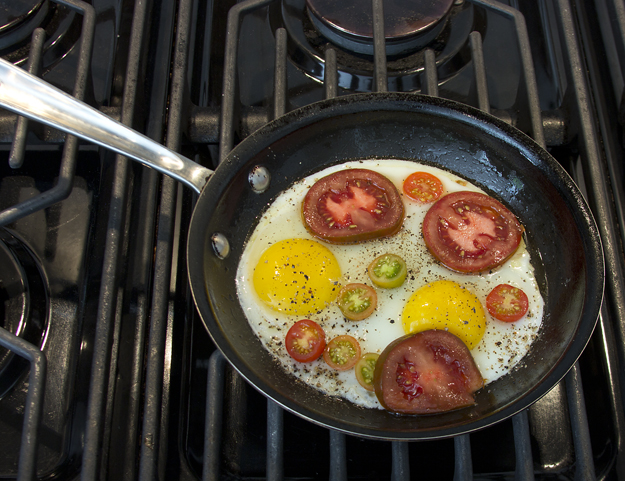
These are turkey burgers with nothing to apologize for. They are spiced with cumin and just a hint of chipotle chile powder. Lightly oiled and heavily salted just before they hit the grill, they are cooked through with just the perfect amount of char and crunch on the outside. Delicious as this burger is, it’s really all about the toppings here. I thinly sliced several onions and cooked them low and slow in a bit of olive oil, for almost 40 minutes until they were sweet and caramelized. A pinch of sugar helps the process. Patience please. Do not try to rush this process by turning up the heat. You will end up with burned onions.Some thickly sliced heirloom tomatoes, sour kosher dills and buttery avocado, sliced into wedges round out the toppings. I toasted a multi grain bun and spread it liberally with some chipotle mayo.   The cherry on top is a fried egg. It seems that fried eggs are showing up on top of everything these days. There’s a very good reason for the fried egg trend. It just tastes freaking amazing. The crispy edges and the runny yolk of a fried egg are really one of life’s simpler pleasures in our ever increasingly complex world.
The richness of the yolk is the ideal way to counteract the natural leanness of the turkey.From that very first bite when you chomp into the burger and the yolk dribbles down your chin and the side of the burger, happiness will ensue. The flavours and textures of this burger are something very special. The contrast of the cool crunchy sour dill with the warm tender egg will get your taste buds very excited for a second bite. Slow down and notice the sweet-acid zip of the tomato and the smooth buttery avocado. Take note the heat of the chipotle mayo, thickly slathered on the bun and the smoky accent of cumin in the burger. It all just works.
The fact that I have made these cookies four times in the past two weeks would lead you to the inescapable conclusion that I have a humungous sweet tooth and a total lack of willpower. And you would be correct! However, each time I made them I tweaked the recipe slightly until I came up with what I believe to be an outstanding cookie. So you could say that it was all in the name of research.
I made them exactly as the original recipe was written. I had seen these cookies on seriouseats.com, and was intrigued. They are essentially an oatmeal cookie but with some butterscotch chips mixed in. I baked the first batch but found them to be a bit too sweet and one-dimensional. So I baked a second batch and added some Skor bits to amplify the toffee flavour. They were good but not perfect. Something was missing. My daughter suggested I add dried cherries to the dough. Jackpot!
I love the way the Skor bits melt and ooze out of the cookie as they bake. There is a tiny bit of crunchy toffee on the edge of each cookie as they cool. The textural contrast between the crispy edges and the chewy center is what keeps you going back bite after bite. Tart dried cherries  temper the sweetness of the butterscotch and toffee. The occasional ping on your tongue, from the Fleur de sel crystals sprinkled on top keep everything in check. These are a perfectly balanced (albeit, not nutritionally balanced) cookie!Using an ice cream scoop to portion the cookies ensures that they will all be the same size and shape and bake evenly. I like the #24 size scoop (about 1.3 ounces). I was able to get 12 cookies on my baking pans (13 x 18 inches).  Pour a cold glass of milk and prepare to be enchanted. These are quite addictive. Click here to print recipe for Butterscotch Toffee Salty Oatmeal Cookies.
Savvy contemporary chefs have a secret ingredient in their cuinary tool box. If you remember this treat from your childhood, you might guess what this mystery ingredient is.Lik-m-aid, a sweet-sour treat was eaten by licking your finger, sticking it into the little envelope and coating your wet finger with the crystal-like powder inside. Then you would lick your finger to eat the tart-sweet goodness. It came in several fruit flavours; lemon, lime, strawberry, raspberry, grape and orange, but a quick look at the ingredient list (dextrose and citric acid) revealed that this treat contained no actual fruit. Today Lik-m-aid is sold under the name of Fun Dip and it comes with a candy dipping stick so modern kids do not have to use their fingers. I hope that kids today appreciate how good they have it. Chefs in the know are using citric acid to create pucker-inducing flavours that consumers are starting to embrace. Sour is no longer a four letter word.  Sour beers are gaining in popularity, and the pickling craze is not about to die down any time soon. I fully expect Carla Hall to introduce “Can you Pickle it?” based on her wildly amusing (well, amusing certainly to my sisters and I ) game, “Can you Blend it?”
Citric acid occurs naturally in lemons, limes and other citrus fruits. It is also manufactured in a dry powder form by adding a special mould to glucose and letting it ferment. The dry powdered stuff is the one that chefs are using to elevate flavours and bring harmony and balance to a finished dish. It is easily available in small bags at most bulk food or health food stores. Food writer Shawna Wagman calls it the “fairy dust of flavour amplification.”
Here in Ottawa, Chef Kevin Mathieson, founder of Art is In Bakery, is creating magic with it. He sprinkles a touch of citric acid and confectioners sugar on citrus peel or wild Quebec blueberries and lets it dry out for a week. Then he grinds it all up in a coffee grinder and adds it to jellies for filling house-made chocolate truffles and marmalade that gets thickly spread on their buttermilk multi-seed bread for Sunday brunch.
The Food Section of the April 9 2014 Globe and Mail featured a recipe for a Greek salad dressing using citric acid. Chef Carlotte Langley learned to make this from the  French-Lebanese mom of the very first chef she worked for. I decided to creat a Farro Greek Salad to showcase this fantastic dressing. Tart and full of bright zingy flavour it plays very well with the nutty, chewy farro and all the fresh crunchy vegetables.  I usually just cook farro in boiling water, but I learned a great method over at Food52. I added half a red onion, a clove of garlic, parsley and salt to the water to infuse the farro with more flavour. I am not a huge fan of raw red onion, so I thinly sliced and pickled it. A short 20 minute bath in red wine vinegar, water, salt and sugar are all that’s needed to tame the harshness.
Just did a quick check and discovered that coconut has been featured 15 times on my blog.  To  the coconut haters out there, “I’m sorry”, and to the rest of you lovely folks I say, “you’re welcome”.
When I saw this dish on serious eats last month I bookmarked it immediately. This recipe checked all the boxes for me; one pot complete dinner, flavourful moist chicken thighs, coconut milk and jasmine rice. Since we are trying to limit our intake of white carbs, white rice has been scarce around here lately. But every so often, I get a craving for Basmati or Jasmine rice. The nutty, popcorny aroma that envelopes my kitchen makes me believe that all is right with the world and that I am very loved.
Yasmin Fahr, creator of this recipe asked “Why I don’t cook everything in coconut milk is beyond me.” Well Yasmin, in answer to your question, I would bathe in coconut milk if I could, but if I cooked everything in it, I would surely weigh 200 pounds. The sweet luxurious coconut milk in this recipe  is saved from a cloying fate by the addition of cumin and a strong hint of cayenne. The finishing touches of lime and cilantro produces a dinner that packs a wallop of flavour.
You must exercise great patience when browning the chicken thighs. Put the pan on high, add the thighs, skin down and leave them alone for a good 8-10 minutes. The brown caramelized bits and pieces of chicken that get stuck to the pan, known in French as “fond” should not be thrown out.  The chicken stock and coconut milk  will help you to to scrape up all those flavourful dark bits. They will dissolve and become the foundation for the luxurious sauce that the chicken and rice are cooked in.
The original recipe called for adding snow peas during the last few minutes of cooking for some crunch and gorgeous colour. I went with a triple pea crunch and added snow peas, sugar snaps and some frozen green peas, because that’s how I was raised. I come from a home where more is better. When my mom made banana bread, if the recipe called for 3 bananas, my mom added 5.  It produced a loaf with the heft of a brick, but heck, that’s just  how mom rolled.Â
Upon waking each morning, I peek through the drapes to see if any buds have appeared on the  bare limbs of the Norway maple tree outside my bedroom window. Seeing none, I am overcome with the urge to burrow right back into my hole (or under my covers). Mother nature has a perverse sense of humour this year. This long cruel “polar vortex” winter seems to have segued into a particularly nasty spring.
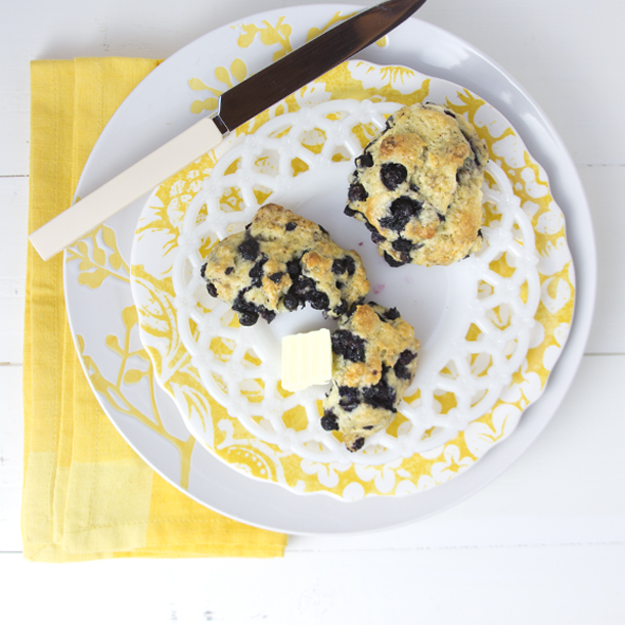
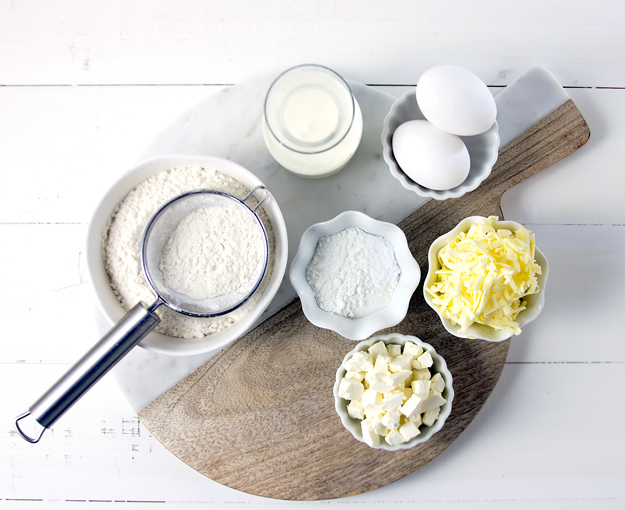
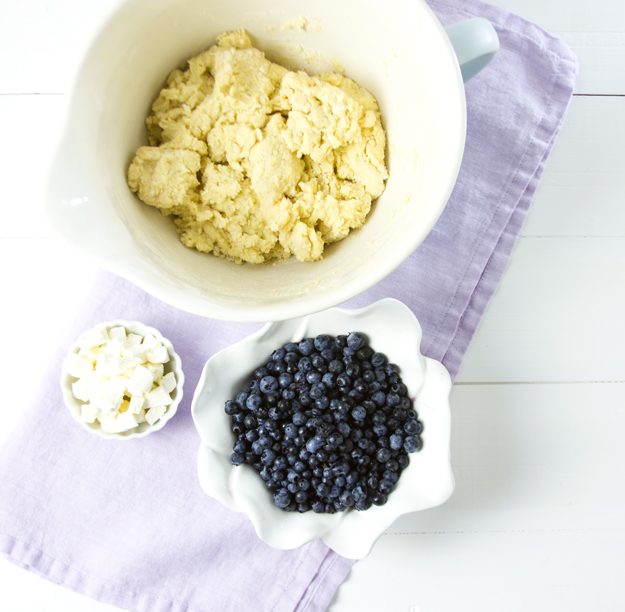
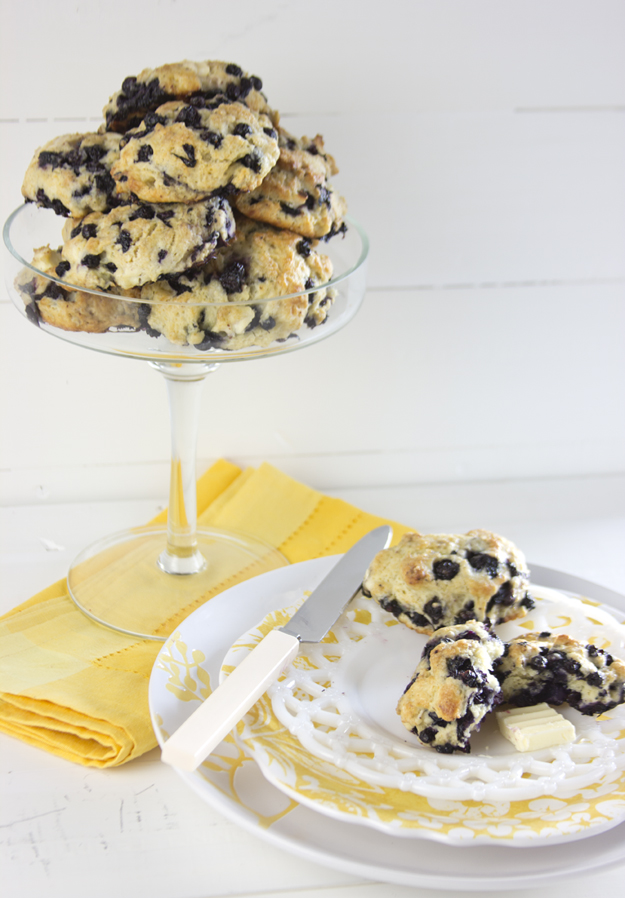
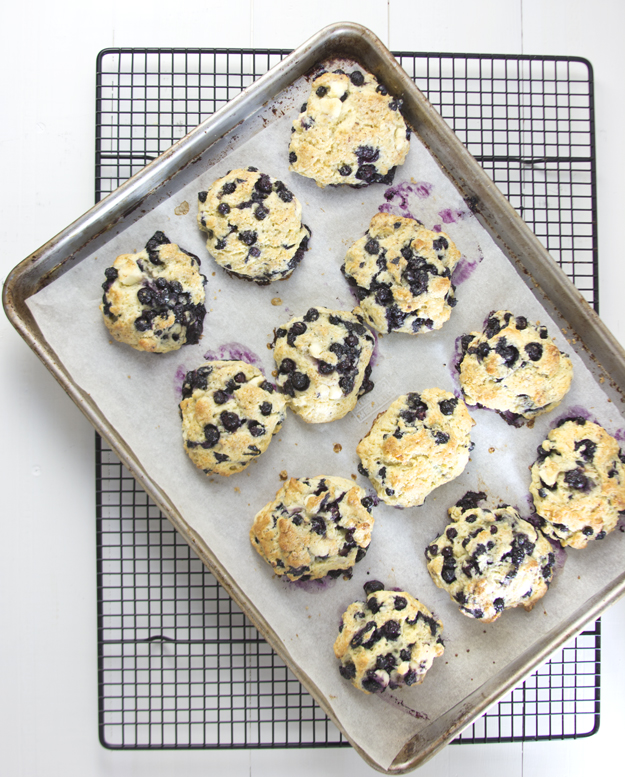
When I finally saw the first buds materialize, followed by a thatch of chives popping through through the earth, I knew that local rhubarb was not far behind. I’m not a rhubarb fanatic, but I do like to create with it at least once a year to celebrate the season. Last year it was this gorgeous tart. This year, I had had my heart set on rhubarb scones. I was inspired by Midge over at Food 52. When I told my husband about my plans, he frowned and grumbled, “What a way to ruin scones.” Clearly I am married to a Spring Grinch. Blueberry scones would make him purr, but those come in July. Get with the program honey.My favourite scone recipe is from the bibleBaking Illustrated, created by the same geniuses over at Cook’s Illustrated. These scones use heavy cream which contributes to a rich and tender crumb that  buttermilk or whole milk would never achieve. They are not overly sweet, just 3 tablespoons of sugar are called for in the recipe. Knowing that rhubarb is super tart, I decided to add an additional few tablespoons of sugar to macerate with the sliced rhubarb, before adding it to the dough. When I went to make them, I discovered that I didn’t have quite enough heavy cream. Feeling too lazy to run to the store, I topped up the measuring cup with a bit of coconut milk.  To ramp up the coconut flavour I added about 1/4 cup of unsweetened shredded coconut. The dough gets pressed into an 8 inch cake pan to give you a perfectly round circle for dividing into triangular scones. A bench scraper or sharp knife work well for cutting the scones.A final brush of heavy cream before they hit the oven gives the finished scones a lovely glossy surface. They were the height of scone perfection. Moist and flaky with a lightly crisped exterior. Even the Spring Grinch enjoyed one with butter and jam.
My baby will be turning 21 this week. I wanted to make him a very special cake, but he is not exactly co-operative that way. Every year he wants the exact same cake; chocolate cake with chocolate buttercream icing. For a food blogger that is quite sad. How am I supposed to have new things to blog about if he requests the same cake every year?
I was dying to create a rainbow cake like this one, or this stunning jellybean cake from one of my favourite bloggers, the amazingly talented Steph at raspberricupcakes. However, I knew that if I showed up without a chocolate cake, disapointment would surely ensue. Steph’s jellybean cake got me thinking and I decided to decorate the outside of the cake in Smarties. When my son was 2 years old, I was a bit concerned that he might be colour blind. Every time I quizzed him about the colour of something was he always answered green. He said it with a little glint in his eye and then laughed, so I just wasn’t sure. His dad is colour blind, so it was a distinct possibility.
I decided to test him. I bought a box of Smarties, put a pink one in my hand and dangled it in front of him. As he went to grab it i snatched my hand back and said, “Tell mommy what colour this is and you can have it.” “Pink” he squealed. He named every colour in the box correctly. Turns out he just liked to play mind games with his mom. So in honour of his 21st birthday I made him this cake.The cake and icing are simple to make. This is a quick chocolate cake recipe (adapted from Noreen Gilletz’s chocolate cake recipe in Pleasures of Your Food Processor) that comes together in minutes in the food processor. Vegetable oil in the batter makes it super moist. I add about a 1/4 cup of espresso to the milk because coffee and chocolate are a supreme combo. The icing is a simple buttercream made with cocoa powder, butter, icing sugar, a bit of espresso and a hit of vanilla extract. I just discovered Cacao Barry’s extra brut cocoa powder and it is deep, dark and intensely chocolatey. The vanilla extract in the photo below is homemade by my neighbour Holly. She made it using Madagascar vanilla beans steeped in bourbon. Who knew you could do that?
The most time consuming part of making this cake was sorting the Smarties by colour (I used 6 200 gram bags) and getting them on the cake in nice straight (well almost straight) lines. It’s times like this that I really miss my sister Jody and wish we still lived in the same city. Her rows would have been perfect!
I made a double recipe of the cake (each recipe makes 2 layers), and used 3 layers, since this was the perfect height to get one row of each colour of the rainbow. I froze the extra 4th layer. I also made a double recipe of the icing. The flags, stick on letters and straws were from Michaels.
Jamie was thrilled with the cake, so thrilled that he asked if I would make another one exactly like it, for when his friends come over this weekend. I told him I’d think about it!
These are my absolute favourite macaroons. That’s macaroon, with 2 o’s – the coconut variety, not the pain-in-the-ass Diva, ground almond and meringue variety, which are macarons, with one o. This recipe for Triple Coconut Macaroons, comes from Cook’s Illustrated Magazine. I have been making these since the recipe first came out in 2000. Why I have waited so long to share with you is a mystery to me. I promise you, I’m reallly not a petty person.
Although I could make them any time of year, I always associate coconut macaroons with Passover. As a child we bought our macaroons from Open Window Bakery in Toronto. They made both vanilla and chocolate coconut macaroons. I preferred the simplicity of the vanilla ones. I found the chocolate ones too chocolatey for me. The cocoa powder masked the flavour of the coconut, which is exactly the point of coconut macaroons. I always felt sorry for those families that had to get their macaroon fix from the can. They were gummy and chewy, in short, just awful. The quintessential coconut macaroon is slightly crunchy on the outside and chewy in the middle, without being gluey. They should be sweet, but not cloyingly so, and they should be bursting with shreds of sweetened coconut. A final dip in a melted chocolate bath, to cover the lower third of the macaroon would not be a bad thing. Cook’s Illustrated’s test kitchen discovered that the choice of coconut in the macaroon makes a big difference in both taste and texture. Unsweetened shredded coconut, which is drier than sweetened, solved the gluey texture issue. Â Sweetened shredded coconut packed more flavor than unsweetened, and together they worked very well. To add one more layer of coconut flavor, they tried cream of coconut and cracked the coconut macaroon code.
Cream of coconut, is not to be confused with coconut cream or coconut milk. Here is a little coconut product primer: Coconut cream is very similar to coconut milk but contains less water. Coconut cream is made by simmering equal parts of shredded coconut and water until frothy,  then straining the mixture through a cheesecloth, squeezing out as much liquid as possible; this is coconut milk. The coconut milk is refrigerated and allowed to set. Coconut cream is the thick non-liquid part that separates and rises to the top of the coconut milk.
Cream of coconut is coconut cream that has been sweetened. It is used most commonly in piña coladas. This is the one you want for this recipe. I usually find it in Asian supermarkets, although some larger stores carry it in the drinks aisle.
Creamed coconut is a compressed block of coconut flesh which has been slightly dehydrated and sold in a waxy lump.
Lately, there has been much written about the evils of high fructose corn syrup. This is not the same as the regular corn syrup you buy for baking. If you are at all concerned and want to know more about the science behind it, this article clears up the confusion.
The canned cream of coconut has liquid at the bottom, so it is best to empty it out into a bowl and mix it up with a spoon before measuring and adding to the batter. The batter should be chilled for about 15 minutes before shaping macaroons. here is a video demonstrating how to shape them.
The chocolate should be chopped fairly fine. I melt about 3/4 of it in the microwave on medium power. When it is totally melted, stir in the remaining 1/4 of chocolate. This is a quick and dirty tempering method but it works quite well. I like to dip the bottom third of the cookies in chocolate.
1/2teaspoonDiamond Crystal Kosher salt, or 1/4 teaspoon Morton's Kosher salt
227gramsunsweetened desiccated coconut,
227gramssweetened shredded coconut
283gramsbittersweet or milk chocolate, chopped
Instructions
Adjust oven racks to upper-middle and lower-middle positions and heat oven to 350°F. Line two cookie sheets with parchment paper.
Whisk together cream of coconut, corn syrup, egg whites, vanilla, and salt in small bowl; set aside. Combine unsweetened and sweetened coconuts in large bowl; toss together, breaking up clumps with fingertips. Pour liquid ingredients into coconut and mix with rubber spatula until evenly moistened. Chill dough for 15 minutes.
Scoop dough using a one ounce (2 tablespoon) size cookie scoop, spacing them about 1 inch apart on parchment lined baking sheet. Form cookies into loose haystacks with fingertips, moistening hands with water as necessary to prevent sticking. Bake until light golden brown, about 18-20 minutes, turning cookie sheets from front to back and switching from top to bottom racks halfway.
Cool cookies on cookie sheets, set over wire cooling racks.
Line two cookie sheets with parchment paper. Melt about 3/4 of the chocolate (212 grams) in small heatproof bowl set over pan of almost-simmering water, stirring once or twice, until smooth. (To melt chocolate in microwave, heat at 50 percent power for 2 minutes and stir. If chocolate is not yet entirely melted, heat an additional 30 seconds at 50 percent power.) Remove from heat; stir in remaining 1/4 of the chocolate (71 grams) until smooth. Holding macaroon by pointed top, dip bottom and ½ inch up sides of each cookie in chocolate, scrape off excess with finger, and place on cookie sheet. Refrigerate until chocolate sets, about 15 minutes.
I very rarely cry, so when I found myself sobbing, twice in a span of less than a month, I had to take a step back and examine what exactly was going on here.
The first time I cried, I was halfway through the book  “The Fault in Our Stars” by John Green.  I noticed a slow tricking of tears sliding down my cheeks. Within an hour, there was full on gushing. No question about it, I was sobbing. I went through a full box of Kleenex. For those not familiar with this book, I don’t want to give too much away in case you plan to read it. Let me just say that it is raw, genuine, alternately sad and funny and honestly all-out poignantly heartbreaking.
The book falls under the category of “YA (young adult) Literature.” At their core, YA books are for and about teenagers and pre-teens, usually between 12 and 18 years old. Full disclosure here, I am not in that age category. I will, however, admit that I am a sucker for this genre of writing. I have read the Harry Potter series (All seven books. TWICE!), the Twilight series (Team Jacob all the way!), and the Hunger Games series. The thing about these books is that good writing is good writing. If the characters are believable and the plot is compelling, its appeal will span a wide age range.
The second incidence of tears occurred this week, as I was binge watching “The Big C”, late at night when sleep eluded me. It was during the third episode of season 4 when again I noticed the quiet dribble of tears making their way, ever so slowly, down my cheeks. The main character, Cathy (brilliantly played by Laura Linney) has terminal melanoma. To ease the burden for her husband and son, she selflessly checks herself into a hospice to die. Her 17 year old son feels totally helpless and wants to do something for his mom. He sneaks into the hospice at 5:00 am and while his mom is deep in a morphine-drip induced slumber, he covers the ceiling above her bed in a huge collage of family pictures. When she wakes up and sees what he has done, it is all I can do to hold it together.
If my children are reading this, Â you now know what to do with those thousands of pictures I tortured you by taking as you were growing up.
As I thought about my tears, specifically how they began as a leisurely crawl and progressed to a full on waterfall, I couldn’t help but make the maple syrup analogy. (Even in my deepest sorrow, food is not far from my thoughts. I must have a well developed right cerebral cortex!) When maple trees are tapped for their sap, the initial flow is just a mere dribble. As the weather warms up, the flow increases.
Our friend, Harold, who lives close to our cottage has a sugar bush. Every spring he gives us a 2 litre jug of maple syrup. Last summer I baked some raspberry tarts for him. He asked me if I had ever made maple tarts. He said they are just like butter tarts, but instead of corn syrup to sweeten them, you use maple syrup.
Butter tarts are the quintessential Canadian treat. Sadly, my experience with butter tarts does not come from a tattered recipe handed down from generation to generation. For me, butter tarts will always be associated with the summers I worked as a counsellor at an overnight camp. On our day off, my friends and I would hitch hike from camp into the nearby town of Haliburton Ontario. When I think about some of the rides we accepted, climbing into the back of pick up trucks with strange men, I shudder. But, in our defence, we were young and the part of our brain that deals in common sense was not yet fully formed.
When we arrived in town our first stop was the laundromat. Then, while our clothes were spinning, we shopped at Foodland, for a picnic lunch and treats to keep us fed until our next day off, as camp food was less than stellar. We would park ourselves on the beach by the lake and eat our feast. We always finished with a huge box of butter tarts. They were tooth achingly sweet but we craved that sugar rush. The main source of sugar came from high fructose corn syrup. We had no idea what an evil thing it was in those days.
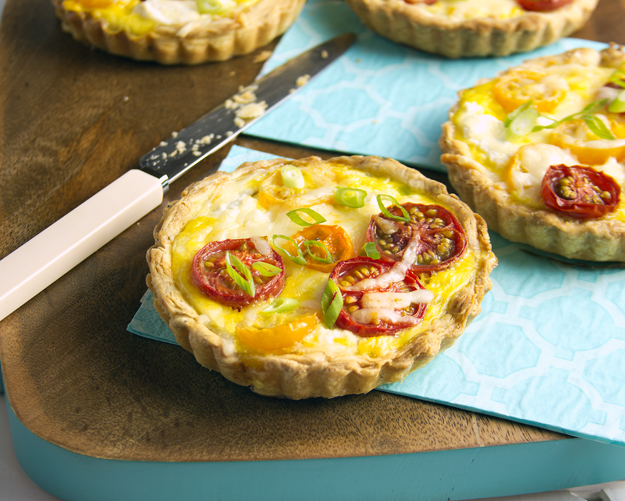
So when Harold told me that you could substitute maple syrup for the corn syrup, I felt my insides do a little flip! Could it possibly be true? He brought me a recipe and I tucked it away, vowing to try them as soon as the sap began running again in the spring. It just seemed wrong to make maple tarts in the summer. Well, I am thrilled to report to you that, yes, maple tarts are real, and they’re spectacular!I fiddled a little bit with Harold’s recipe and added some whole-wheat flour. I like the earthy depth of flavour that it contributes. I also browned the butter in the filling. Browned butter has an intense aroma and nutty flavour that really complements the maple syrup in the filling. These tarts are undeniably sweet, but the flavour profile is layered, with the molasses in the brown sugar contributing an assertive acidic sweetness, while the maple syrup adds a deep, caramelized toasty sweetness. There is a touch of cider vinegar and salt in the filling, to help balance all the sweetness. The dough comes together fairly quickly. No food processor is needed. I used Michael Smith’s dough recipe. His method involves grating frozen butter into the flour and then using your hands to gently knead it.Â
I added toasted chopped pecans and raisins to mine, but feel free to leave them out if you like.When you brown the butter for the filling, stay by the stove and watch closely. It can turn from brown to black in the blink of an eye. Transfer it to a measuring cup when it reaches the perfect shade of brown. This will stop the cooking process instantly. It will smell nutty and toasty. Resist the urge to sample as soon as they come out of the oven. Let them cool completely before you try to remove them from the muffin pan.