Tag Archives: Dukkah

Dukkah Crusted Salmon

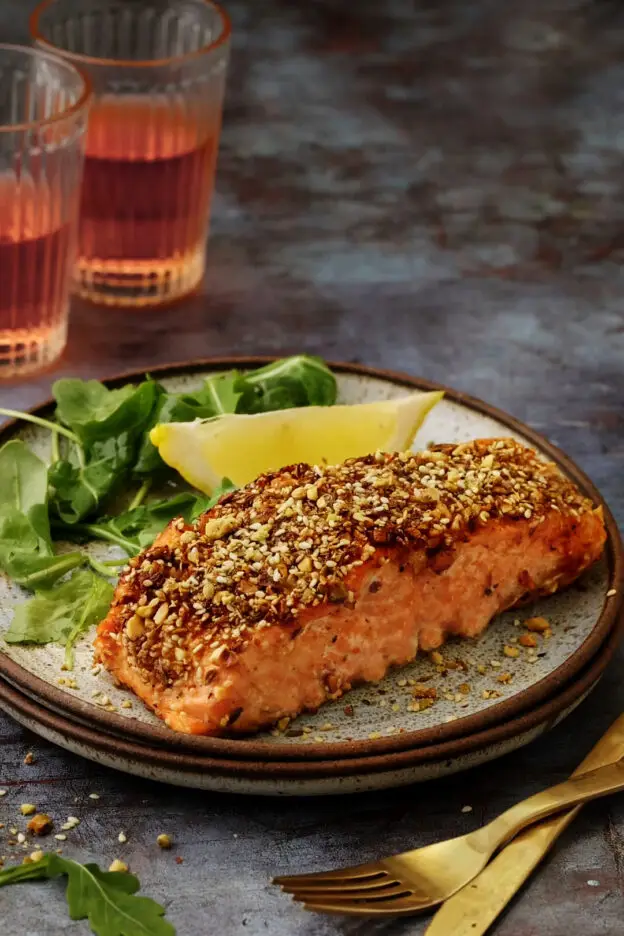
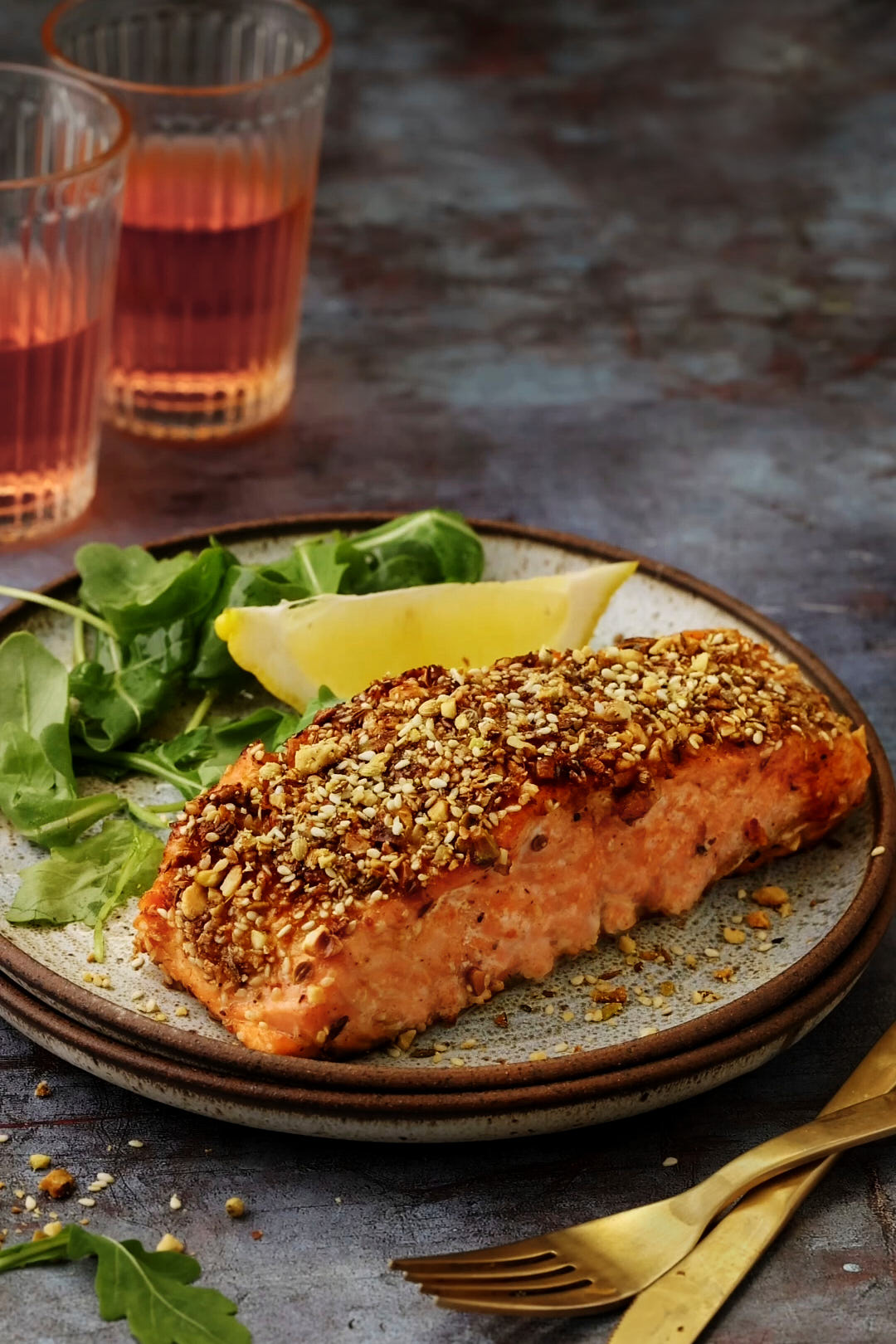
Some dinners look fancy but take almost no effort at all. This is one of them. When you have a bag of dukkah in the freezer, dinner gets wonderfully simple — a no-thinking-required kind of meal. A spoonful of this toasty nut-and-seed blend gives salmon the most irresistible golden crust: nutty, crunchy, and full of warm spice.
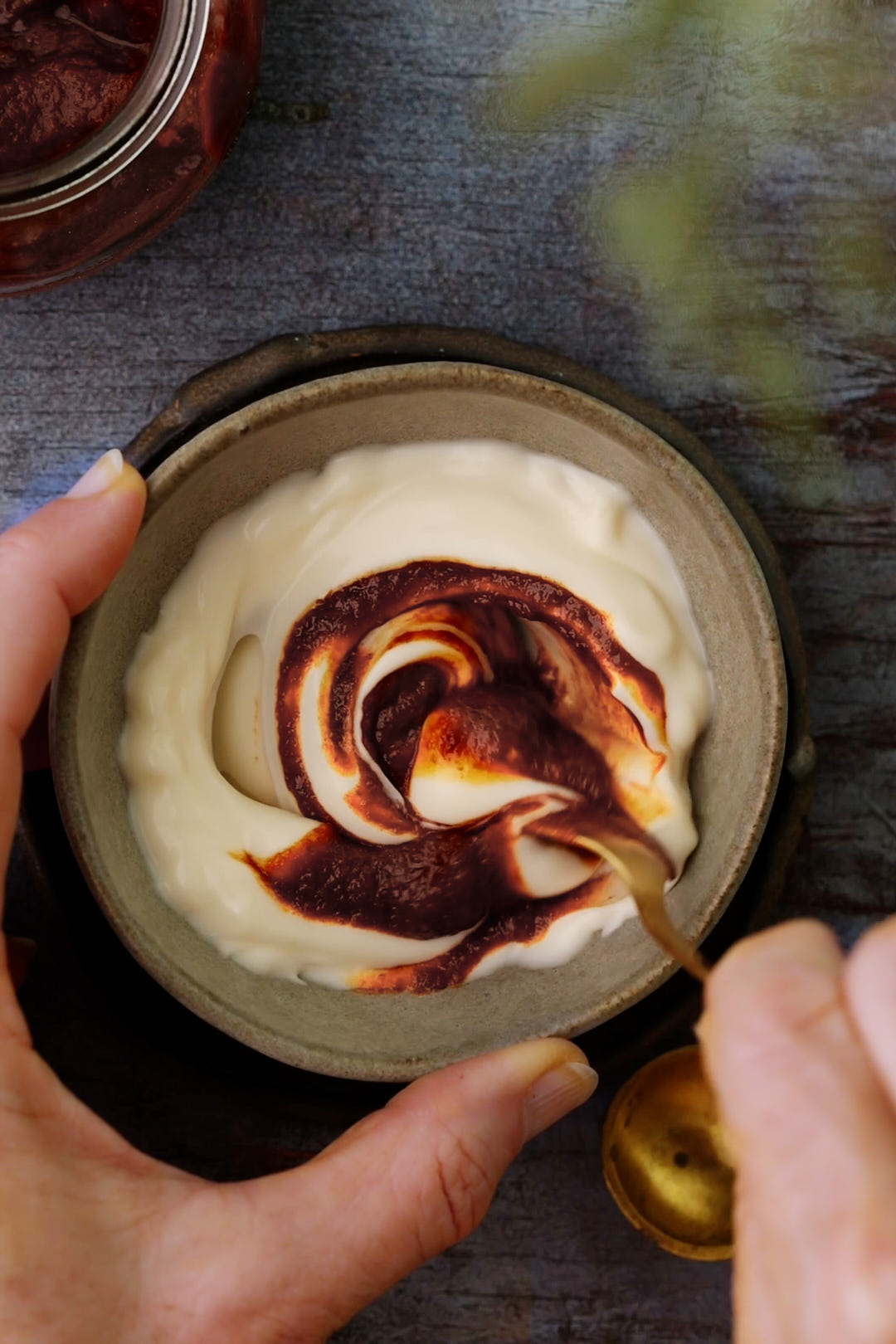
Spread a little harissa-mayo over the salmon, press on the dukkah, and let the pan do the rest. The bottom crisps, the top stays tender, and you end up with a weeknight dinner that feels restaurant-worthy with hardly any work at all.

This recipe is Part 3 of my Dukkah series, where I’m exploring all the delicious ways to use this Egyptian blend of toasted nuts, seeds, and spices. If you missed the base recipe, start with How to Make Dukkah. You’ll want a batch in your freezer at all times.

Watch me make it. If you’re a big fan of ASMR videos, this one will make you happy!

Keys to Success in making Dukkah Crusted Salmon

  • A blazing-hot pan. Cast iron is ideal here, but non-stick will also work. Heat it until it’s blazing hot before adding oil — that’s how you get the crunchy, caramelized crust without overcooking the fish.
  • Don’t skip the harissa mayo. It’s the “glue” that makes the dukkah cling to the salmon and also adds a gentle heat and richness. The crust won’t stick the same way without it.
  • Use room temperature dukkah. If your dukkah has been in the freezer, let it warm up for 2–3 minutes on the counter so it doesn’t steam and soften in the pan. Freshly toasted flavours also bloom beautifully in the heat.
  • Finish in the oven. Stovetop heat gives you the crust, oven heat cooks the salmon gently to the perfect doneness. The two-step method makes all the difference.

Serving Suggestions

Serve with simply dressed greens (I love lightly oiled arugula), steamed rice, or roasted asparagus. A squeeze of lemon over the top brightens everything and cuts through the richness of the crust.
This dukkah-crusted salmon is the kind of weeknight dinner that tastes far more impressive than the effort it requires. A swipe of harissa-mayo helps the dukkah cling to the fish, creating a nutty, golden crust that stays crisp while the salmon stays tender. With dukkah in the freezer, this comes together in minutes.

Dukkah Crusted Salmon

Servings 4 servings
Calories 347 kcal

Ingredients
  

  • 600 grams Atlantic salmon, 4 fillets (about 150 grams each)
  • 1 teaspoon Diamond Crystal Kosher salt, or 1/2 teaspoon Morton’s Kosher salt
  • 1/4 teaspoon black pepper
  • 2 Tablespoons mayonnaise,  (regular or light; avoid fat-free)
  • 1 Tablespoon tablespoon harissa paste, (I love NY Shuk Signature Harissa Paste)
  • 1/2 cup Dukkah
  • 2 Tablespoons olive oil

Instructions
 

  • Preheat the oven to 350°F. Pat the salmon dry and season with salt and pepper. In a small bowl, mix together the mayonnaise and harissa paste. Brush the top of each fillet with a thin layer of the harissa-mayo. Sprinkle 2 tablespoons of dukkah over each fillet, pressing gently so it adheres.
  • Sear the salmon. Heat a 12-inch cast iron or non-stick skillet over medium-high heat. Add the olive oil. When the oil is hot and shimmering, place the salmon fillets dukkah-side down into the skillet. Reduce heat to medium. Sear for about 2 minutes, until the crust is golden brown.
  • Finish in the oven. Flip the fillets, transfer the skillet to the oven, and bake for 10–12 minutes, or until the salmon reaches an internal temperature of 130°F for rare or 140° F for medium.
  • Serve. Remove from oven and serve immediately

Notes

This dukkah-crusted salmon is the kind of weeknight dinner that tastes far more impressive than the effort it requires. A swipe of harissa-mayo helps the dukkah cling to the fish, creating a nutty, golden crust that stays crisp while the salmon stays tender. With dukkah in the freezer, this comes together in minutes.

Nutrition

Calories: 347kcalCarbohydrates: 4gProtein: 31gFat: 18gSaturated Fat: 3gPolyunsaturated Fat: 7gMonounsaturated Fat: 11gTrans Fat: 0.01gCholesterol: 84mgSodium: 823mgPotassium: 815mgFiber: 0.1gSugar: 1gVitamin A: 104IUVitamin C: 1mgCalcium: 20mgIron: 2mg
Tried this recipe?Let us know how it was!

More Ways to Use Dukkah

Continue the series here: 

Part 1: How to Make Dukkah

Part 2: Dukkah Fried Eggs

Part 4: Pita with Olive Oil and Dukkah – recipe coming soon.

Dukkah Fried Eggs

Dukkah Fried Eggs

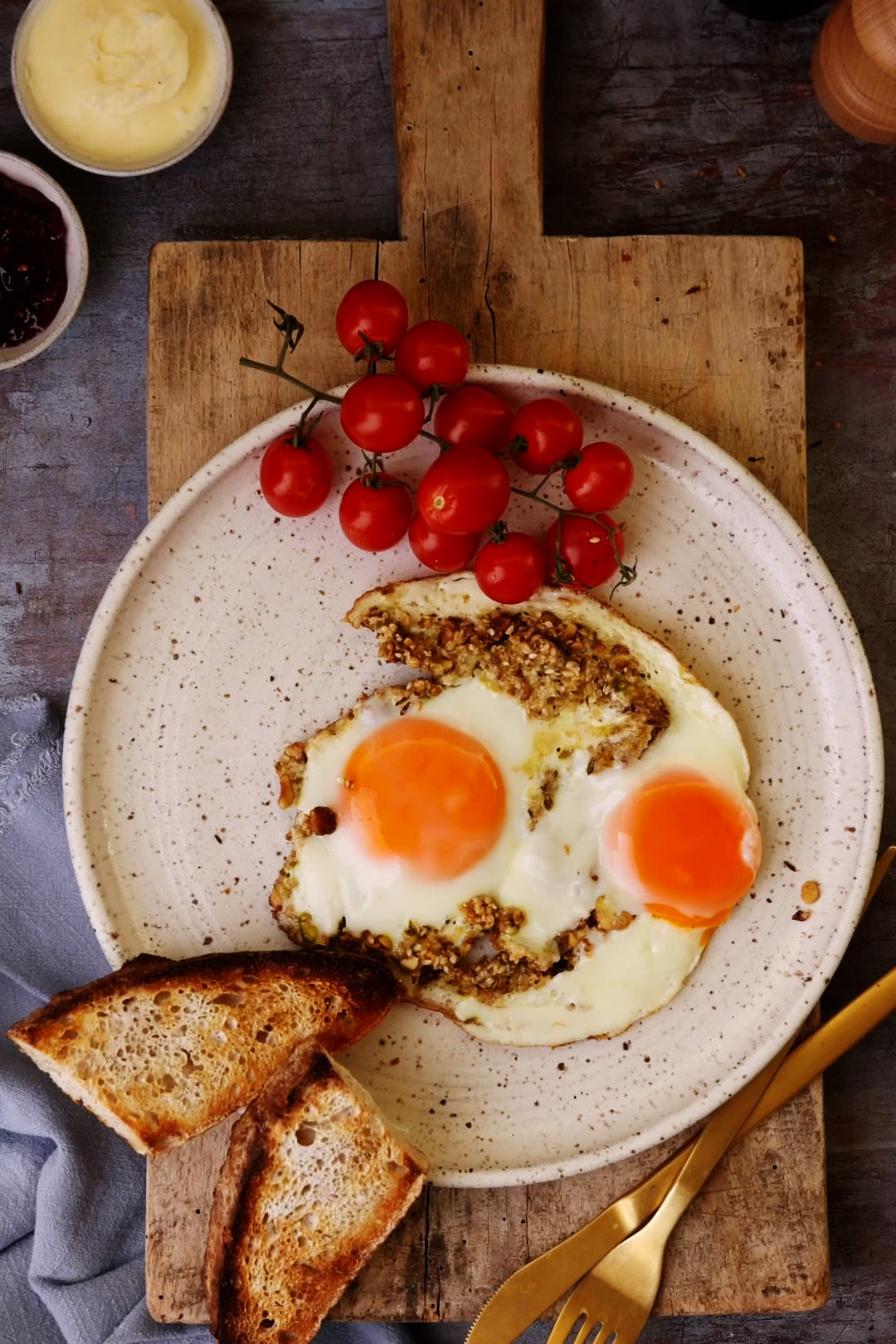
Fried eggs cooked on a bed of buttery dukkah — nutty, crunchy, and just a little spicy. Breakfast doesn’t get simpler or more satisfying.

Some mornings call for a breakfast that feels just a little special. Enter Dukkah fried Eggs. Nothing fancy—just eggs, butter, and a generous sprinkle of dukkah. As the butter melts, the seeds start to sizzle, releasing that toasty, nutty aroma that makes the whole kitchen smell alive. Crack in a couple of eggs, cover the pan, and a minute later you’ve got crisp edges, golden yolks, and a layer of warm spice underneath. It’s the kind of simple magic that makes you fall in love with breakfast again.

This recipe is Part 2 of my Dukkah series where I’m showcasing different ways to use this Egyptian blend of toasted nuts, seeds, and spices. If you missed Part 1, check it out. How to Make Dukkah— the base recipe that transforms everything from eggs to salmon to warm pita.

Watch the magic. ASMR lovers, this one’s for you: butter hitting the pan, dukkah sizzling, yolks wobbling like liquid gold. It’s breakfast at its most satisfying. 

Dukkah Fried Eggs

Dukkah Fried Eggs

Servings 1 serving

Equipment

  • 1 8 or 10 inch cast iron or non stick slillet with lid

Ingredients
  

  • 2 teaspoons unsalted butter
  • 2 Tablespoons dukkah
  • 2 large eggs
  • 1 slice sourdough toast

Instructions
 

  • Melt the butter: Place an 8- or 10-inch skillet over medium heat. Add the butter and let it melt.
  • Toast the dukkah: Spoon the dukkah into the melted butter and spread it evenly across the pan. Let it sizzle for about 20–30 seconds to lightly toast the spices.
  • Add the eggs: Crack the eggs directly over the dukkah. Season with a pinch of salt and pepper.
  • Cover and cook: Turn the heat down to low, cover the skillet, and cook for 1–2 minutes, until the whites are just set but the yolks are still jammy.
  • Serve: Slide the eggs onto a plate and serve immediately with sourdough toast for dipping.

Notes

  • Lightly toasting the dukkah in butter intensifies its nutty aroma.
  • Cooking the eggs over low heat with a lid creates steam which helps the whites set gently while keeping the yolks perfectly runny. 

Tried this recipe?Let us know how it was!

Keys to Success when making Dukkah Fried Eggs

  • Toast the Dukkah Gently: When the butter foams, add the dukkah and let it sizzle for 20–30 seconds before cracking in the eggs. This wakes up the spices and deepens the nutty flavour.
  • Cover the Pan: A lid traps steam, helping the whites set while keeping the yolks perfectly jammy. You’ll know it’s ready when the whites are opaque and the yolks still shimmer.
  • Use Butter: Oil works in a pinch, but butter gives the dukkah a rich base to bloom in — and that browned, nutty aroma makes the whole dish sing.
  • Serve It Simply: Slide the eggs onto a piece of toasted sourdough and break the yolks so they run into the dukkah and butter. Each bite is crunchy, creamy, and just a little spicy. It’s the kind of breakfast that feels indulgent but takes less than five minutes to make. 

If you’re loving these flavours, explore the rest of the series: 

Part 1: How to Make Dukkah

Part 3: Dukkah-Crusted Salmon

Part 4: Pita with Olive Oil and Dukkah – recipe coming soon

Dukkah might have Egyptian roots, but it feels right at home on a North American breakfast plate. Once you try eggs this way, it’s hard to go back — the buttery crunch and warm spice turn an everyday breakfast into something quietly extraordinary.

Dukkah…the sprinkles of the savoury world

There’s something quietly magical about dukkah. It’s a humble Egyptian blend whose name means “to crush”—and that’s exactly what happens: nuts, seeds, and spices gently pounded together until they form a coarse, toasty mix that tastes like sunshine and warmth. A spoonful adds texture and sparkle to the simplest foods. I like to think of dukkah as the sprinkles of the savoury world—crunchy, nutty, aromatic, and capable of making even a fried egg feel like something special.

I keep a bag of it in my freezer so it’s always within reach. A sprinkle here, a crust there—it’s the kind of seasoning that turns “whatever’s for dinner” into something worth remembering.

How to make Dukkah

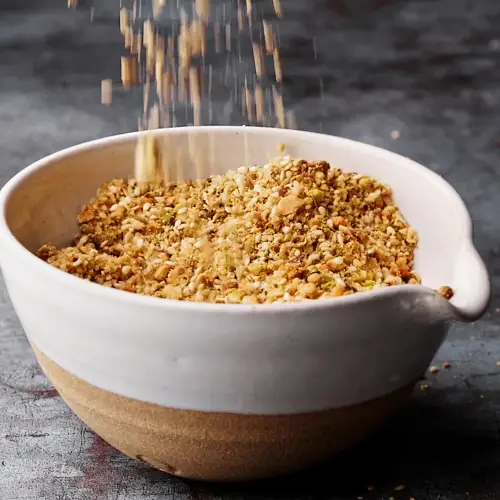
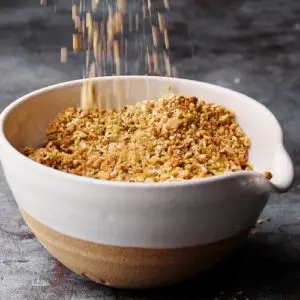
The process is simple but deeply satisfying: toast the nuts until fragrant, the sesame seeds until golden, and the spices until they pop. When you pulse everything together, the aroma that rises is intoxicating—nutty, citrusy from the coriander, and just a little earthy from the cumin. The key is to crush, not grind; you want texture, not powder.

Once mixed, it keeps beautifully in the freezer for months—ready to sprinkle, coat, or dip whenever the urge strikes.

Dukkah

Dukkah means “to crush” in Arabic — fitting for this Egyptian blend of toasted nuts, seeds, and spices that’s as versatile as it is addictive.
Servings 2 cups
Calories 828 kcal

Equipment

  • food processor

Ingredients
  

  • 1/2 cup hazelnuts
  • 1/2 cup shelled pistachios
  • 1 cup sesame seeds
  • 2 Tablespoons coriander seeds
  • 2 Tablespoons cumin seeds
  • 1 teaspoon Diamond Crystal Kosher salt, or 1/2 teaspoon Mortonsws Kosher salt

Instructions
 

  • Toast the hazelnuts: Preheat the oven to 350°F. Spread hazelnuts on a baking sheet and toast for about 5 minutes, until fragrant. Transfer to a container with a tight-fitting lid (like Tupperware), seal, and shake vigorously to loosen the skins. Remove and discard skins; set nuts aside to cool.
  • Toast the pistachios: Place pistachios on the same baking sheet and toast for about 5 minutes, just until lightly golden and aromatic. Set aside to cool.
  • Toast the seeds: In a dry skillet over medium heat, toast the sesame seeds until light golden brown, stirring often. Transfer immediately to a bowl so they don’t continue to brown. In the same skillet, toast the coriander and cumin seeds, shaking the pan occasionally, until fragrant and the seeds begin to pop.
  • Grind and mix: Transfer the coriander and cumin to a food processor and pulse until finely ground. Pour into the bowl with sesame seeds. Add cooled hazelnuts and pistachios to the processor and pulse until the mixture resembles coarse breadcrumbs — you want texture, not nut butter. Add the nut mixture to the bowl with the ground spices, sprinkle in the salt, and stir well to combine.
  • Store: Transfer to an airtight container or zip-top bag and store in the freezer. Keeps well for several months.

Notes

  • Shaking the hazelnuts in a sealed container is cleaner and easier than rubbing them in a towel.
  • Hazelnuts are often sold already skinned, which makes the first step even easier — just toast them lightly before proceeding.
  • Freezing keeps the nuts fresh and the flavours bright.

Nutrition

Calories: 828kcalCarbohydrates: 36gProtein: 26gFat: 72gSaturated Fat: 8gPolyunsaturated Fat: 23gMonounsaturated Fat: 37gSodium: 1183mgPotassium: 1041mgFiber: 18gSugar: 4gVitamin A: 217IUVitamin C: 5mgCalcium: 890mgIron: 18mg
Tried this recipe?Let us know how it was!

Keys to Success when making Dukkah

  • Toast, don’t burn. Keep the heat moderate and your eyes on the pan. Nuts and seeds go from perfectly golden to singed in seconds. Stir often and trust your nose—when it smells irresistible, it’s done.
  • Let everything cool before grinding. Warm nuts release oil too quickly, which can turn your dukkah clumpy. A few minutes on a plate to cool will keep the texture light and crumbly.
  • Pulse, don’t puree. Use the food processor in short bursts. You want texture, not paste. If it looks a little rustic, you’ve done it right.
  • Mix and match. Dukkah welcomes improvisation. Try hazelnuts for richness, pistachios for colour, or almonds for a toasty crunch. Add fennel or a pinch of chilli if the mood strikes.
  • Store it smart. Because nuts can go rancid, I keep my dukkah in a resealable bag in the freezer. It stays fresh for months and is ready to sprinkle straight from frozen—no thawing required.


How to Use Dukkah

Once you have a jar of dukkah on hand, you’ll find yourself reaching for it constantly. Here are three of my favourite ways to let it shine:

  • Part 2. Dukkah Fried Eggs
  • Butter, crunch, and liquid-gold yolks.
  • A spoonful of dukkah in sizzling butter forms a fragrant bed for eggs to fry on—every bite is nutty, crisp, and softly spiced.
  •  Part 3. Dukkah-Crusted Salmon
  • Crispy crust, tender inside.
  • Dukkah mixed with a little harissa-mayo makes the perfect coating for salmon—golden, flavourful, and weeknight-easy.
  • Part 4. Pita with Olive Oil and Dukkah
  • The simplest appetizer that never gets old.
  • Dip warm pita into good olive oil, then into a bowl of dukkah for a snack that’s equal parts rustic and irresistible.
  • Recipe coming soon.


From its humble Egyptian roots to your kitchen counter, dukkah proves that a handful of toasted nuts and seeds can do extraordinary things. Once you’ve made a batch, you’ll start to see every meal as a canvas for that irresistible crunch—the sprinkles of the savoury world.

Labneh with Dukkah Topping

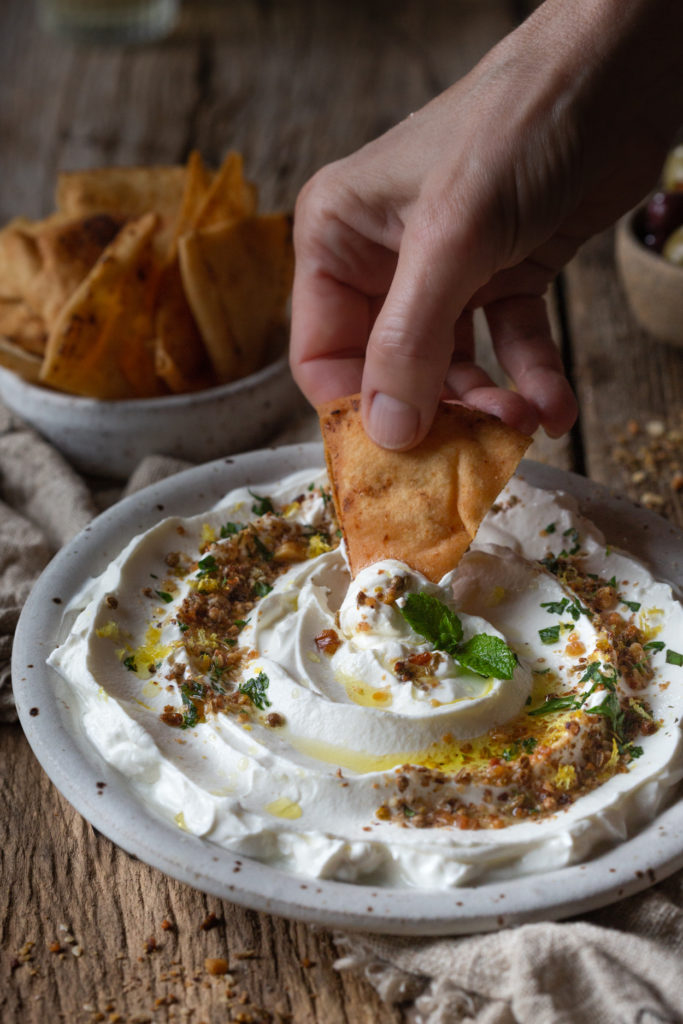
Move over hummus, there’s a new dip in town. Bold statement, I know, but hear me out. Labneh is essentially yogurt strained past the point of even Greek yogurt, until it is ultra-thick. Middle Eastern in origin, it is often referred to as yogurt cheese. Lush and creamy, the texture is somewhere between cream cheese and fresh chevre.

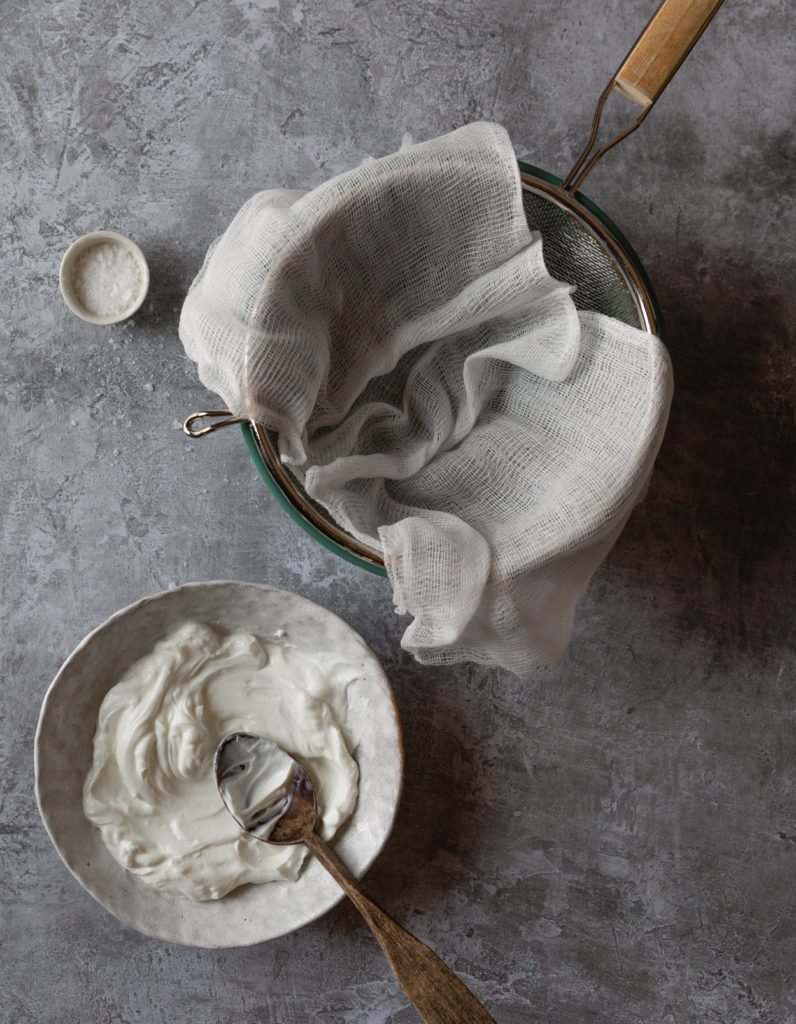
If there is a Middle Eastern store in your area, you can probably buy labneh. If not, it’s easy to make your own. Mix whole milk (5%) plain yogurt (not Greek) with some salt, and strain it in cheesecloth for 24-48 hours.

Labneh is so versatile. You can spread it on toast, drizzle with honey and toasted hazelnuts and have it for breakfast. It’s a great substitute for mayo as a sandwich spread. Check out these other delicious creative ideas to use labneh.

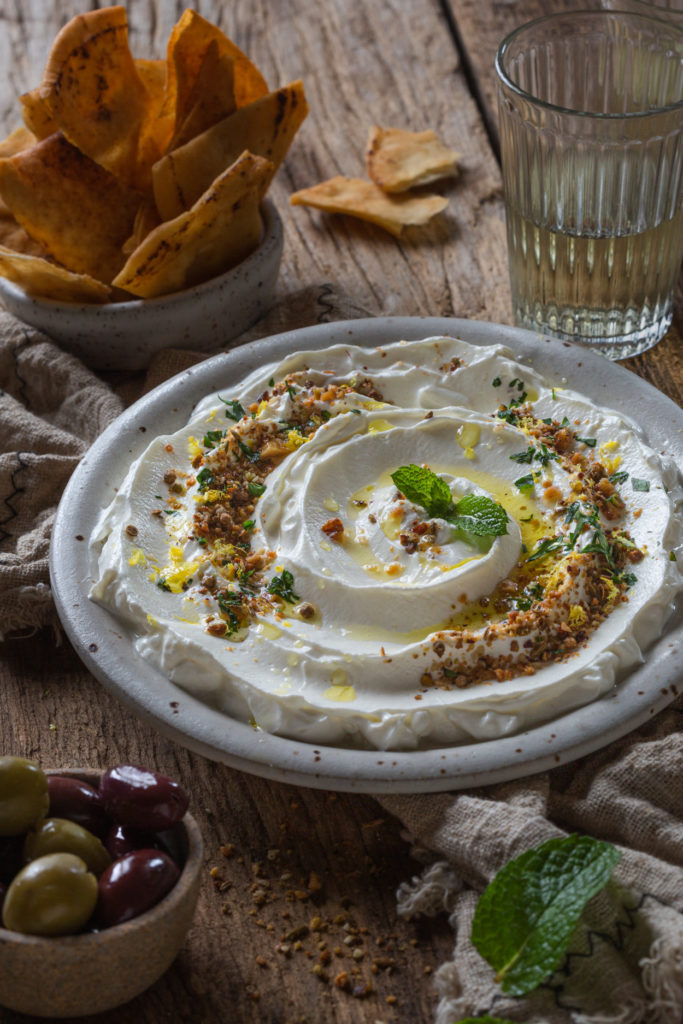
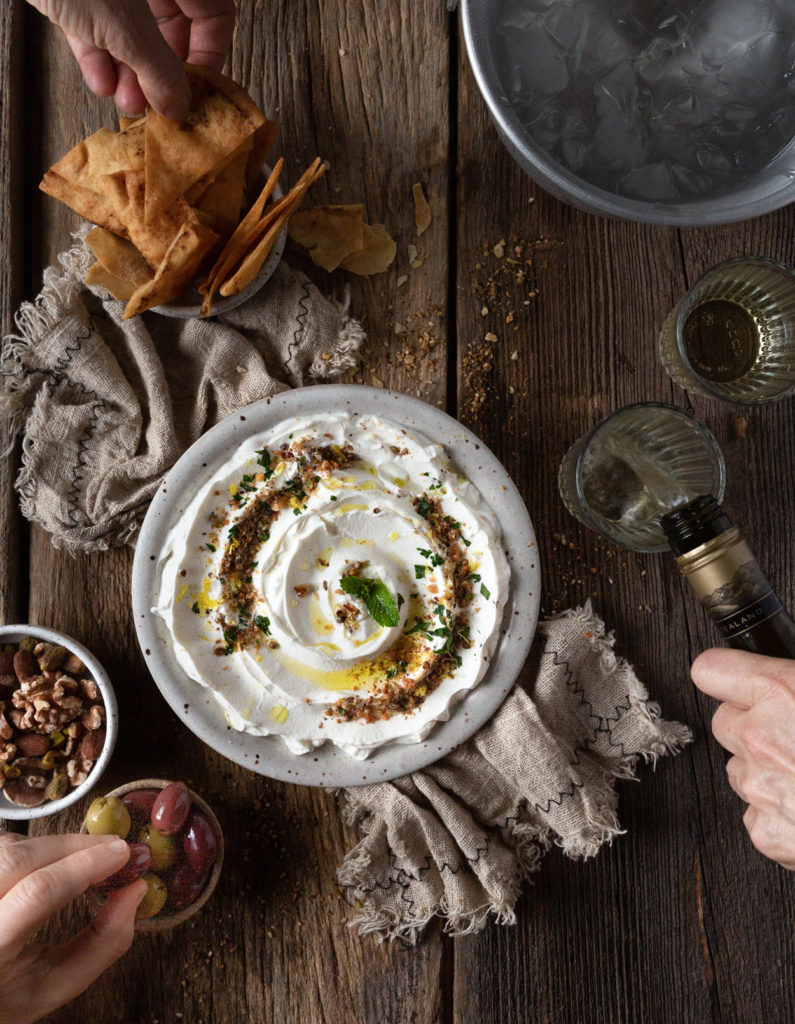
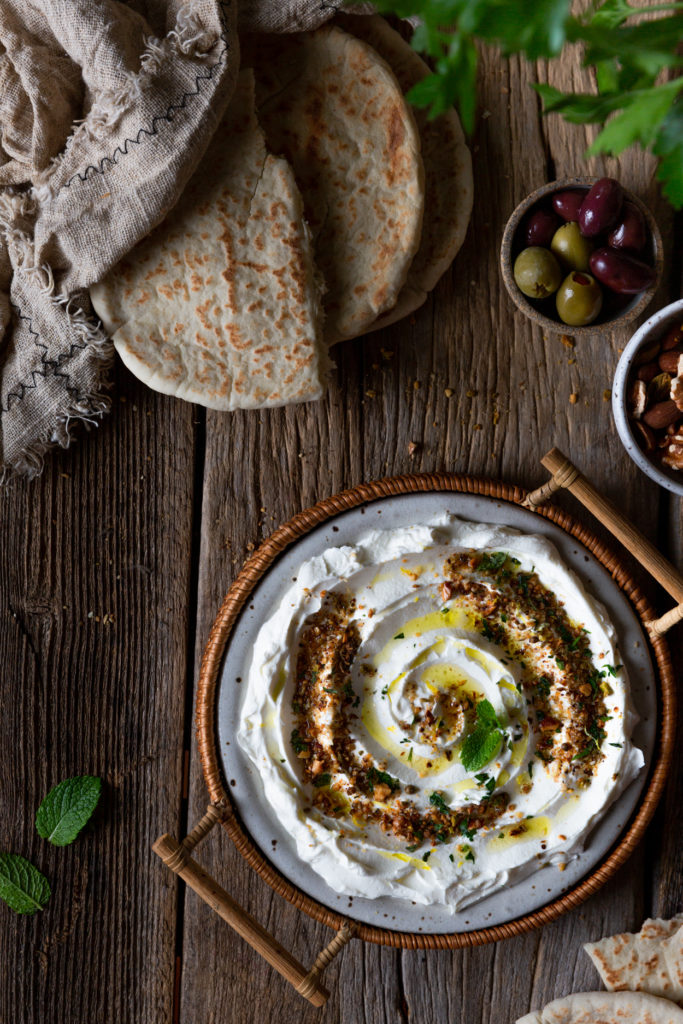
My favourite way to eat labneh is as a dip. I love textural contrast in my food, so I topped this lush creamy dip with crunchy dukkah.

Dukkah is a Middle Eastern nut and spice mix. The first time I had it was at Mahane Yehuda Market  (The Shuk) in Jerusalem. Vendors there sell small paper cones filled with dukkah, along with strips of grilled pita bread.  You dip the bread into the vendor’s bowl of olive oil, dunk it into the cone of dukkah and then joyfully crunch and munch your way to a very happy place. (Obviously, this was before the pandemic! No one would dip their pita into a communal bowl of olive oil these days.)

The name dukkah originates from the Egyptian word “dakka,” which means “to crush,” which is what you do to many of the ingredients that go into the mix. There really is no classic recipe for dukkah. Just follow the basic ratio of 1 cup nuts: 1/2 cup sesame seeds: 4 tablespoons spices: 1 teaspoon kosher salt.

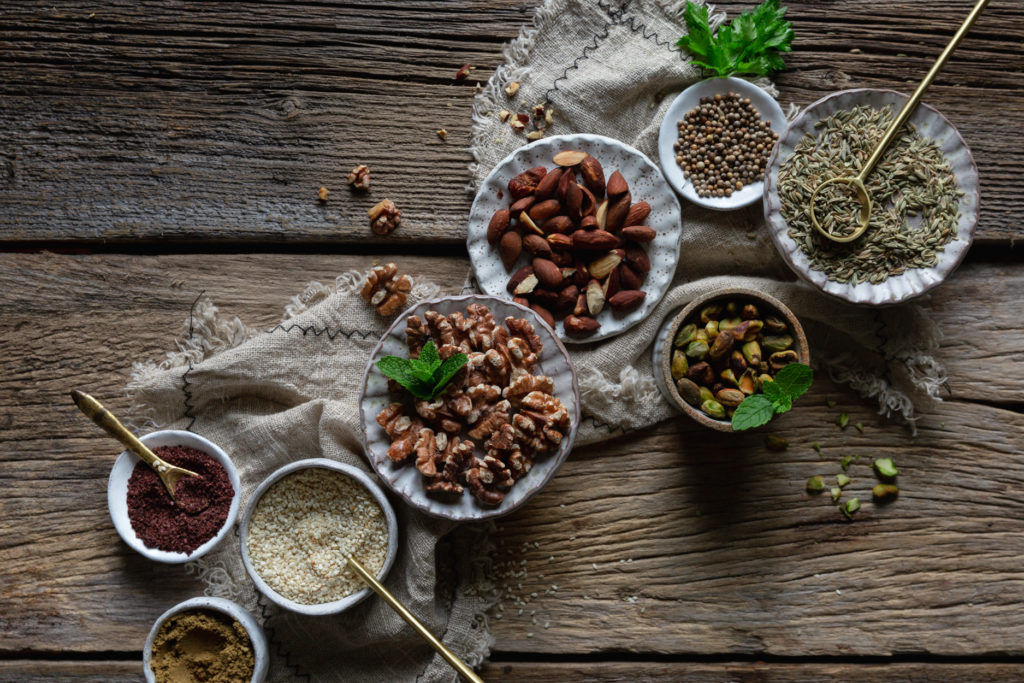
This dukkah combination was inspired by a recipe in the Summer 2020 issue of the LCBO magazine, Food & Drink. Almonds, walnuts, and pistachios provide the crunch while fennel seed, cumin, coriander and sumac provide the spice notes. Go wild and create your own custom Dukkah mix.

You will only need about 1/4-1/2 cup of dukkah to sprinkle over the labneh. Save the extra in the freezer and use it to coat fish or chicken for baking.

Warmed pita bread cut into wedges makes the perfect dipping companion. If you live in Ottawa, you need to buy Thyme and Again’s spiced pita chips (pictured here). They are addictive.

Add a bowl of salted nuts and some marinated olives and you have a perfect snack to serve with drinks.

Avocado Labne Toast

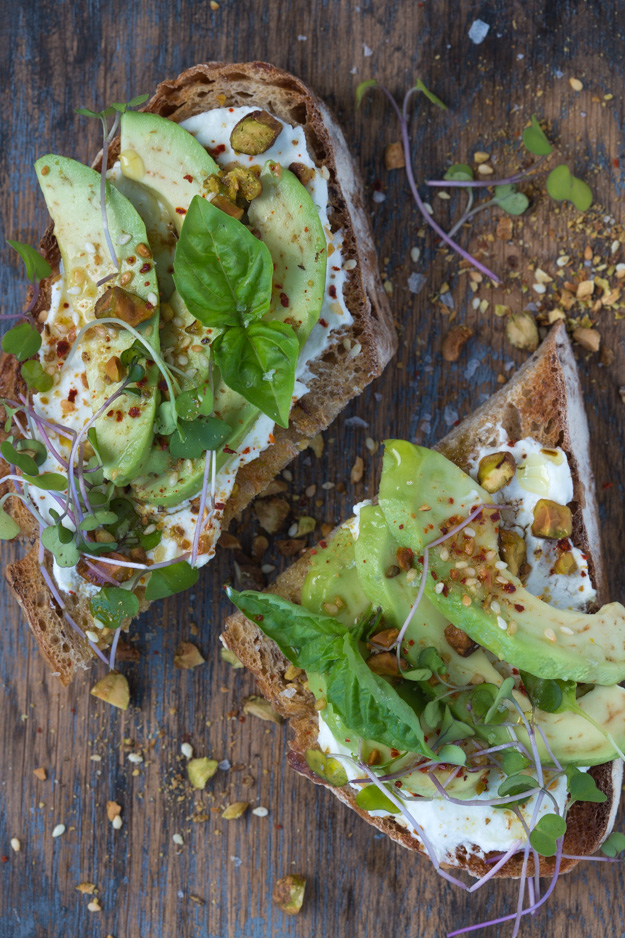
If my sweet version of breakfast labne toast with strawberries and honey didn’t convince you to bust out the cheesecloth and make some labne, perhaps this savory version will.

Labne, also known as yogurt cheese, is simple to make. Mix plain yogurt (greek or regular, your choice) with a bit of lemon juice and salt. Put it in a cheesecloth lined strainer, set over a bowl. Leave it in the fridge for 24-28 hours, depending on how thick you like it. You can feed the whey drippings to your pet pig, if you happen to have one. If not, just discard.

Homemade labne will keep in the fridge for 2 weeks, so make a big batch and shake up your morning breakfast routine.

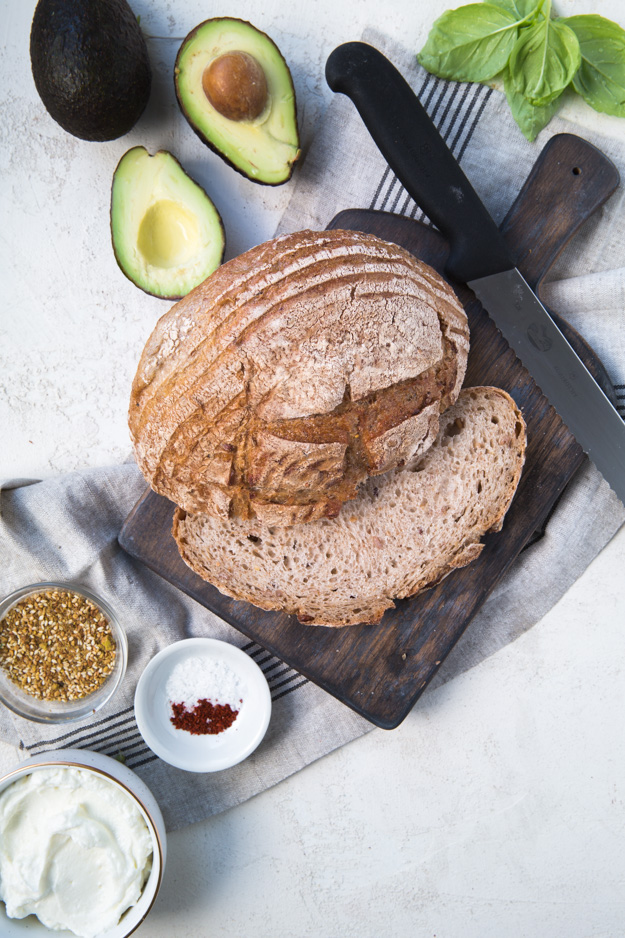
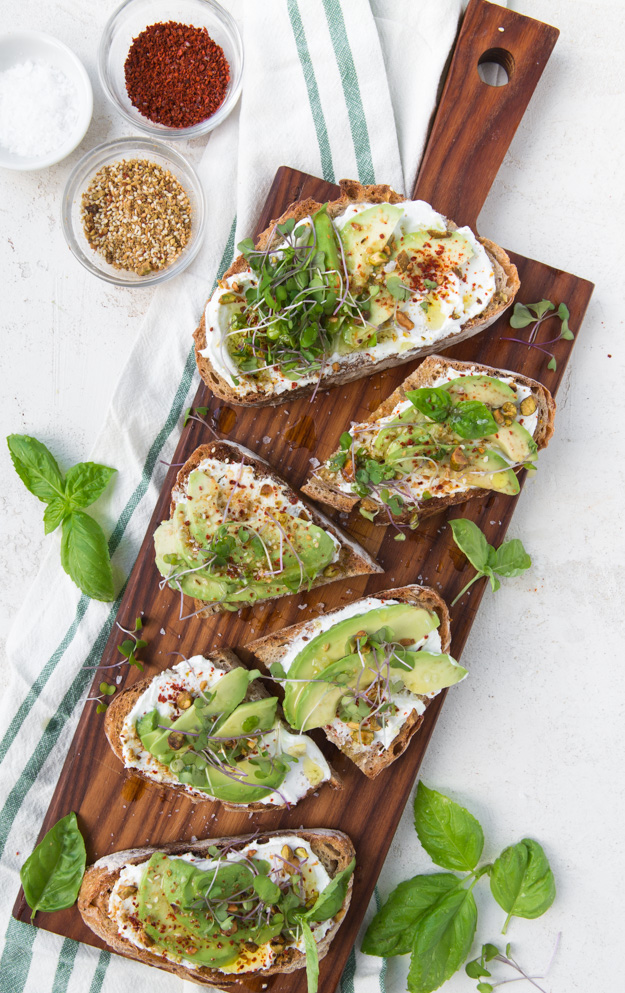
Start with good bread. A hearty artisnal loaf, something substantial, maybe one loaded with seeds and nuts. Please remember to deeply toast your bread, otherwise the labne will soak into the bread like a sponge, and that would be sad.
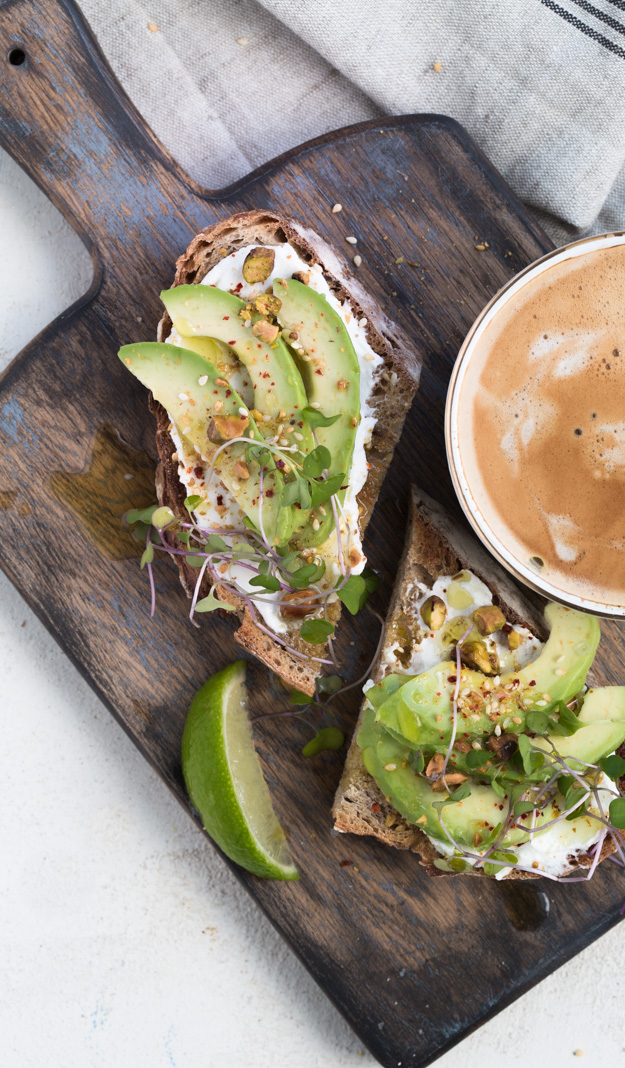
Plain avocadoes are bland. They need to be treated with the magic trifecta of acid, salt and heat. In this case, I used lime juice, flaky sea salt and maras red pepper. If you don’t know about maras pepper, you need to learn about it and get yourself a bag. They are sun-dried Turkish peppers with a slow, subtle heat. They instantly add a hit of brightness to everything you put them on. If you have a Mid-East grocery in your city, they will likely stock it.

Add some toasted pistachios for a little crunch. And if you happen to have a jar of dukkah in the pantry, a sprinkle of that will really take this breakfast to the next level deliciousness.

Click here to print recipe for Avocado and Labne Breakfast Toast.


Dukkah Crusted Salmon

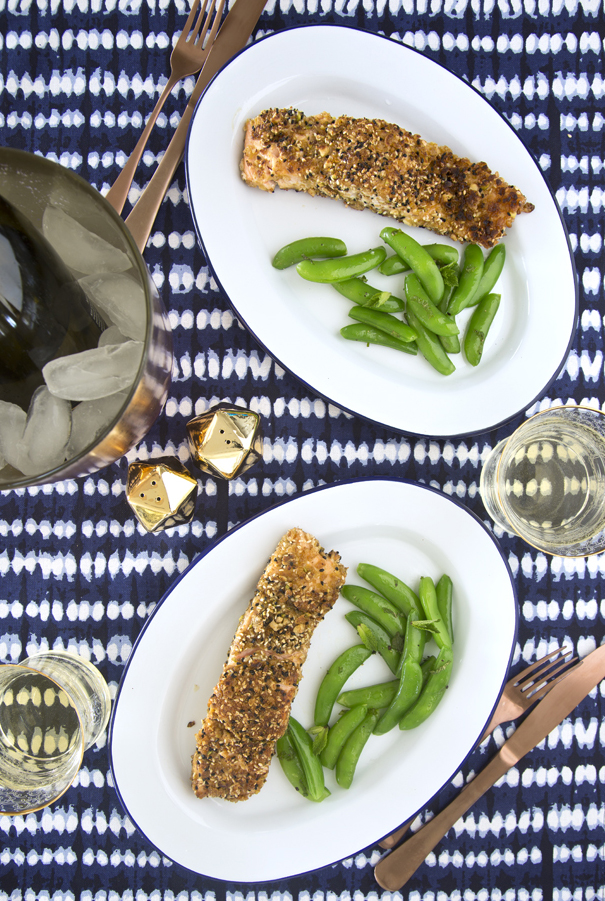
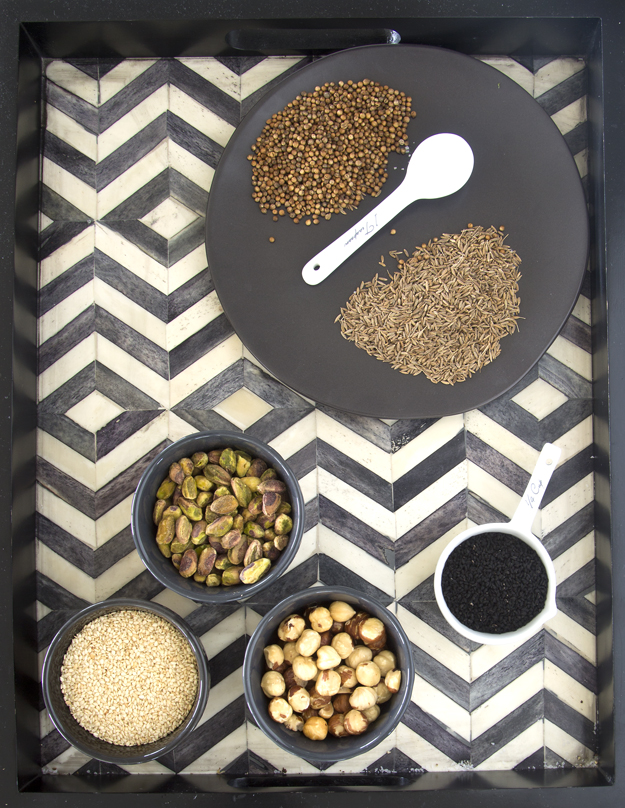
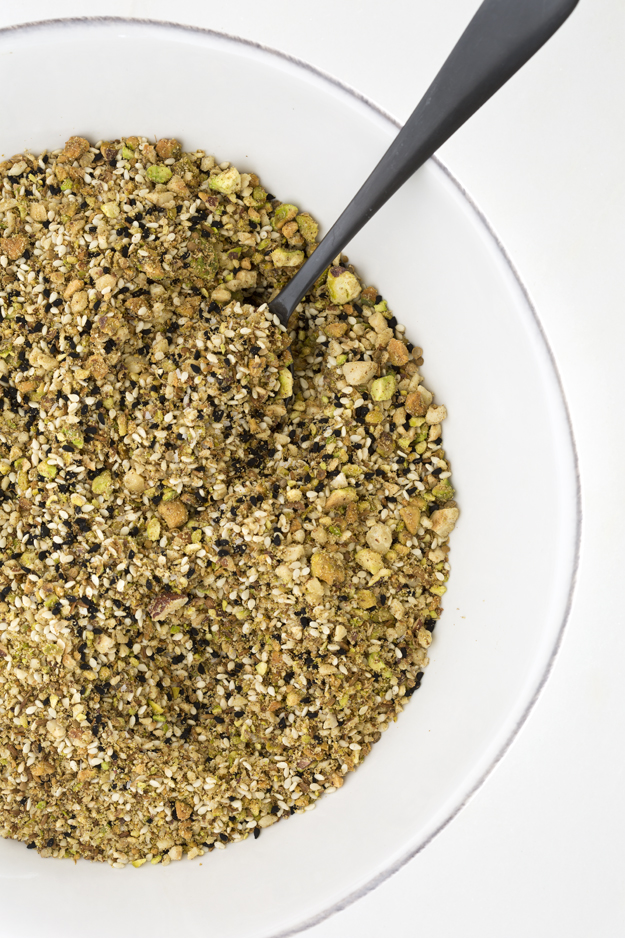
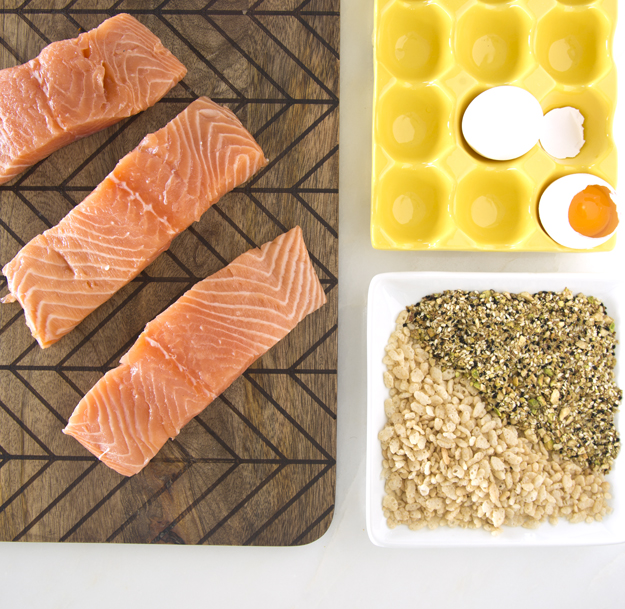
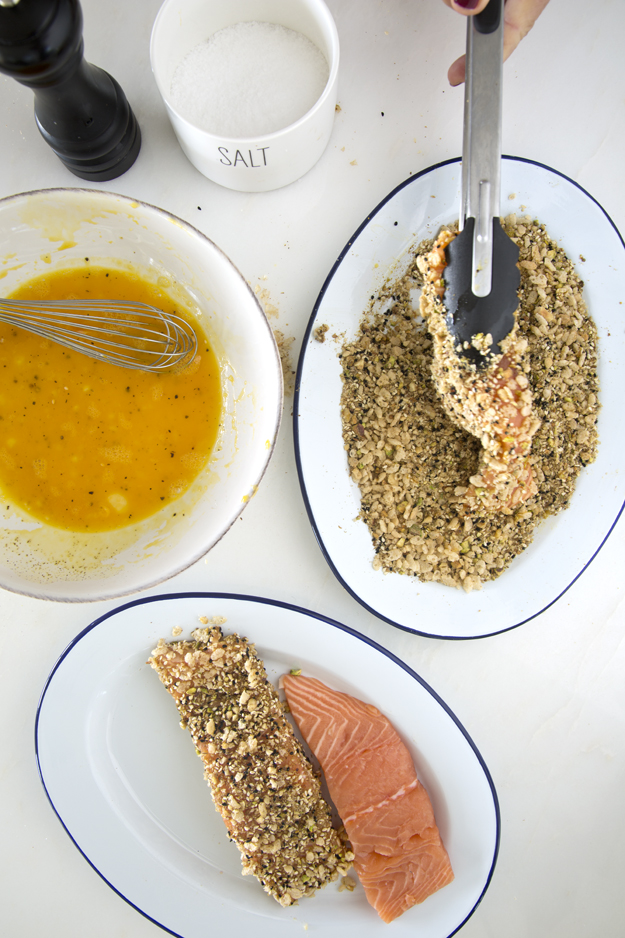
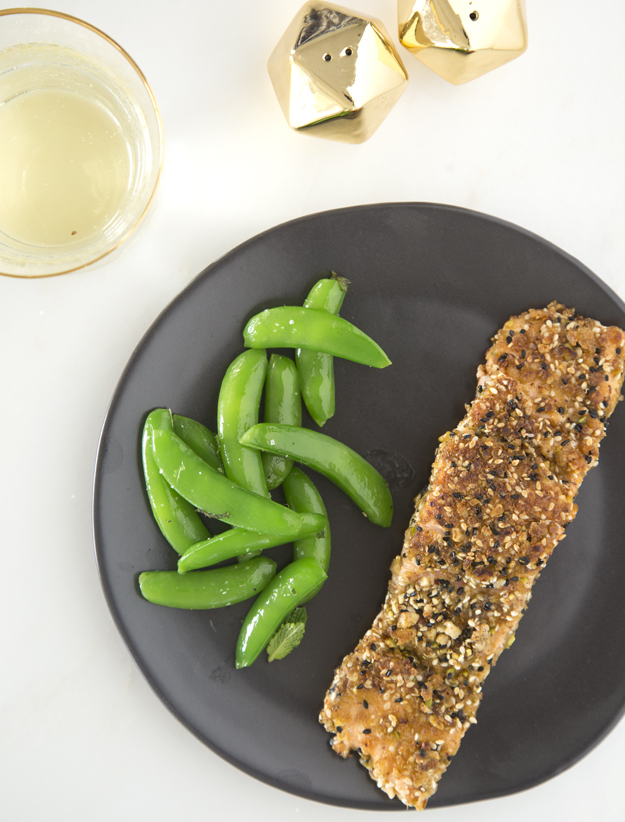
2-platesThis week, I’m not sure if I’m more excited about the Toronto Blue Jays or this salmon recipe. But, let’s put aside baseball and talk about Dukkah Crusted Salmon. Dukkah is a mid-east nut and spice mixture, chockfull of crunchy hazelnuts, pistachios and sesame seeds, scented with cumin, coriander and nigella seeds. dukkah-ingredientsA food processor makes quick work of the nuts and spices. dukkahI have waxed poetic about dukkah in this space before. (Grilled Flatbread with Dukkah, Roasted Asparagus with Dukkah). It is such a versatile mixture. My version of dukkah crusted salmon was inspired by Donna Hay’s recipe. To use the dukkah alone as a crust would be too heavy and overpowering. Donna suggests lightening up the coating by mixing in some puffed amaranth cereal. Too lazy to go to the store to hunt down puffed amaranth, I decided that Rice Krispies would be an excellent substitute.ready-for-crusting-1coating-fish-in-dukkah The fragrant crunchy coating yields way to meltingly tender rich salmon. Guys, this is my new favourite way to eat salmon.

Click here to print recipe for Dukkah-Crusted-Salmon.

1-plate

Go Jays Go!!

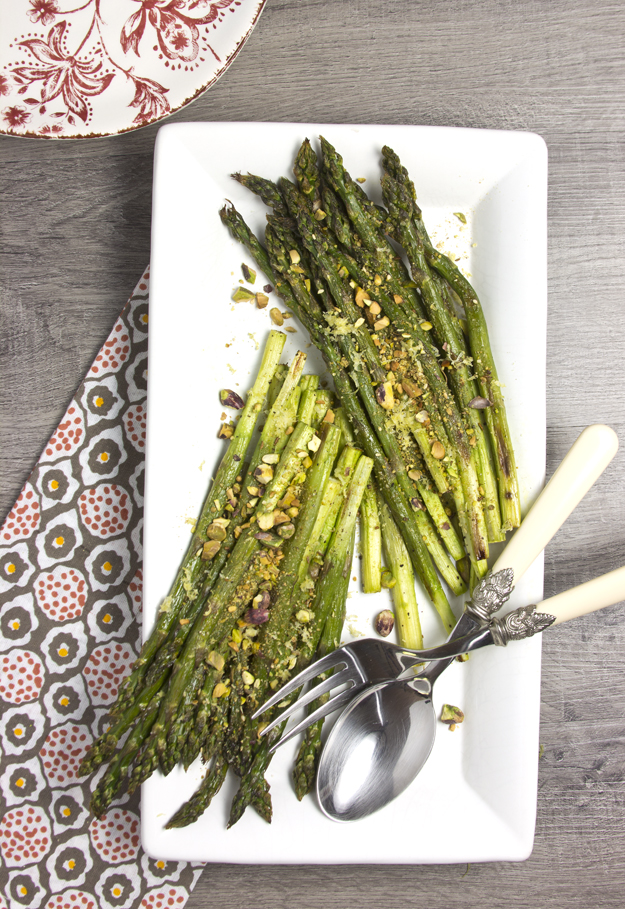
Roasted Asparagus with Dukkah

asparagus on white platterWhen a chef takes a humble ingredient, like the carrot, and makes it sublime, I pay attention. My first carrot experience created by Chef Michelle Bernstein, was 5 years ago, at The Omphoy Hotel in Palm Beach. I was visiting my friend Marla and we went to a killer barre class at the hotel’s Exhale Spa. After class we hobbled over to the restaurant for breakfast.

Once we ordered our poached eggs, the waiter delivered a basket of hot biscuits and house made carrot marmalade to the table. He said we must try the marmalade, and because our mammas raised us right, just to be polite, we ate all the biscuits and asked for a second ramekin of the carrot marmalade. I still have no idea what was in it or how they got it to taste so good. but I think about it often.

My second Michelle Bernstein carrot experience was last month in Miami. I was in town for my nephew’s wedding. We had a spare night so we went to dinner at her Biscayne Blvd. restaurant Cena. I started with the roasted carrots topped with whipped sardinian ricotta and dukkah. Once again, her wizardry with carrots dazzled me. Sadly, I just heard the restaurant closed on May 31.

Dukkah is a Middle Eastern nut and spice mix. I have written about it before, a few years ago. One of my favourite ways to eat it is to dip pita in olive oil and then do a second dunk into the dukkah. A very satisfying and addictive little bite. It had never occurred to me to sprinkle dukkah on vegetables, but it totally works.

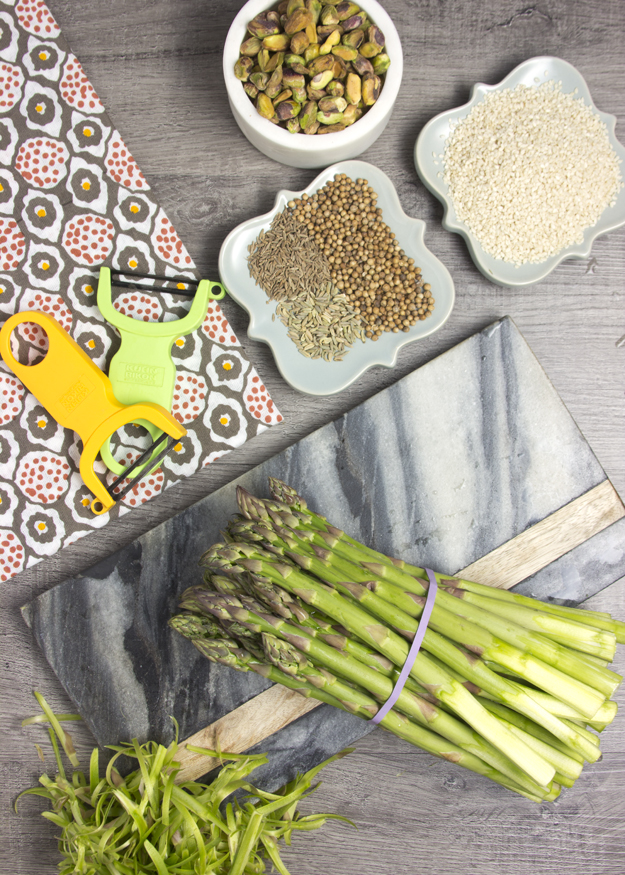
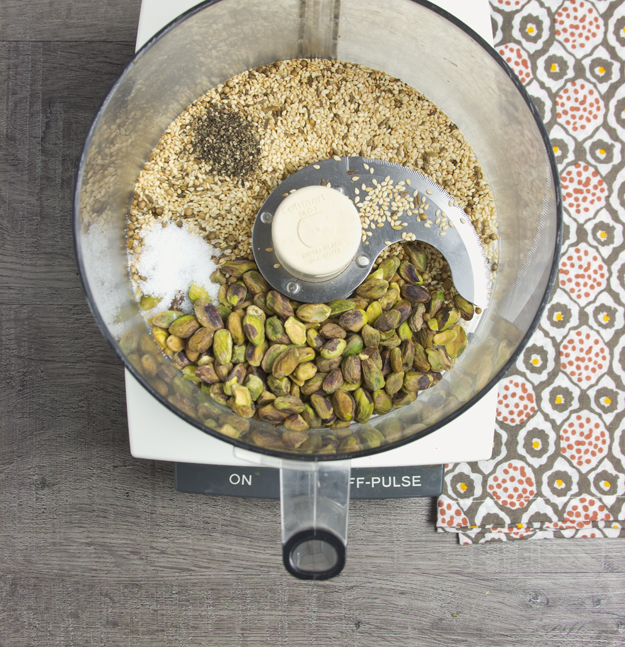
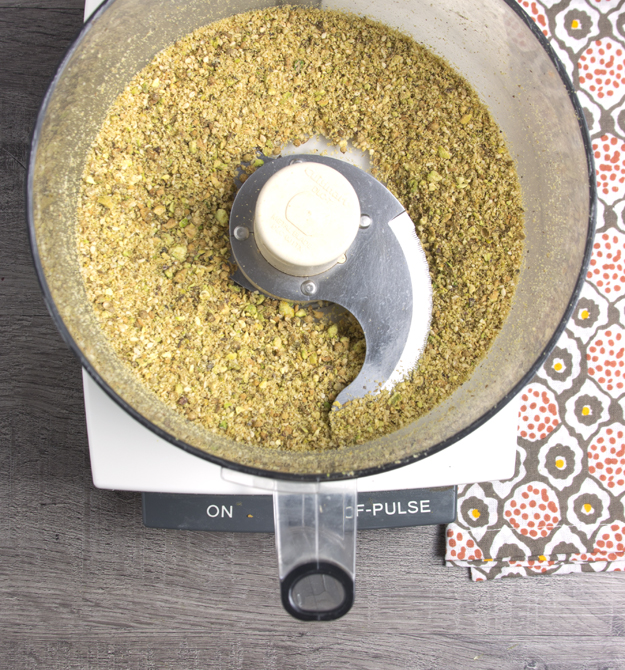
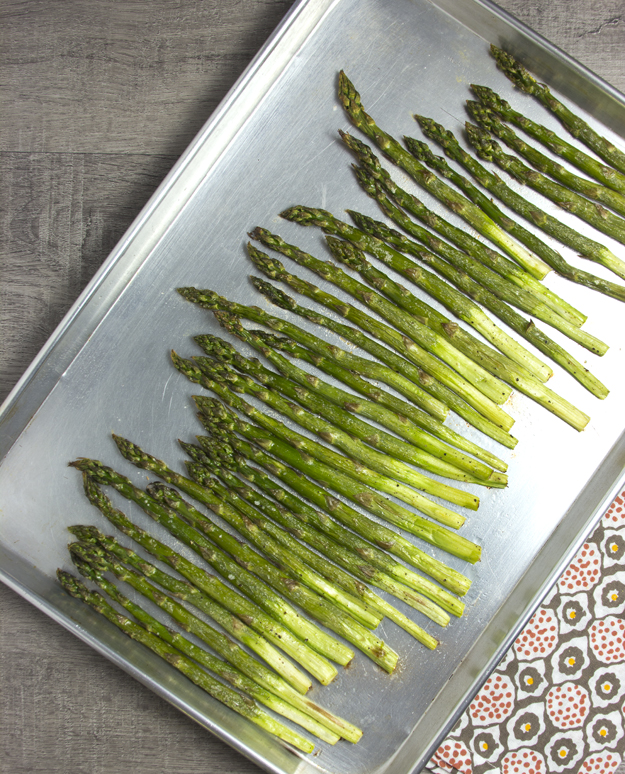
Fat spears of asparagus got my attention at the market so I abandoned all plans of roasted carrots. You gotta go with what looks good that day. I decided on a pistachio based dukkah, but feel free to use any nut you like. Sesame seeds, fennel, cumin and coriander seeds add fragrant deliciousness. ready to cookSeeds and nuts are toasted and then coarsely ground in the food processor. making dukkah 1making dukkah 2asparagus on preheated pan

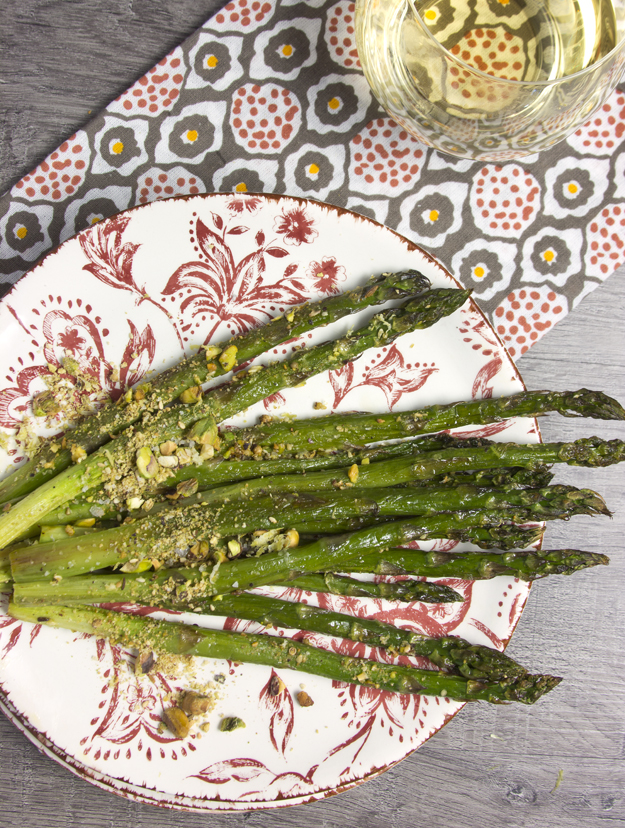
Click here to print recipe for Roasted Asparagus with Pistachio Dukkah.asparagus on red plate

Grilled Flatbread with Dukkah

round 1 625 sq
Aside from baking challah every week, it’s been way too long since I’ve had any fun with yeast. I have really missed that culinary alchemy that happens when you combine flour, water, salt and yeast. I decided to take it outside and grill some flatbread.

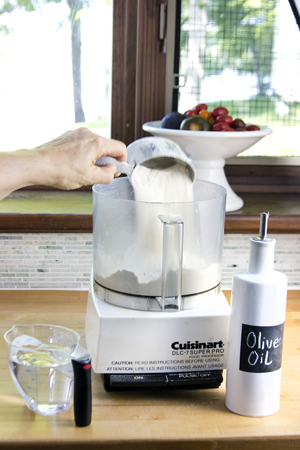
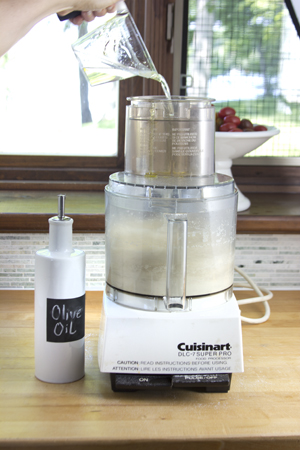
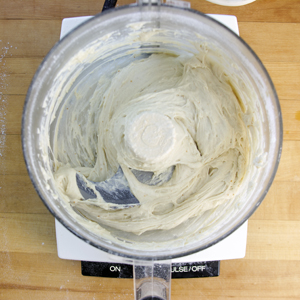
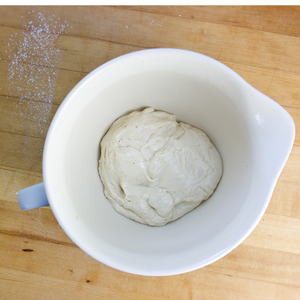
This is a gorgeous dough that comes together in the food processor in about 2 minutes flat.  Made with bread flour and just a touch of nutty whole wheat flour, this dough is super hydrated with water and olive oil. A wet dough is how you achieve, what bread freaks call, an “open crumb structure”. That just means that the inside of the grilled flatbread has those airy bubbles, that make it so chewy and delicious to eat.
making dough 1making dough 2making dough 3making dough 4
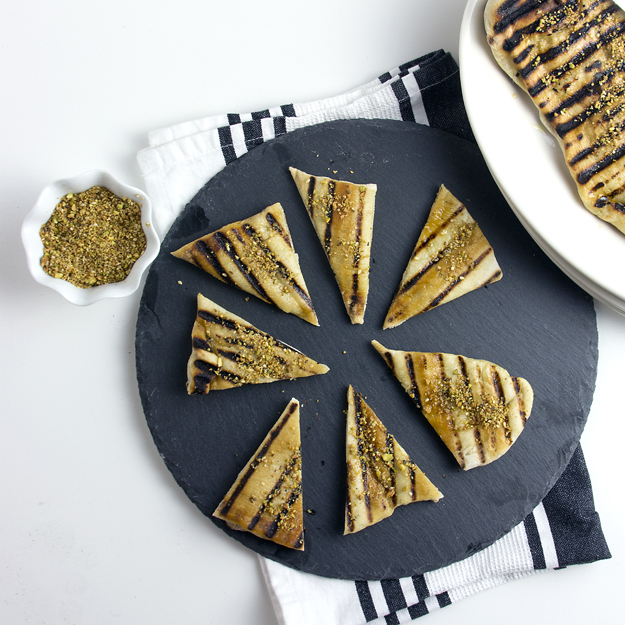
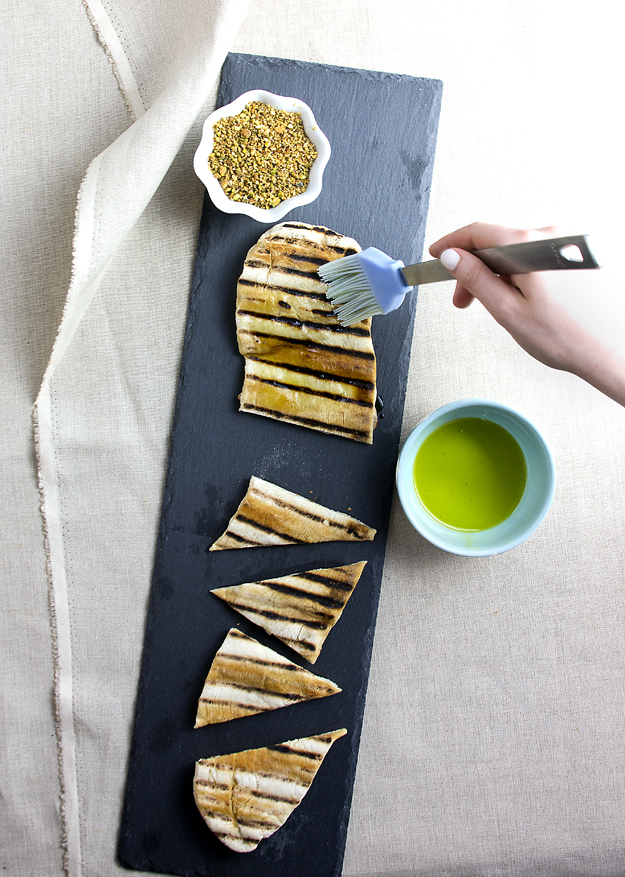
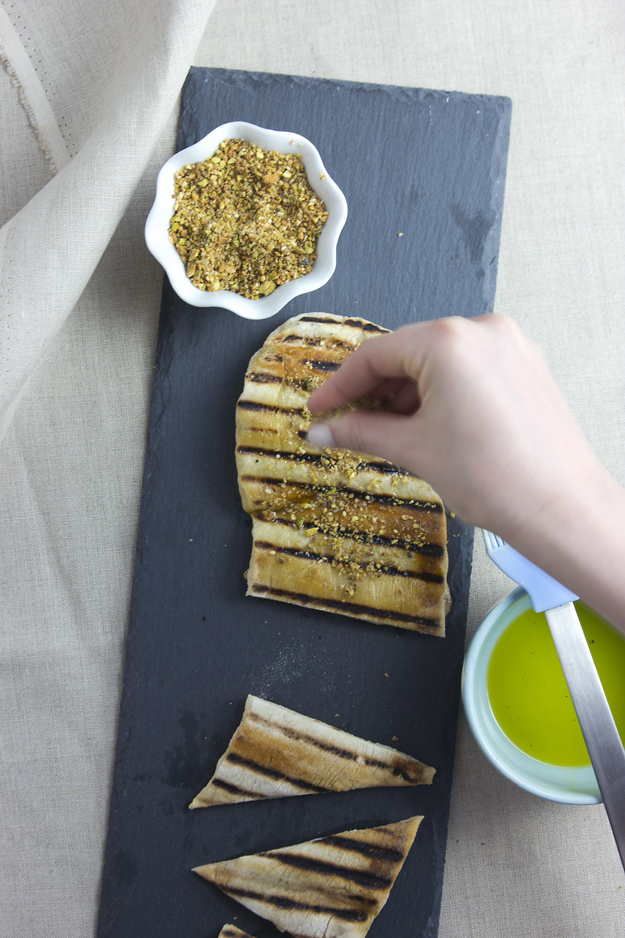
I will admit it takes a leap of faith to put this thin super stretchy dough onto the BBQ and not be riddled with anxiety that it will fall right through the grill. But, miraculously, it doesn’t. In about 4 minutes the flatbread is charred to perfection. I like to brush it with a really fruity olive oil as soon as it comes off the grill and then sprinkle it with Dukkah.
brushing on olive oil

sprinkling dukkah
Dukkah is a Middle Eastern nut and spice mix. The first time I had it was at Mahane Yehuda Market  (The Shuk) in Jerusalem. Vendors there sell small paper cones filled with dukkah, along with strips of grilled pita bread.  You dip the bread into the vendor’s bowl of olive oil, dunk it into the cone of dukkah and then joyfully crunch and munch your way to a very happy place.

The name dukkah originates from the Egyptian word “dakka,” which means “to crush,” which is what you do to many of the ingredients that go into the mix. There really is no classic recipe for dukkah. Just follow the basic ratio of 1 cup nuts: 1/2 cup sesame seeds: 4 tablespoons spices: 1 teaspoon kosher salt.

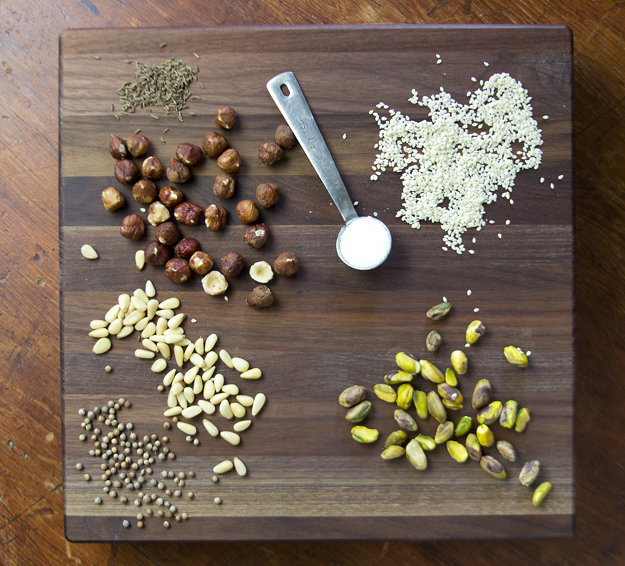
I settled on a combo of hazelnuts, pine nuts, pistachios, sesame seeds, cumin and coriander seeds and salt. Go wild and create your own custom Dukkah mix. Peanuts or macadamia nuts would be fantastic. Fennel or caraway seeds would add a really unique flavour. dukkah ingredientsWhen I am having family or good friends over, it is great fun to watch them greedily dip the warm chewy charred bread into fruity olive oil and then into the bowl of dukkah. Double dipping almost always ensues as this mix has all the hallmarks of an outstanding snack; crunchy, spicy and just a little bit salty.

And hey, if you decide not to make your own flatbread and just buy some pita bread to serve with the dukkah, I won’t judge. One of my very best friends called me after reading my post about Lemon Poppy Seed Baby Bundts to tell me that she was going to buy a few of of those adorable mini bunt pans and fill them with Duncan Hines Lemon Poppy Seed Cake mix!

Click here to print recipe for Grilled Flatbread with Dukkah.