I am not exactly a fully immersed and loyal subject of the social media kingdom. While I do have an Instagram account, I came late to the game and don’t post very frequently. Like all social media, it sometimes leaves me feeling just a teeny bit jealous. Like when I see posts like this, this, and this.
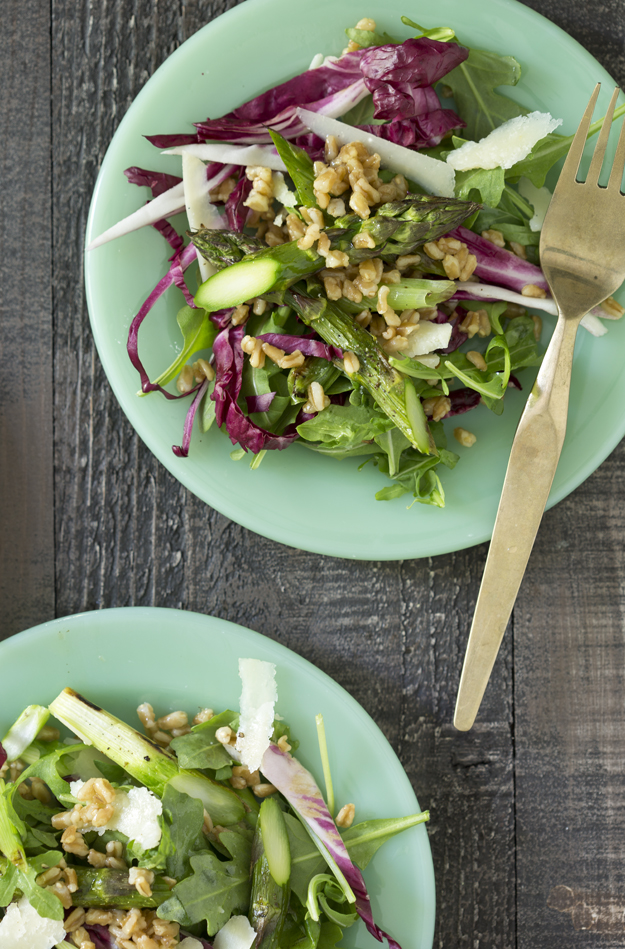
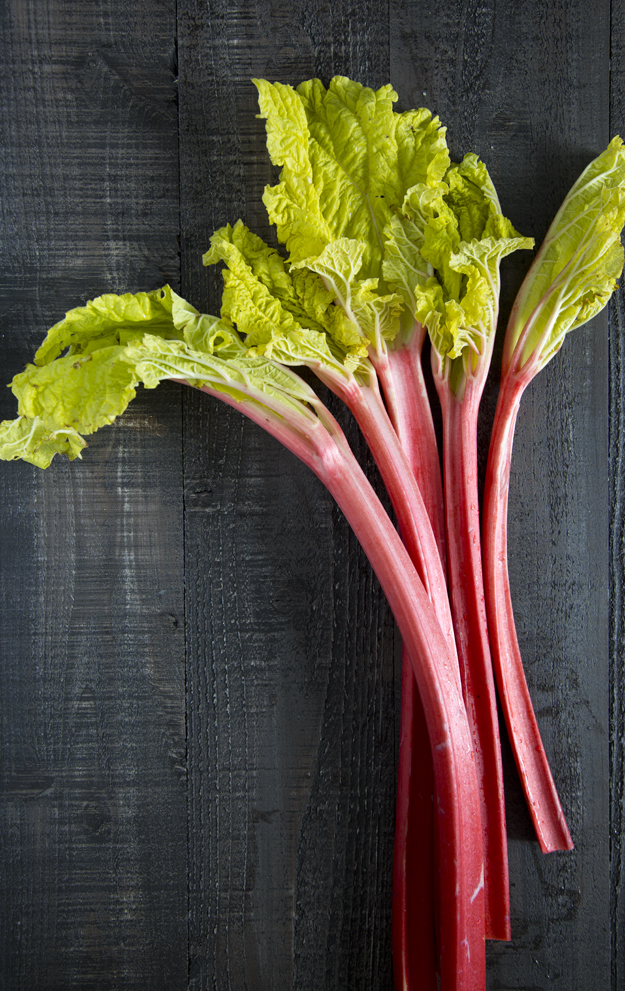
Local asparagus, rhubarb or spring peas have not yet arrived in my neck of the woods, but I am still craving something fresh and crunchy. Enter the humble carrot. Much like that shy kid you knew in school, carrots possess way more charisma than we give them credit for. One of mother nature’s most versatile creations, they can be juiced, braised, stir-fried, roasted, pureed, whipped and baked. Equally at home in savoury and sweet applications, carrots are an unsung hero in the kitchen.
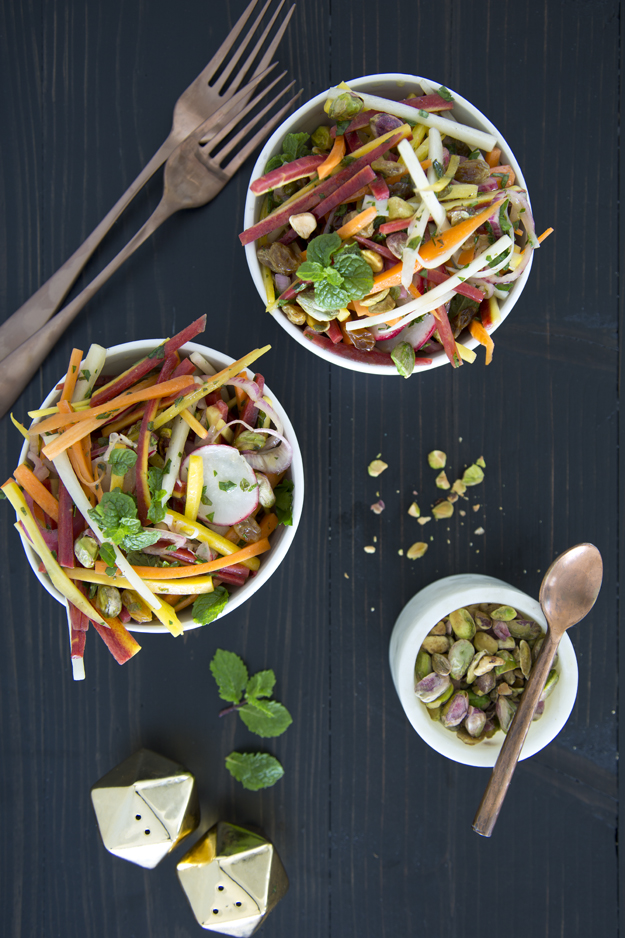
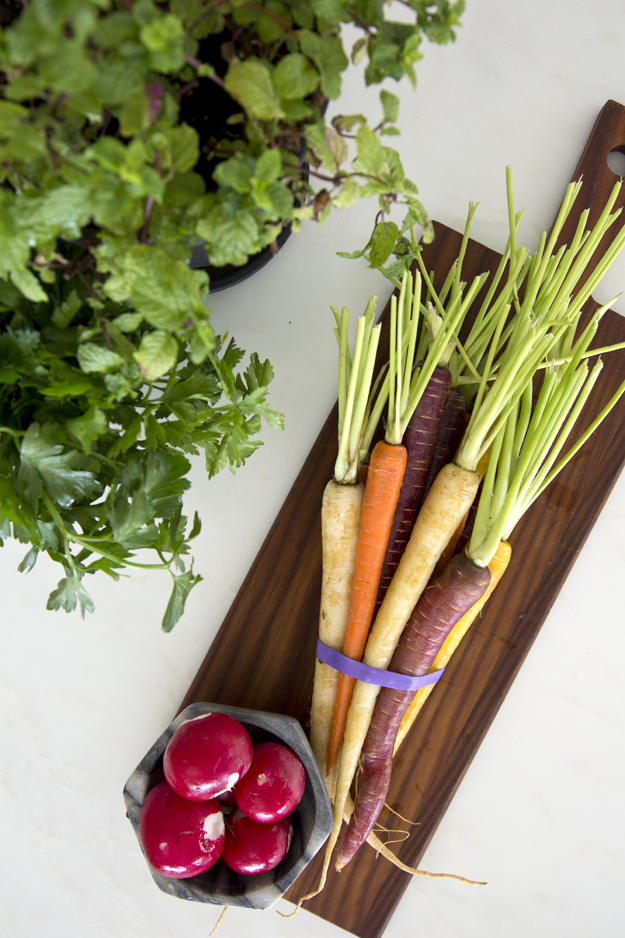
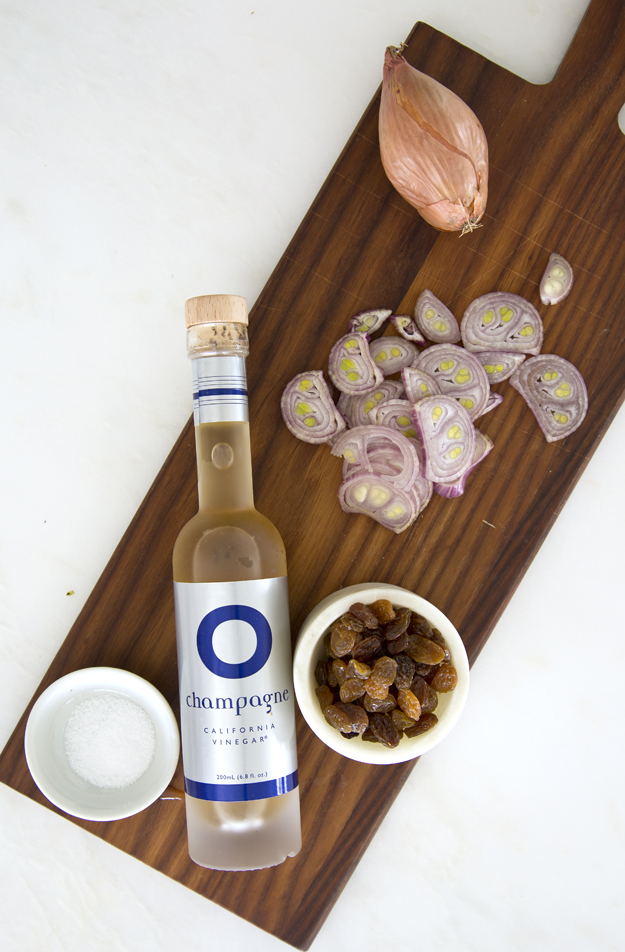
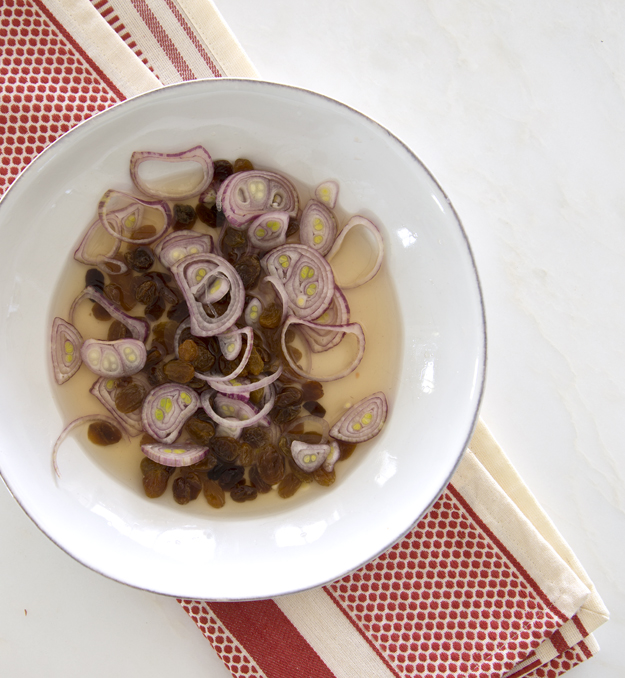
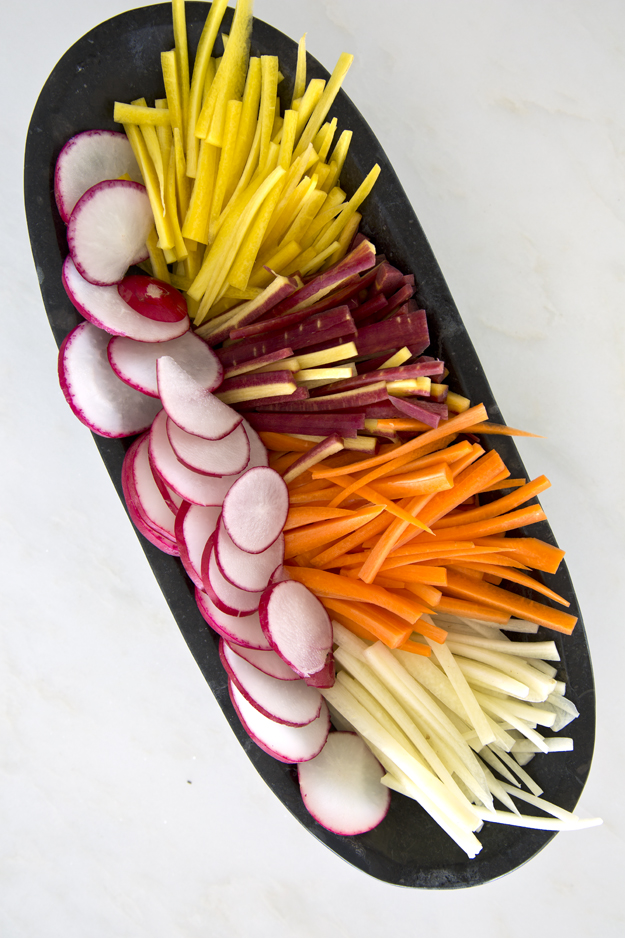
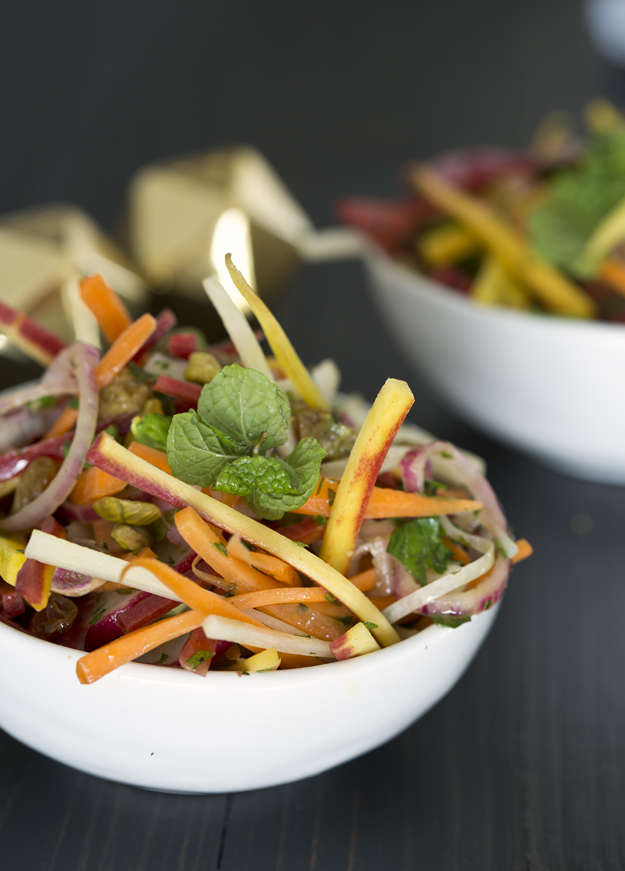
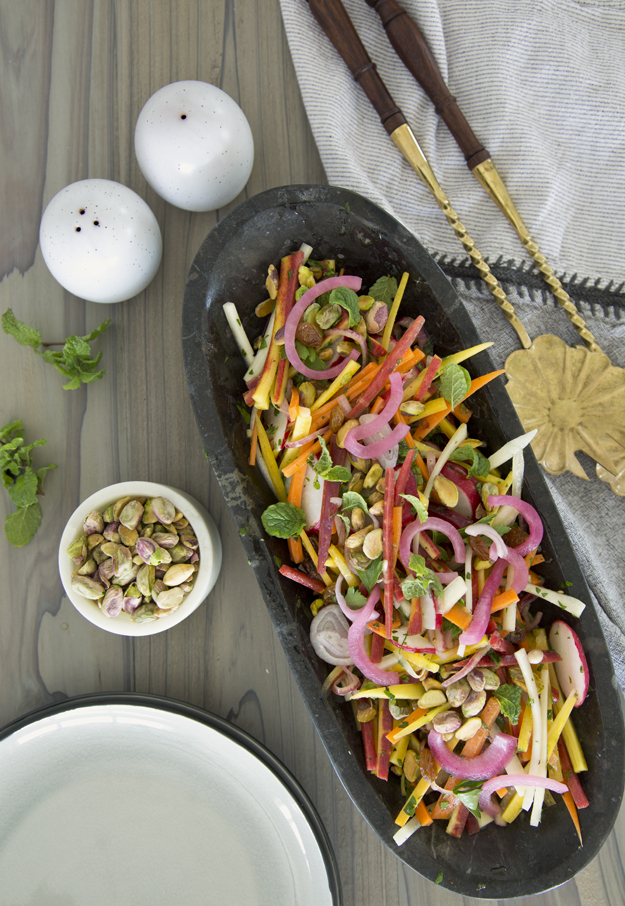
Bonus points if you can find rainbow carrots, but regular carrots will be equally delicious. Start with a quick pickling of a shallot and some raisins. If you have some fancy champagne vinegar in the pantry, now’s the time to bust it out. If not, regular white wine vinegar will also work. Give the vinegar, sugar and salt some time to do their magic and get on with the rest of the salad. Julienning carrots is a breeze if you have a mandoline. If not, here’s the perfect time to practice your knife skills. I made a video showing you the safest and quickest way to do it. If you can’t be bothered to julienne, simply shaving the carrots with a vegetable peeler would be a good alternative. I just prefer the crunch that you get with julienned carrots.
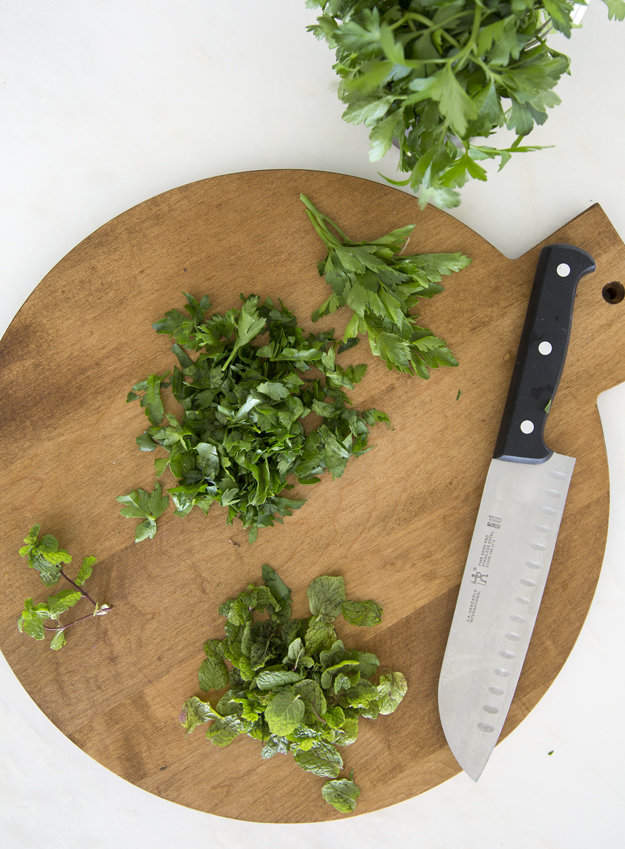
Mint and Italian parsley add the verdant freshness I am craving this time of year. This salad touches all the bases. The raisins and honey add a welcome whisper of sweetness. Bitter radishes and spicy red pepper flakes punch back at that sweetness. Pistachios add a satisfying crunch. And bonus! This salad tastes even better the next day.
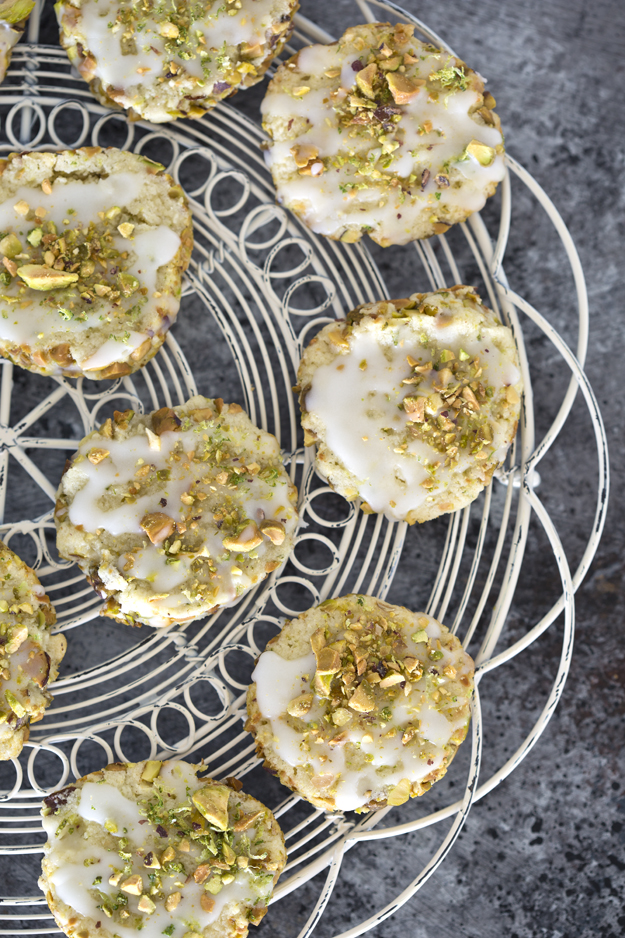
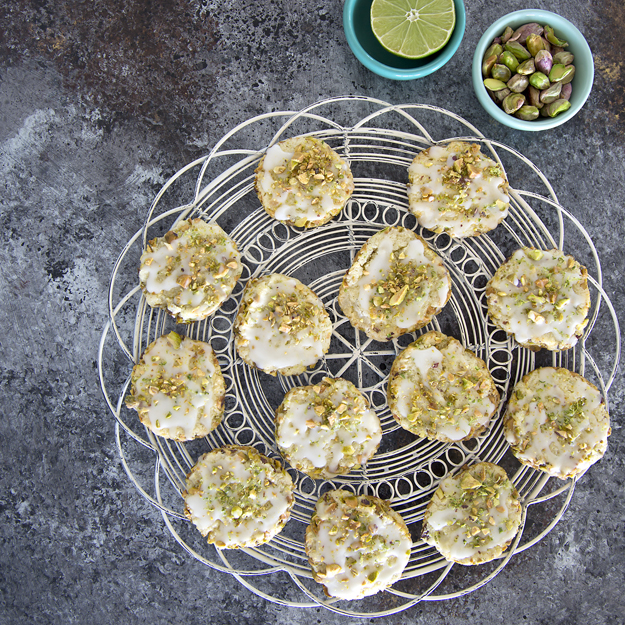
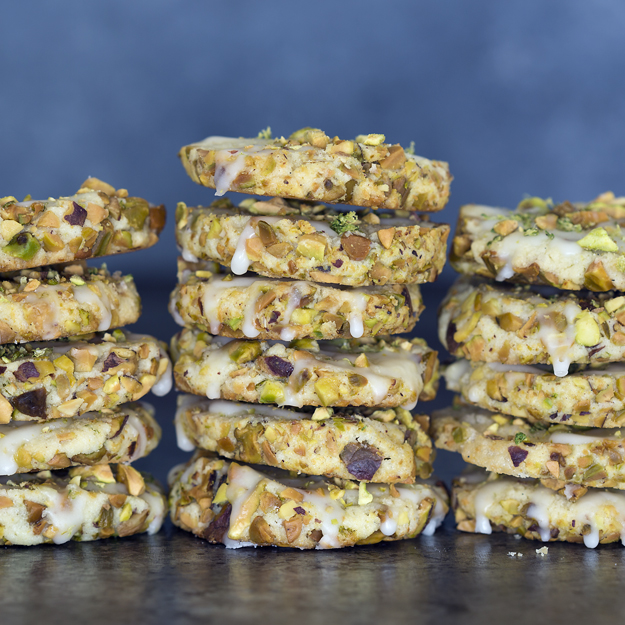
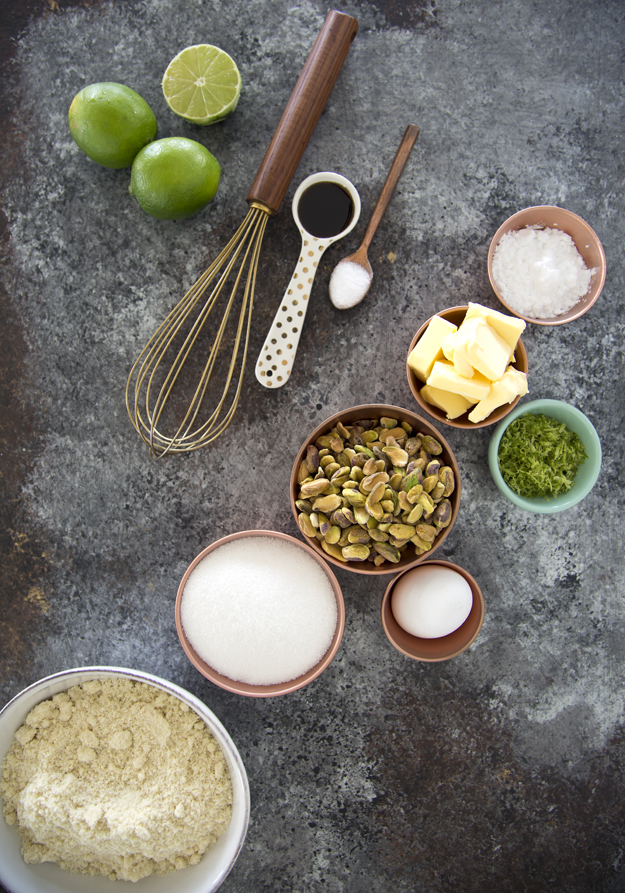
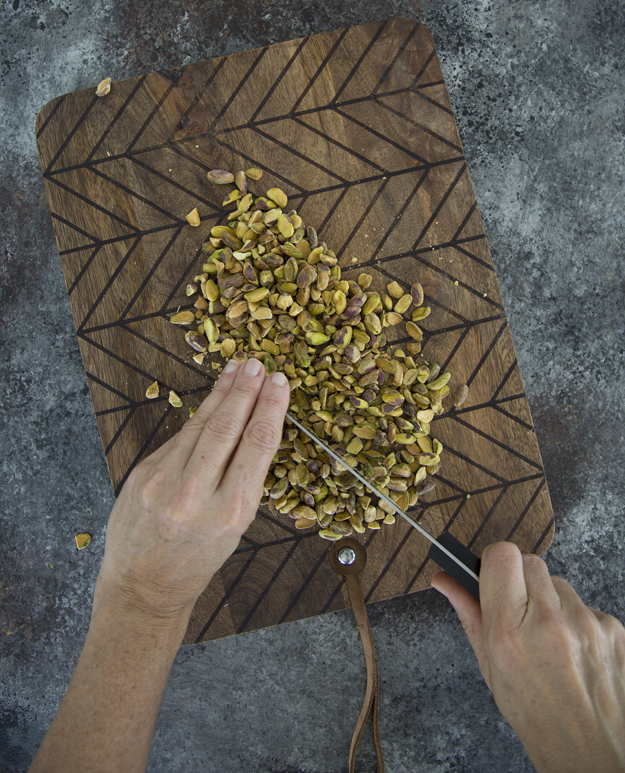
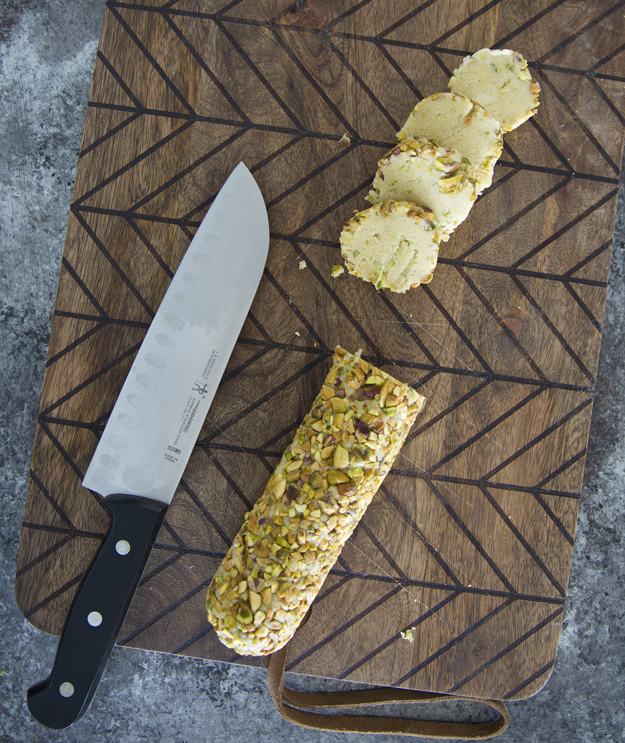
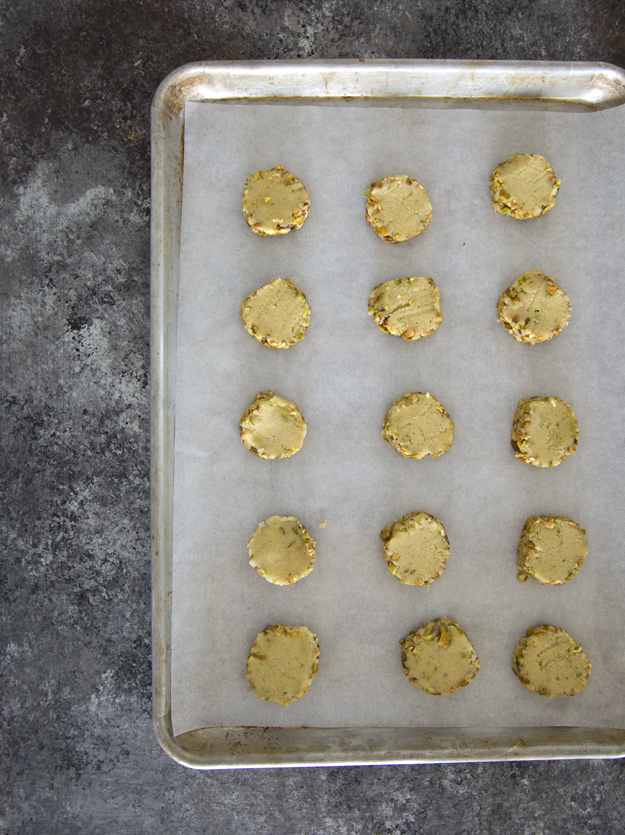
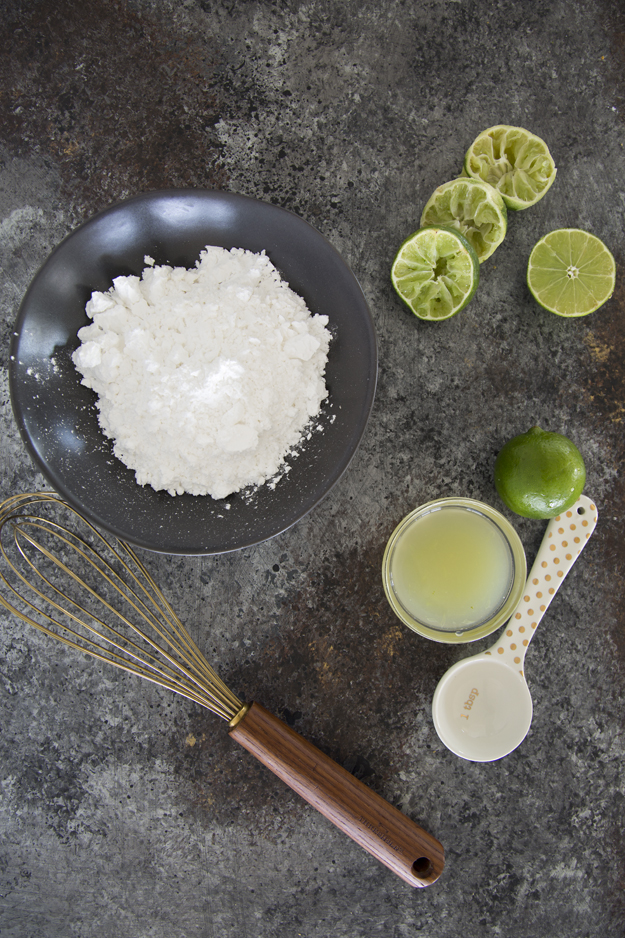
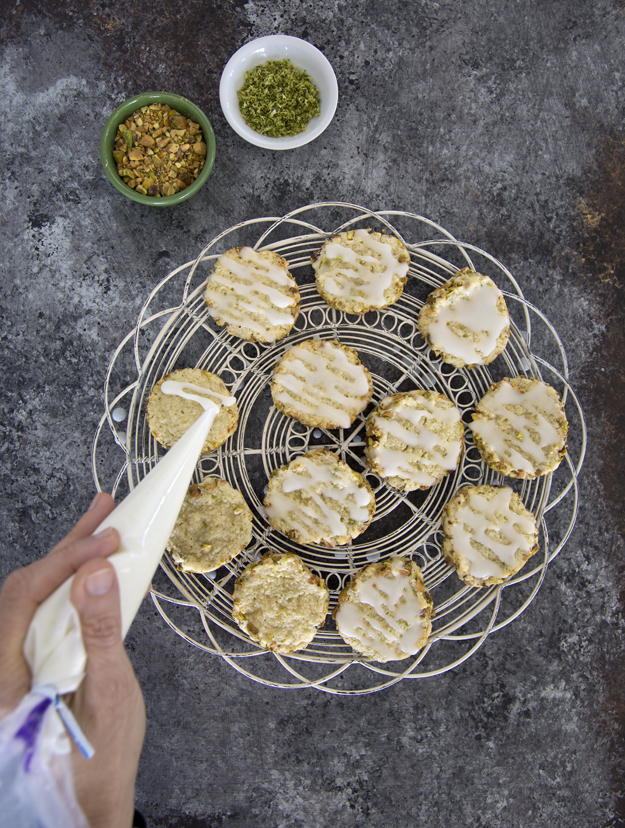
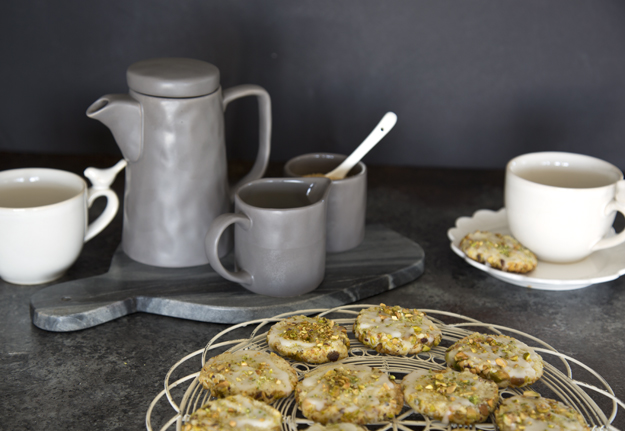
After my last debacle with almond flour and citrus, you would think I’d be reluctant to go down that road again, but I guess I’m just a natural born gambler. Well, a gambler in the culinary sense, at least. I have never understood the appeal of real gambling. If I’m going to throw money away, I’d at least like to have a pair of shoes to show for it.When I saw this recipe for Flourless Almond Cookies with Cardamom, Orange Zest and Pistachios, I thought it would be a perfect addition to our Passover dessert table. I changed it up and used lime instead of orange and deleted the cardamom. It’s one of those flavours I want to like, but haven’t yet acquired a taste for.  I used to hate cilantro and now I love it, so there’s still  hope for cardamom.These are a slice and bake cookie. They’re fast to make. You do need to allow time for chilling the logs before slicing, so plan ahead. The logs get rolled in finely chopped pistachios. When slicing, make sure you rotate the log 90° (a quarter turn) after each slice to keep from getting one flat side.I decided to glam up these cookies by adding a sweet-tart glaze. I finished them off with a sprinkling of lime zest and more chopped pistachios.These cookies are the perfect little bite to end the Passover seder with. Chewy in the center, crispy on the edges and an ideal sweet-tart balance. I also made a batch with lemon and they were fantastic.
On the next full moon, Monday April 10,  Jewish families, all over the world will gather to hold a Passover Seder. Passover commemorates the emancipation of the Israelites from slavery in Egypt over 3000 years ago, and the formation of the Jewish nation.
The word “seder” means “order” in Hebrew. It refers to the 15 parts of the Seder ritual which are followed in a very specific sequence. In the retelling of the story, the goal is to relive the Exodus, both symbolically and vicariously, with tastes, sounds, sensations and smells. We do this to link our past to our future, to teach the next generation. This is no mean feat and can make for a long night!Â
Every family has their own unique customs and traditions. My youngest sister (I have 4) likes to decorate the table  with items that symbolize the 10 plagues. Plastic jumping frogs,  wild animals, cattle, and stale mini marshmallows (plague of hail). One year my mom covered the table in blue, green and purple jelly bellies to represent the River Nile. We have had Cadbury Cream Easter Eggs (much tastier than the roasted egg on the seder plate and the hard boiled egg dipped in saltwater we eat to represent the tears shed by the Israelites in slavery). I fully expect Dark Chocolate Moses this year.
That same sister is fond of making guest appearances at the Seder, dressed in various costumes. Some family members find this humorous. Others do not.This year, I’m planning to get the party started by bringing little bags of Passover Party Mix to the table.
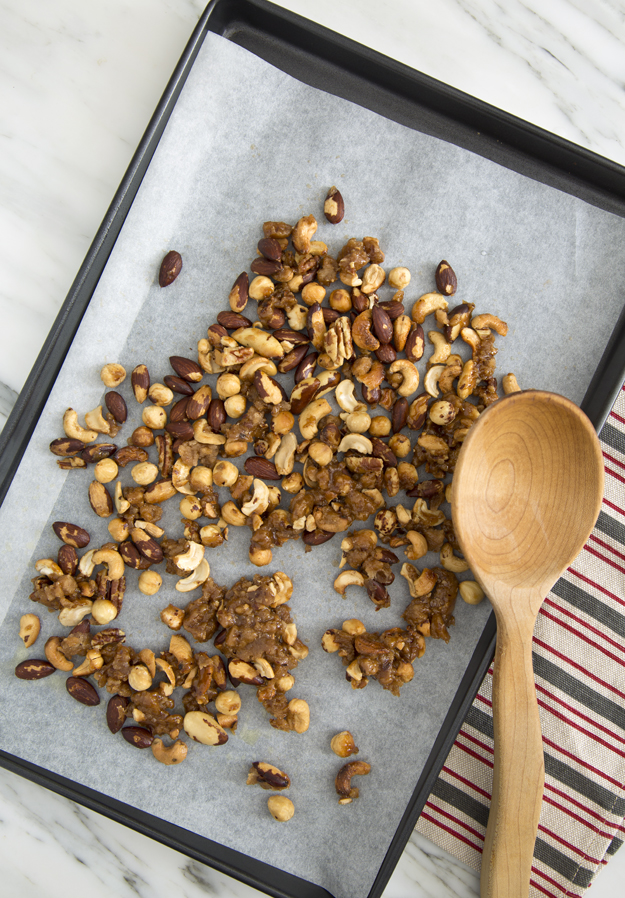
Salty, spicy, sweet and addictive. Not normally adjectives associated with a snack that contains matzoh and kosher for passover crispy o’s cereal! But, add mixed nuts, sugar, salt, cayenne, cumin, cinnamon, coriander and smoked paprika and magic happens.Watch the culinary alchemy occur.
Put them out on the table in little bowls, paper cones or little bags and let everyone munch. IÂ doubt anyone will be offended.
Bánh mì is the Vietnamese word for bread. The origin comes from bánh (bread) and mì (wheat). Over time, because of French colonialism in Vietnam, the term Bánh mì has become synonymous with a baguette sandwich. This is no ordinary sandwich. It represents two cultures coming together to create something glorious.
The French contributed the baguette, mayo, and pork, but the Vietnamese brought the party with the addition of pickled vegetables, cilantro and jalapeño.
The idea for this lightened up version of Báhn mì comes from Amy Rosen in the 2016 Holiday issue of Food and Drink magazine. Replace the baguette with rice noodles and toss everything together in a bowl. I lightened up her version even more by using ground turkey instead of pork in my meatballs.
Start by making a Radish and Carrot Quickle (quick pickle!) with rice wine vinegar, sugar and salt Cilantro, green onion, garlic and Sriracha sauce are mixed in with ground turkey for the meatballs.Sweet, salty, and sour come together in the dressing for this bowl. Lime juice, fish sauce, soy sauce and brown sugar are whisked together for a simple sauce.
Fresh cilantro, mint, thinly sliced cucumber and chopped peanuts are sprinkled on top for a fast and healthy dinner.Â
I made this cake to celebrate my father’s 90th birthday. Sadly, he will have to enjoy this cake vicariously, from his perch in heaven, as he died in 1999. Some may find this a bit macabre, but those who knew my dad understand that enjoying life vicariously, through others, was ingrained in his being. He got great pleasure and joy from other people’s good fortune.Hummingbird cake is a classic Southern dessert, with Jamaican roots. The glorious trifecta of banana, pineapple and pecans meld into a moist dense cake that, once filled and frosted with a cream cheese frosting, could drive a sane person just a tad crazy. I added some unsweetened coconut to the batter because, well, coconut! All you coconut haters can leave it out. You won’t hurt my feelings. I used coconut flakes, but for a less chunky texture, you could use shredded coconut.
This cake recipe is adapted from Bobbette and Belle’s recipe for Hummingbird cupcakes.  No one is quite sure how this cake got it’s moniker. Some theorize that because the cake is so sweet, loaded with sugar and fruit, that it would naturally attract hummingbirds. Others posit that the cake is so delicious, it makes people hum with happiness, like a bird.To decorate the cake I used a #8 Wilton tip to pipe a string of “pearls” around the top and bottom of the cake. I tied some gold ribbon around wooden skewers to create little flags and staggered the heights in the cake.
This is the final instalment of my hamentashen treatise (see part 1 and part 2). Today we’re taking it old-school with the classic Poppy Seed Hamentashen. This is the hamentashen I grew up with. This recipe comes from Uri Scheft. These are the most popular hamentashen at Lehamim, his Tel Aviv bakery.Make sure you start with very fresh poppy seeds. You’ll need to grind them up a bit. I found that  my spice grinder was perfect for the task. The poppy seeds get cooked down into a paste with some milk, sugar and butter. Lemon zest adds a perfect zing of freshness. I learned a great trick from Uri for keeping the hamentashen dough from getting soggy. A handful of cake or muffin crumbs absorb any moisture in the filling leading to hamentashen with a nice crisp bottom crust. I didn’t have any cake or muffin crumbs on hand, so I bought a package of 6 inexpensive white cupcakes at the supermarket, scraped off the icing and ground them up in the food processor to make crumbs. I let the crumbs sit out at room temperature for a few hours to let them dry out a bit. Extra crumbs can be stashed in a freezer bag for another day. I found it easiest to fill hamentashen if I first put the filling into a disposable piping bag.
I’m not quite sure how I feel about the live-action remake of  Beauty and the Beast (to be released March 17). The original is time honoured and perfect. Frankly, I’m worried. Sometimes you shouldn’t mess with a classic. Remember Lindsay Lohan in the remake of Parent Trap? Jackie Chan as the updated Mr. Miyagi in Karate Kid ? Billy Bob Thornton in Bad News Bears? Enough said.
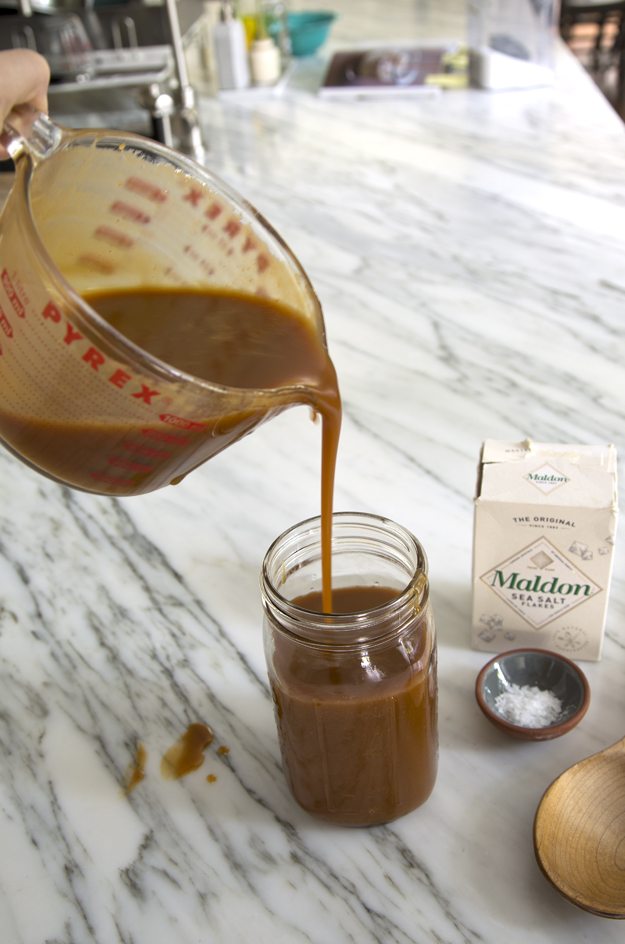
But sometimes messing with the classics works. Traditional hamentashen are filled with either prune or poppyseed filling. In this updated version, apples are cooked down to a thick sauce. A big scoop of dulce de leche and a judicious sprinkling of salt are added and the resulting filling is quite sublime. I have to give credit for this filling to the talented blogger Tori Avey. It was her genius idea. I just took it and wrapped it in a buttery almond shortbread shell.
Hamentashen are the traditional treat baked for the Jewish holiday of Purim, which falls on Sunday March 12 this year. Essentially, the Festival of Purim commemorates a time when the Jewish people living in ancient (4th century BCE) Persia were saved from extermination. If you’re curious to learn more about Purim, check out a more thorough post IÂ wrote in 2012.
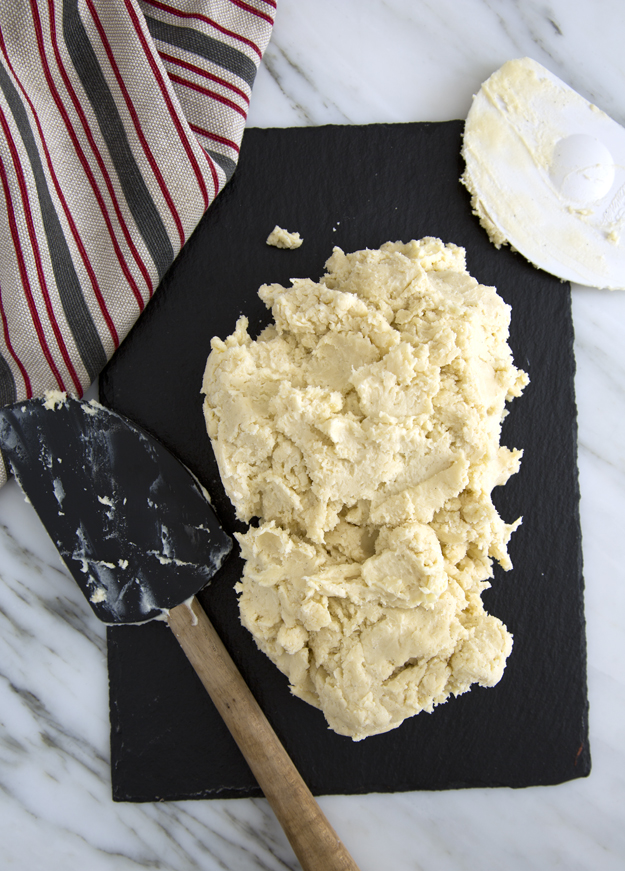
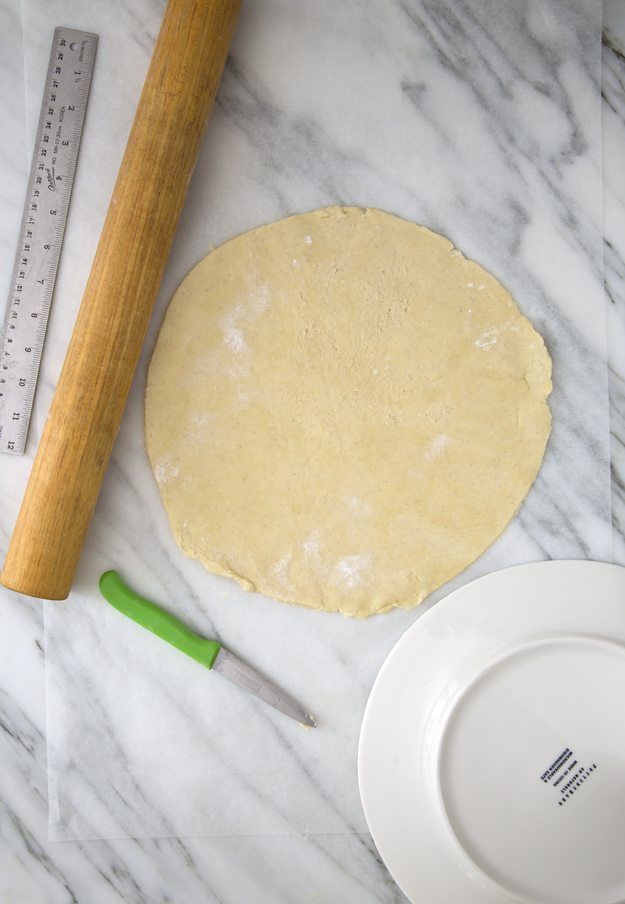
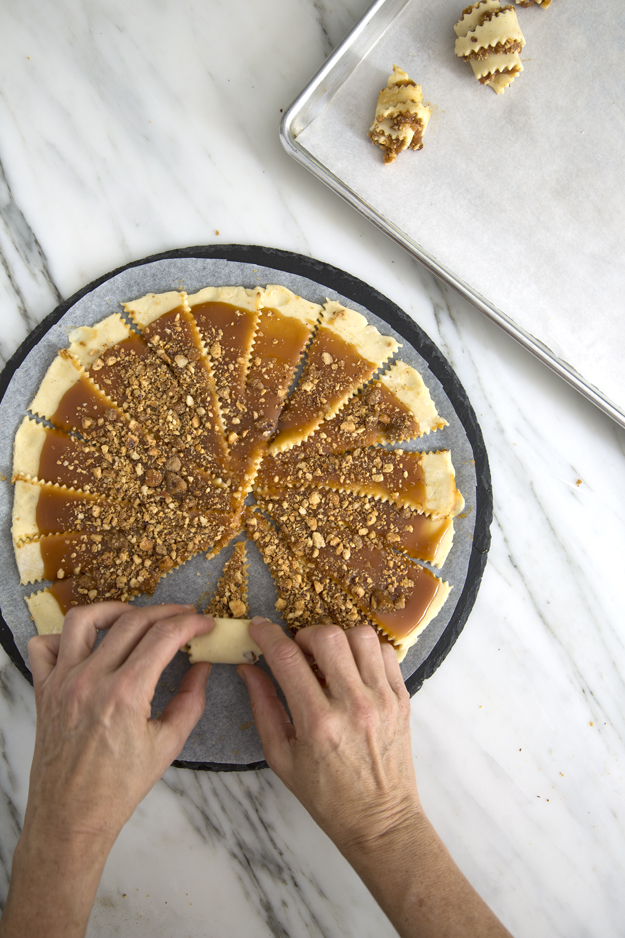
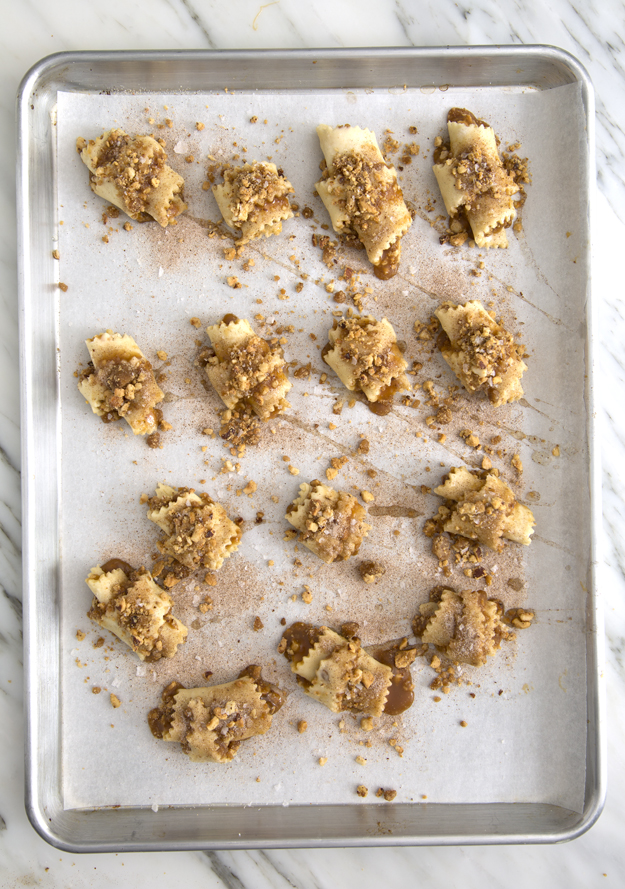
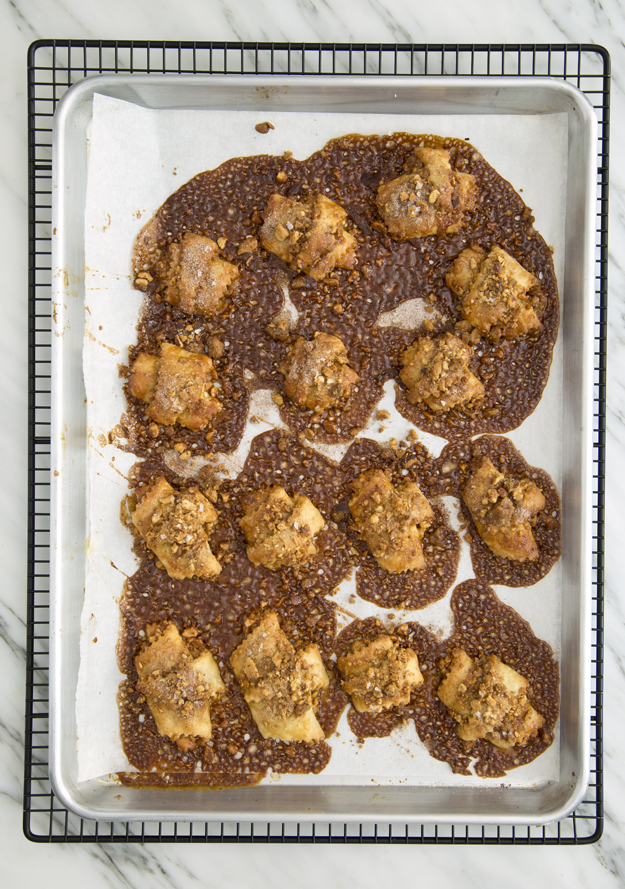
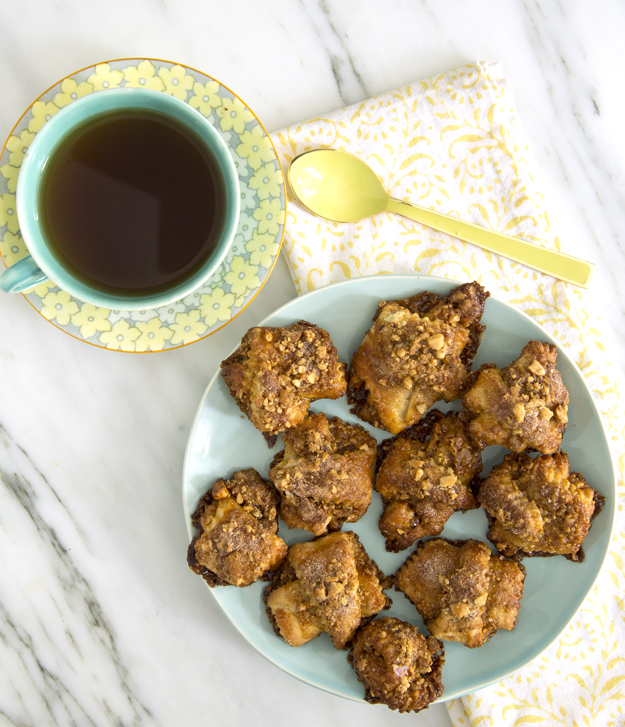
I’ve been busy creating  and this year I have 3 delicious hamentashen recipes to share with you over the next few days. Dried Cherry and Pecan, Poppyseed and Salted Caramel Apple. My childhood Purim memories consist of store bought hamentashen. My mom bought them from Open Window Bakery in Toronto. They made two varieties, prune and poppyseed. My sisters and I vastly preferred the poppyseed filing. Home-made hamentashen didn’t enter my life until I got married. My husband’s aunts, Carol and Jenny, made their own hamentashen. Tender little triangles brimming with a prune-raisin filling and covered in honey and walnuts. I felt like I’d entered an alternate universe. But a universe I was thrilled to be indoctrinated into . All hamentashen should be topped with toasted nuts. Because, crunch!This hamentashen is my twist on their classic recipe. I halved the amount of prunes in the filling and replaced it with dried cherries. The original strawberry jam was swapped out for sour cherry preserves. And then I went really rogue with the dough! I used a butter dough. Carol and Jenny’s hamentashen dough is made with oil, so if you’re looking for a dairy free option, Aunt Carol’s Hamentashen Dough is a great option.This dough recipe comes from Uri Scheft’s new book, Breaking Breads. It is essentially an almond shortbread cookie dough which gets rolled quite thin.
I created this video to show you how to fill and shape the hamentashen.
Bite through the crisp buttery almond shortbread shell to reveal the sweet-tart dried cherry filling. The honey-pecan topping make these hamentashen very special.
The curious folks over at America’s Test Kitchen have launched a new digital brand, Cook’s Science. I have a great fondness for understanding why things work in the kitchen. If you’re a food science geek like me, you’ll love it. I subscribed to their newsletter right away, and one of the first recipes to pop up in my inbox was this one for a white bean hummus.
The recipe was actually created to highlight the tepary bean. The tepary bean is higher in protein and fiber than other beans and is one of the most heat and drought tolerant crops in the world. At this time they are only available by mail order. Since I was in a hurry to make this, I just substituted dried white kidney beans (also called cannellini beans).
Of course you can buy ready made hummus at the supermarket. And, in a pinch, most of them are ok. Moving up a level from store bought is hummus made with canned beans. Ultimate hummus can really only be made with dried beans. Yes, it takes a bit of planning ahead, but the ultra smooth silky texture you get is worth it. Baking soda and salt are added to the soaking water. Both of these contribute to breaking down the tough cell walls of beans and contribute to the creamy consistency of the finished hummus. The usual suspects of lemon juice, garlic, tahini and cumin are added to this version. Where the similarity ends however, is how the garlic is added. The garlic is first pureed with the lemon juice and allowed to steep for 10 minutes. The infused lemon juice is strained out and the garlic is discarded. Turns out that the acidity in lemon juice, tames raw garlic’s harsh pungent bite. I love this kitchen hack. I’m excited to try it with vinegar and garlic in my next batch of vinaigrette. Be patient when pureeing the beans. It will take a good four minutes to get a silky smooth hummus. The hummus is finished an herb and olive salad. Parsley and dill add a bright verdant freshness and olives pack a briny salty punch. A  topping of toasted pumpkin, sunflower and sesame seeds add a delicate crunch.