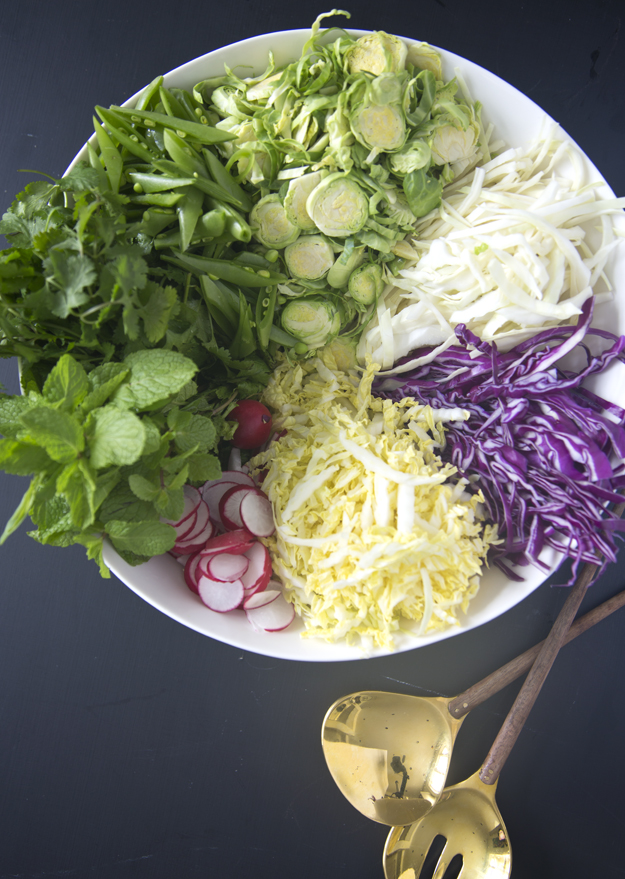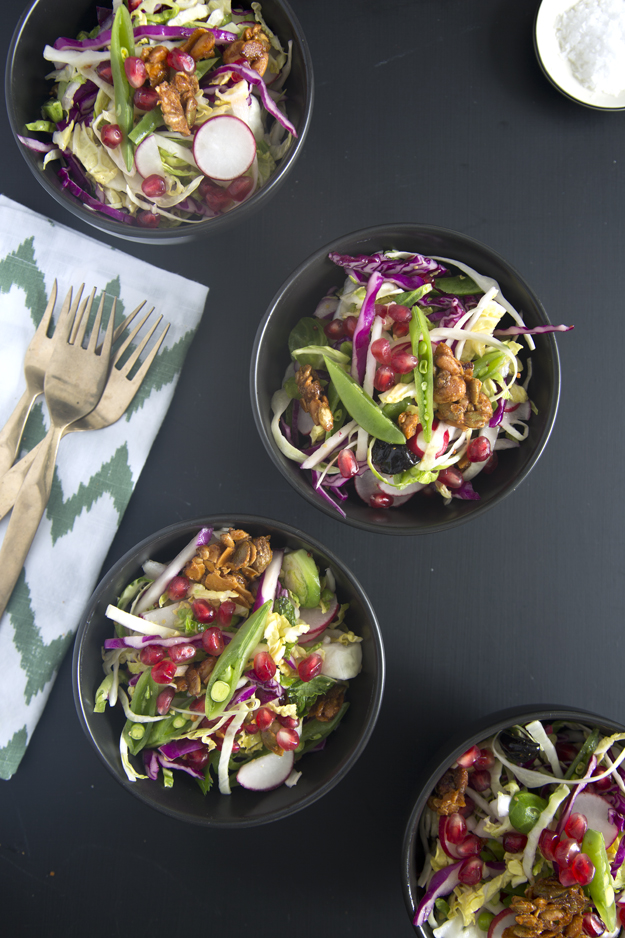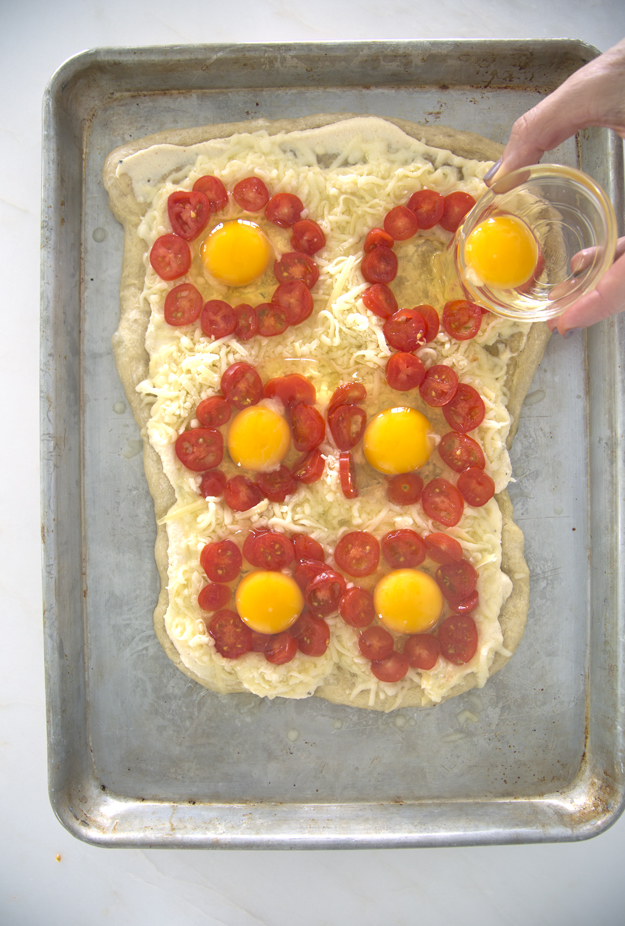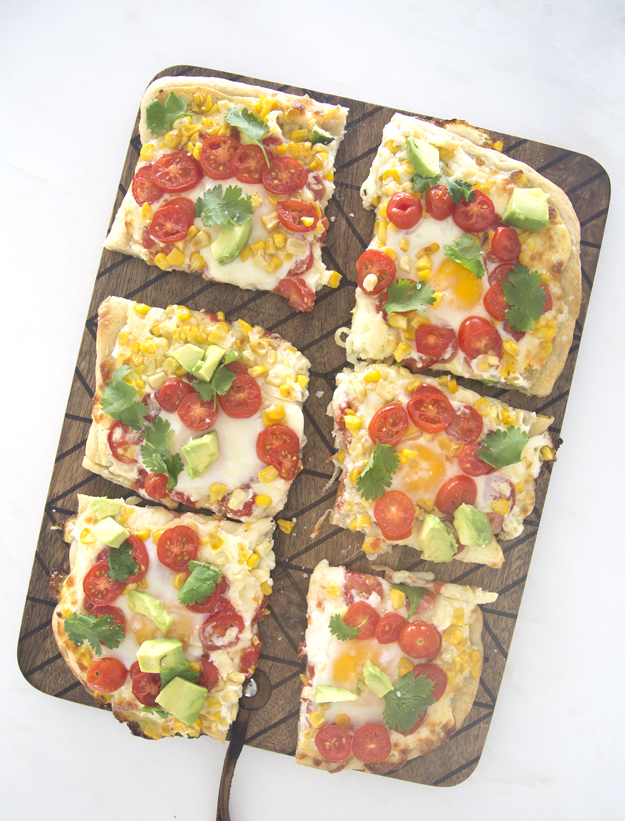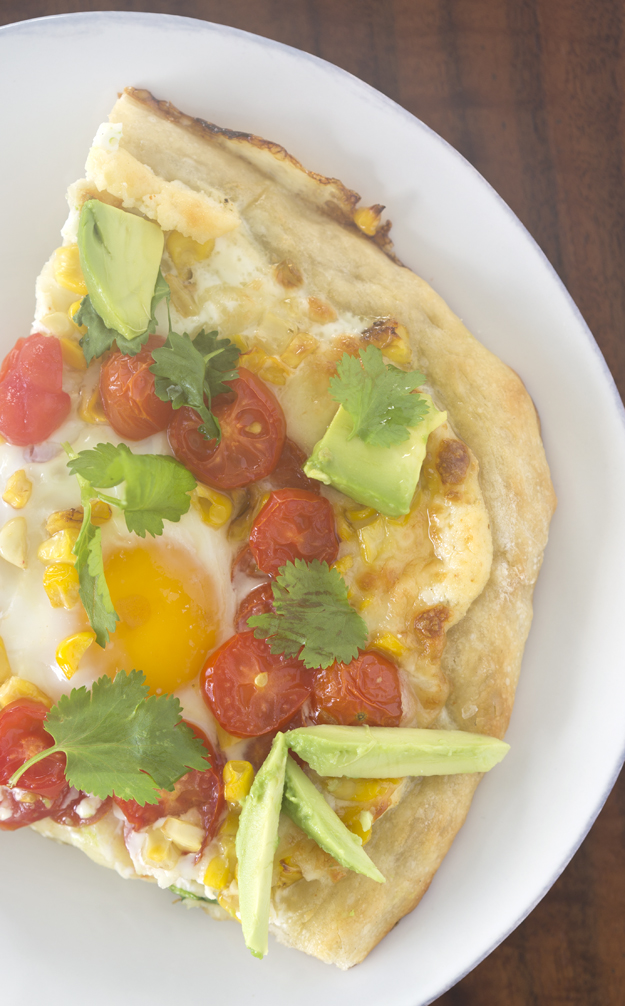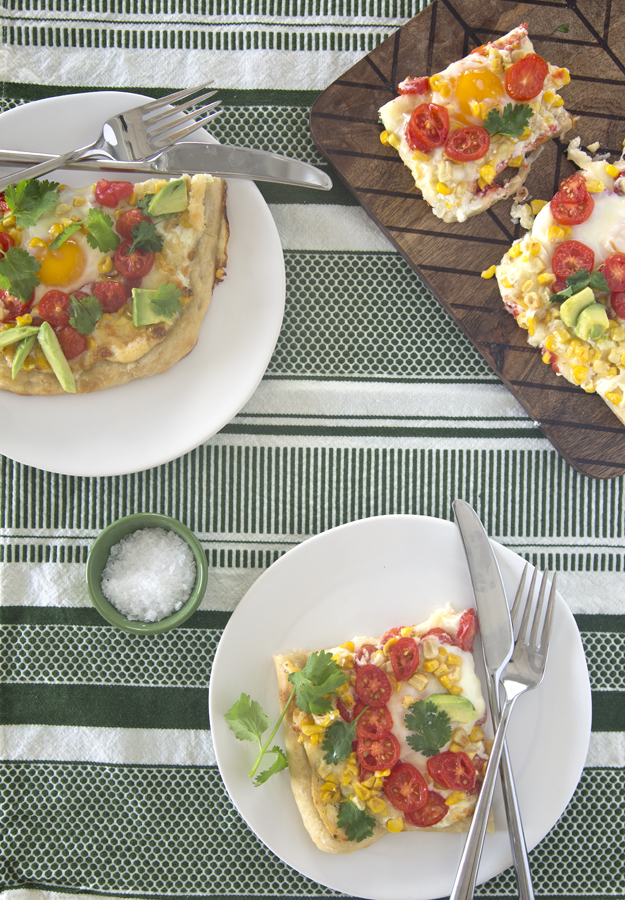
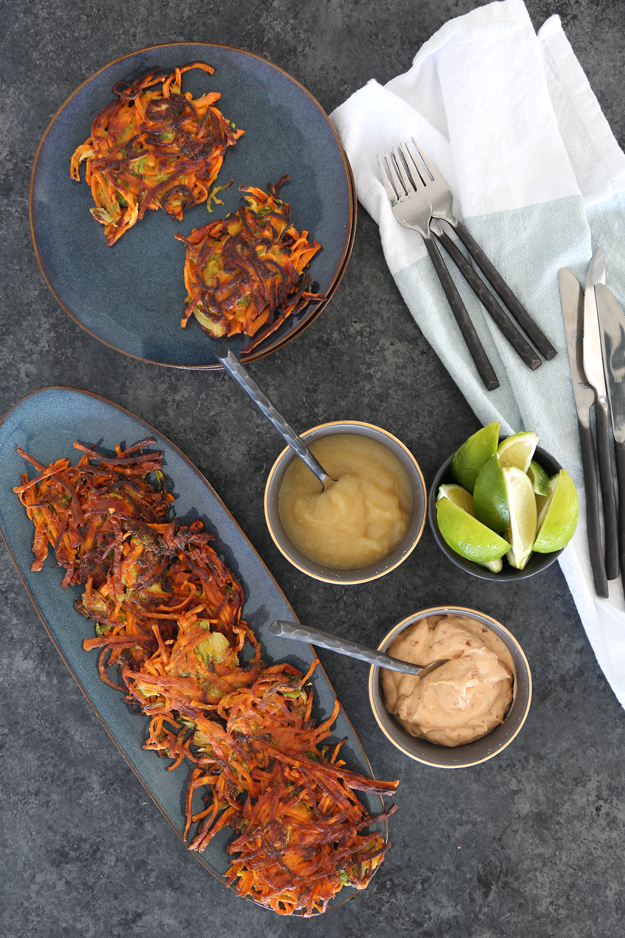
As we enter the festive season of butter and sugar, I thought it would be a good idea to have a new recipe at the ready to provide a healthy counterbalance. This slaw recipe was inspired by an Asian slaw I read about in Milk Street Magazine. This new publication is Christopher Kimball’s first venture since leaving Cook’s Illustrated last year.
I have been a huge fan and supporter of Kimball and Cook’s Illustrated since it’s inception in 1993, so I was curious to check out the premiere issue of Milk Street. The premise behind Milk Street is to bring techniques from the world’s kitchens to America’s weeknight dinner table. Christopher explains that, “There’s no ethnic cooking. It’s a myth. It’s just dinner or lunch served from somewhere else in the world…. Milk Street offers an invitation to the cooks of the world to sit at the same table…All food is everyone’s food.”
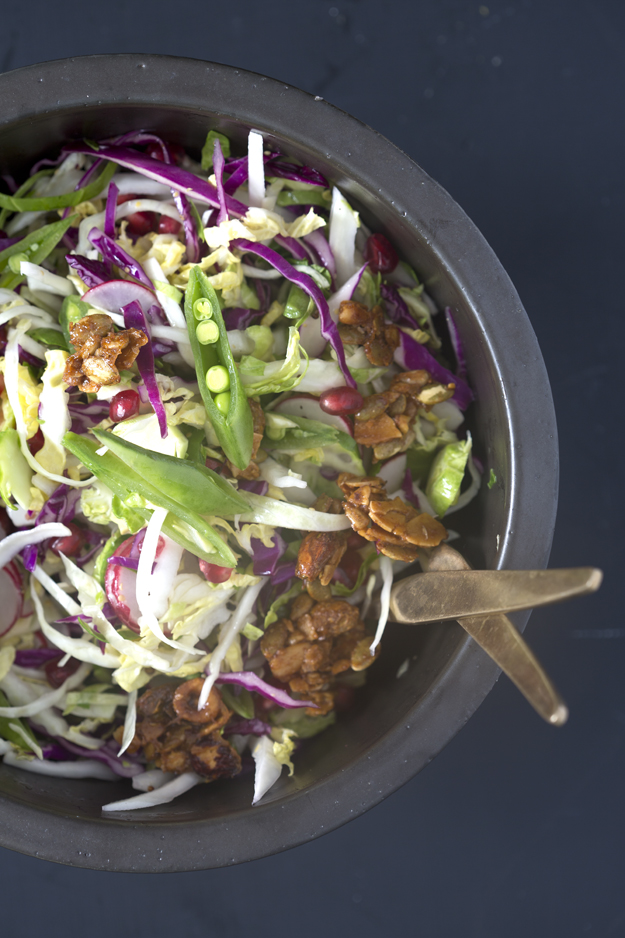
This is my take on Milk Street’s “Coleslaw by Way of East Asia.” I loved the combination of cabbage, radishes and sugar snap peas, but I wasn’t fond of the dressing (coconut milk, lime juice, sugar, fish sauce and serrano chili). I preferred an apple cider vinaigrette with honey and grainy mustard.
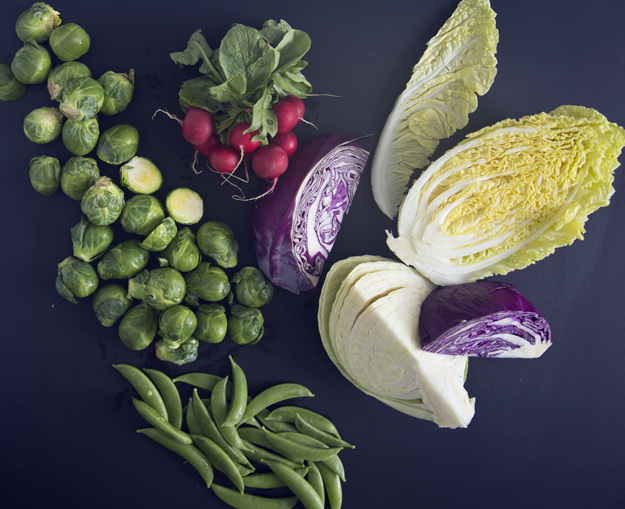
I settled on a combo of Brussels sprouts, red, green and Napa cabbage, radishes and sugar snap peas for my vegetables. Cilantro and mint were also invited to this fresh party.I believe that every salad needs an element of crunch. Croutons are good, but nuts are better! I was inspired by a maple spicy nut crunch I read about in the LCBO’s Holiday 2016 issue of Food & Drink. I’m very excited that the magazine is now available online.
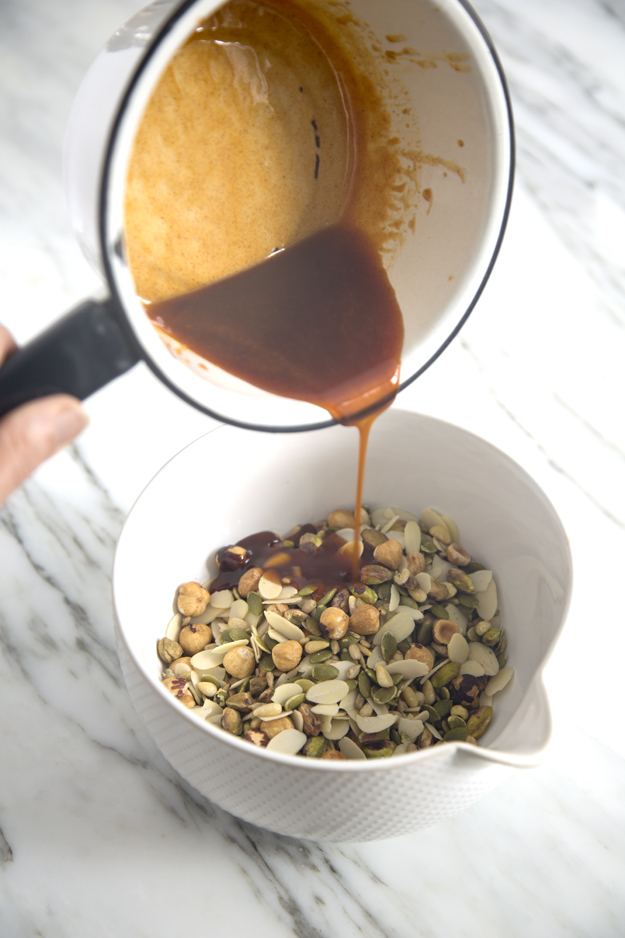
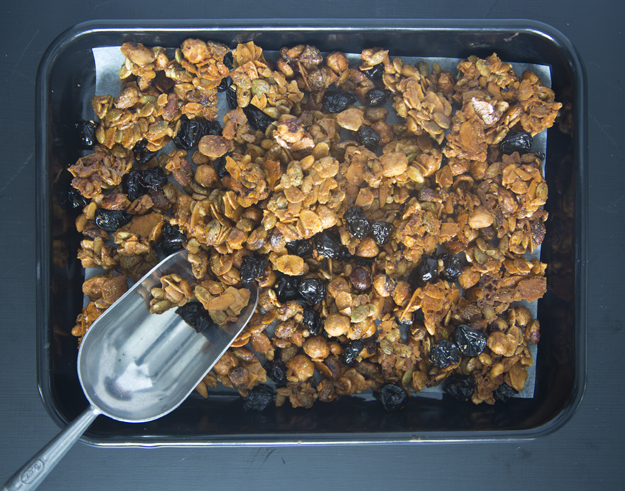
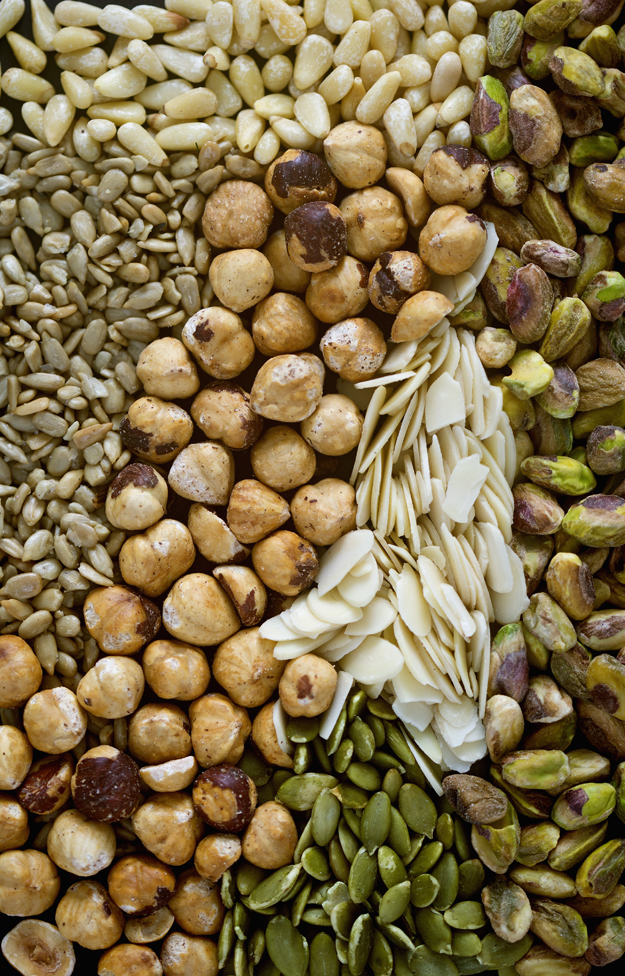
I used a combo of pine nuts, sunflower seeds, hazelnuts, sliced almonds, pistachios and pumpkin seeds. The nuts get coated in a hot bath of maple syrup, brown sugar, paprika, salt and cayenne. 20 minutes in the oven crisps up everything beautifully. I added some dried cherries to the cooled nut mixture. The recipe makes more than you will need, but it keeps perfectly for at least a month in an airtight container. It makes a very yummy afternoon snack.
I blame my addiction to online shopping on my late paternal grandmother, my Bubbe. I grew up in Toronto, but she lived in Philadelphia. At least twice a years would send us her special poppy seed cookies. She always packaged them in a shoe box for mailing. I was conditioned to anticipate the arrival of apparel boxes at a very early age. It’s not my fault.
If you think about it, online shopping is really just the evolution of 20th Century catalogue shopping. If you are Canadian and of a certain age, you will remember The Eaton’s Catalogue. As a child, I spent many happy hours lusting after Barbie clothes and accessories. Not much has changed.
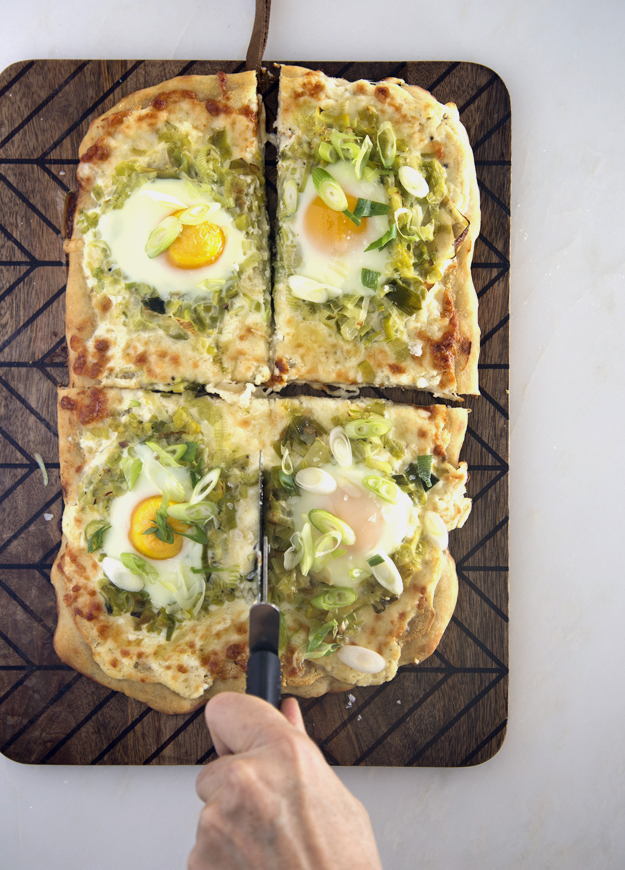
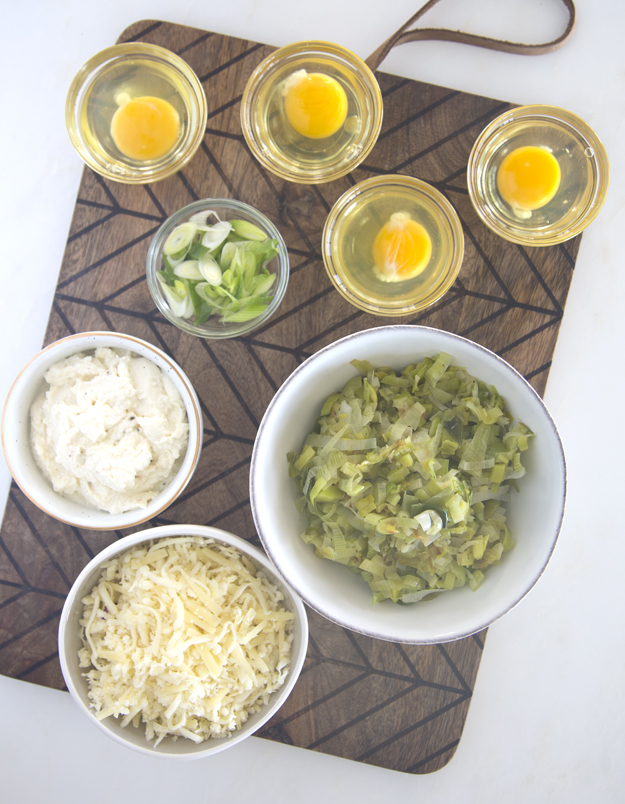
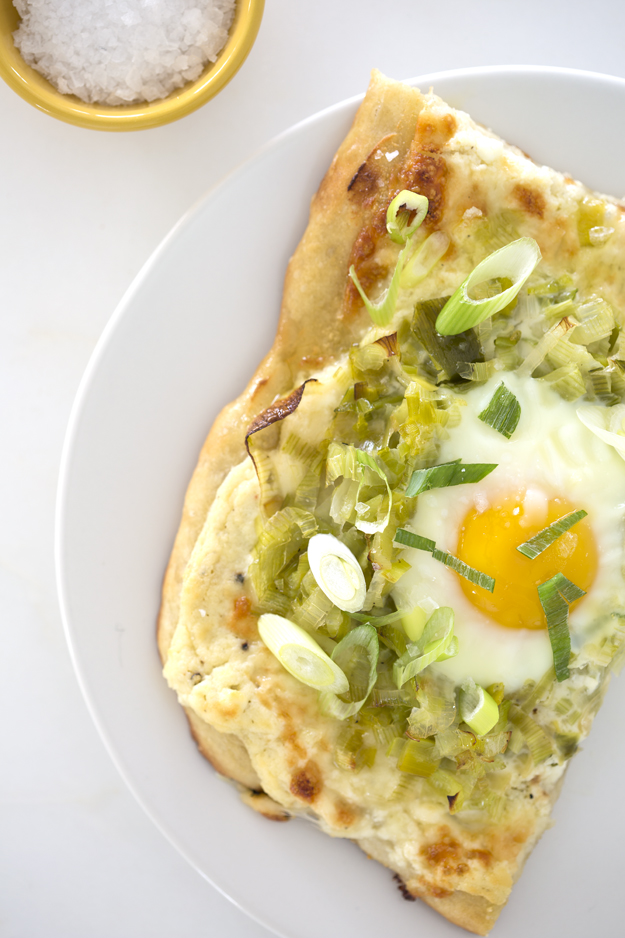
I recently discovered an unexpected bonus of online shopping. With my Amazon Prime subscription, I have access to Amazon TV. While making these breakfast pizzas, I began binge watching Good Girls Revolt. I had been feeling a bit lost after finishing Downton Abbey, and this series is filling the void.
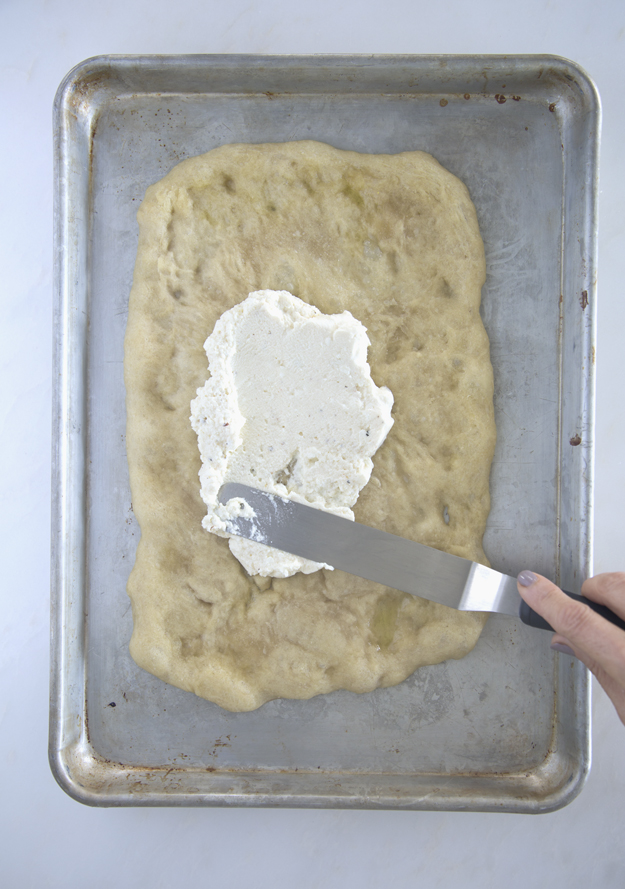
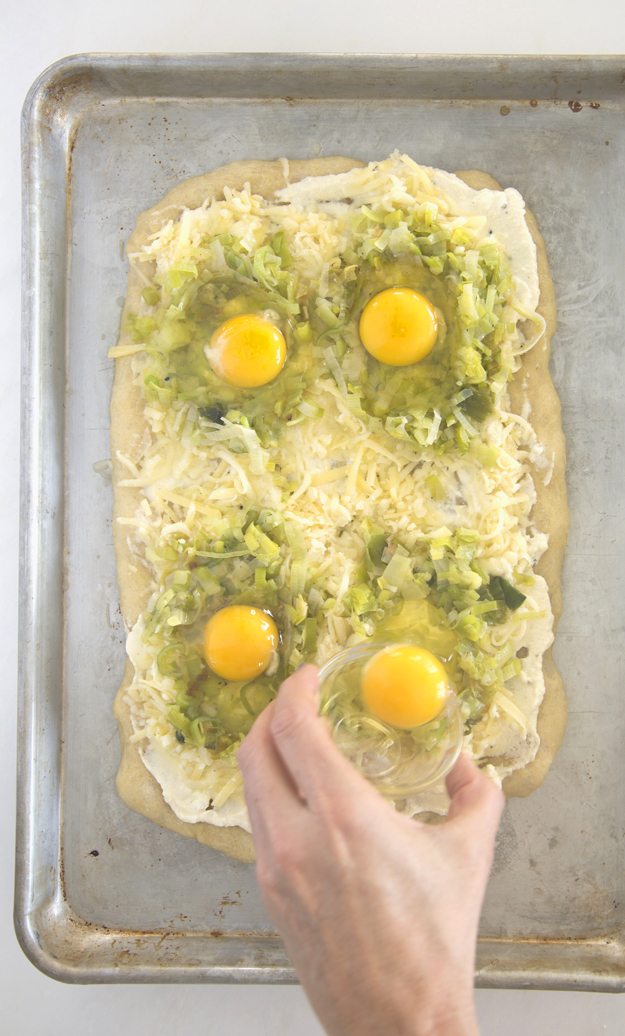
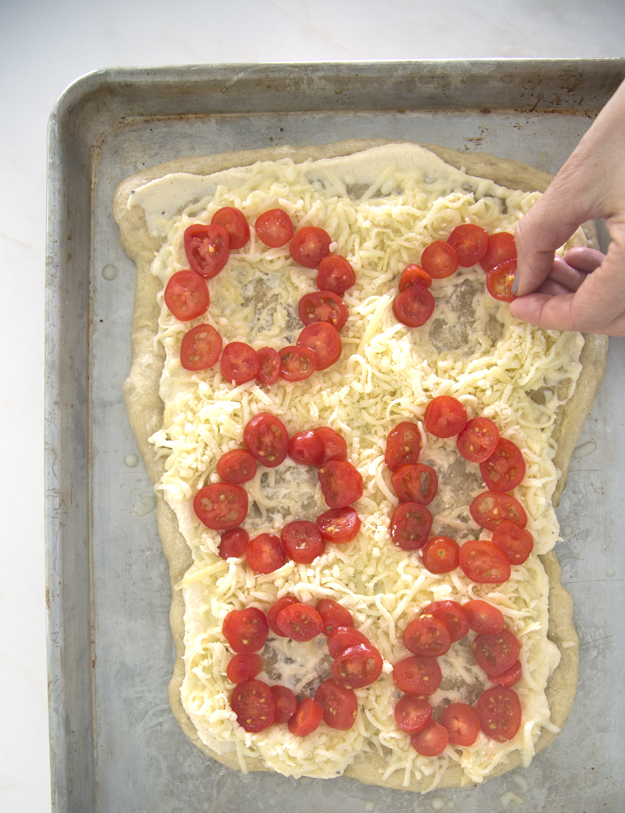
Feel free to use store-bought pizza dough, or make your own. I am a big fan of Jim Lahey’s no-knead pizza dough. All you do it mix flour, yeast, salt and water in a bowl with a wooden spoon. Cover it and let is sit overnight until it becomes all bubbly. I have included the recipe for it at the end of this post.
My breakfast pizzas were inspired by an episode on Cook’s Country
While the leaves have already finished falling where I live, I couldn’t resist making these gorgeous edible ones. It’s just too soon to start making winter cookies. I refuse to get sucked into that vortex this early in the season. I wanted to make the cookies gluten free since one of my sons follows a gluten- free diet and I was curious to try out Bob’s Red Mill 1 to 1 Gluten Free Baking Flour. It is a blend of white rice flour, brown rice flour, potato starch, sorghum flour, tapioca flour, and xanthan gum. You just substitute it cup for cup in your regular recipes.
Roll out dough between two sheets of parchment paper and freeze for about 30 minutes before trying to cut out shapes.I got some beautiful copper cutters from coppergiftscom. They have thousands of different shapes. If you are a cookie lover it is easy to spend lots of time (and money!) over at their site. Don’t say I didn’t warn you. I mixed up 4 colours of royal icing for my leaves. The formula to get these colours is in the recipe at the end of this post. I like to place the piping bags in a tall drinking glass. I place a crumpled up dampened paper towel in the bottom of each glass too keep the icing from drying out and getting all crusty, once you cut a hole in the piping bag. You can only decorate one cookie at a time as the icing must be wet to create the marbling effect. You will need toothpicks and a paper towel to wipe the toothpick off after dragging it through the wet icing. I created a video to show the technique.
The cookies will need to dry overnight before you can package them up. They will keep in an airtight container at room temperature for up to 3 weeks. Perfect with a glass of milk or an afternoon latte!
Guys, I have big news! Perhaps not internet breaking caliber news, but still, kind of exciting. Did you know you could make a vinaigrette with melted browned butter instead of oil? Kind of mind blowing, I know!
There are no shortage of butternut squash and apple salad recipes out there. A quick Google search unearthed 613,000 of them! What makes this one special is the dressing. It’s a brown butter and apple cider vinaigrette and it’s bonkers awesome.
Regular readers of this blog know my love for brown butter. I have used it in seven different desserts. But it had never occured to me to use it as the fat in salad dressing. I have to give credit for this genius idea to Toronto chef Haan Palcu Chang.
If you have never had brown butter before, you are in for a treat. It adds a layer of toasty, nutty deliciousness to anything it touches. Making it couldn’t be simpler. Butter is composed of butterfat, milk protein and water. When you brown butter, you are essentially toasting the milk protein. As you heat the butter, and it begins to bubble and sputter away, the water evaporates and the hot butterfat begins to cook the milk solids, turning them from creamy yellow to a splendid speckled brown colour and your whole kitchen smells like toasted hazelnuts.
The squash is thinly sliced and pan fried until is is almost charred. A cast iron skillet is perfect for this, but a non-stick skillet will also do the job.You can cook the squash ahead of time and warm it in the oven just before assembling the salad. A tart apple like Granny Smith is a wonderful contrast to the sweet squash. Brown the butter just before you are ready to serve the salad. If you make it ahead of time the butter will start to solidify.While the vibrant orange hue of butternut squash is gorgeous on its own, adding a crunchy topping of toasted hazelnuts, a verdant shower of mint and green onions and ruby red jewel-like pomegranate seeds turn this salad into a pretty stunning masterpiece.
You may know larb (pronounced “lawb”) from seeing it on the menu of your local Thai restaurant, but it actually originated in Laos, Thailand’s neighbour to the north-east. It has become a staple dish of Thai street food.
Larb is a salad, but not a regular vegetable salad. It is best described as a meat salad. Typically made with  minced pork, chicken or beef, it is seasoned with fish sauce, chili flakes, lime juice and toasted rice to give it a crunchy texture. It is finished with green onions and an assortment of herbs (cilantro, mint and thai basil) to give it a verdant freshness and bring it all together.
Larb, wrapped in a lettuce leaf, (because anytime I can wrap something in a leaf and call it dinner, I am exceedingly happy), with a spoonful of sticky Thai rice, is a magical flavour bomb. Salty, spicy, sour, sweet and crunchy, it hits all the right notes.   I decided to make it with ground lamb. While not totally authentic, my version is still quite delicious. I think it would also be great with ground turkey or chicken, for a lighter version.
No discussion of larb is complete without chatting about toasted rice. Browned ground rice adds a crunchy bite and a toasted fragrance. Leela over at shesimmers says, “ Whenever a Thai recipe calls for toasted rice powder, even just a smidgen of it, don’t be tempted to leave it out… This insignificant-looking (ingredient) is what differentiates a vaguely Thai-inspired dish from what a Thai mother serves her family somewhere in Thailand as we speak.”
Toasted rice powder is available at many Asian markets as well as on-line, but it is simple to make at home. Start with about 1/2 cup uncooked Thai rice and toast it in a dry skillet over medium heat for about 10-15 minutes, stirring frequently, until light brown and fragrant. (It will smell like you just made popcorn!) Let the rice cool and coarsely grind a few tablespoons at a time in a spice grinder. You only need 1-2 Tablespoons of the ground rice for their recipe. Just store the remainder in an airtight container in the pantry.  Once the toasted rice is done, this dinner comes together in about 30 minutes, if you follow this timetable.
Start with making a quickle. (That’s short for a quick pickle!) Julienne some cucumber and carrots and thinly slice some purple onion. Let them hang out in a vinegar/salt/sugar mixture for about 20 minutes, then drain and discard the pickling liquid. The pickled vegetables add a perfect sour note that contrasts beautifully with the rich lamb meat. Put some Thai rice on to cook. While a rice cooker turns out perfect rice everytime, I have always resisted getting one because I don’t want another kitchen appliance. The reason rice made in a rice cooker always turns out light and fluffy is that it has a mechanism to release steam, which forces out additional moisture that normally gets trapped in a pot resulting in wet rice. Here is my fool-proof method for cooking rice.
I wrap the pot lid in a kitchen towel. The towel mimics the steam release mechanism by absorbing all the excess steam and leaves you with perfectly cooked rice. While the rice is cooking and the vegetables are pickling, cook the lamb. I find a potato masher is the perfect tool for breaking the meat up.
Once the lamb is cooked through, take it off the heat and stir in the toasted rice powder. Start with 1 teaspoon fish sauce, 1/4 teaspoon red pepper flakes, 1 Tablespoon lime juice and 1 teaspoon brown sugar. Stir well and taste. Add more of whatever you think it needs. You want a balance of sweet, spicy, sour and salty. Stir in some sliced green onions.
Let everyone assemble their own wraps. Chopped peanuts add extra crunch.
If the combination of butternut squash and tomato sounds a bit strange, you’re not alone. It seemed like an odd pairing to me as well, when I read about it on bonappetit.com. But when I considered the elements more carefully, it made perfect sense. Butternut squash on it’s own makes quite a sweet soup, which I always enjoy for the first few spoonfuls,. But then it becomes cloying and not terribly nuanced. It always reminds me of baby food. But give the squash a shot of acid, in the form of a tomato and we’re talking a whole different ballgame of flavour. Rich and complex, each spoonful offers a fresh perspective.
The most difficult part of making this soup is cutting the butternut squash in half. Even when I use my 12 inch chef’s blade, my knife always gets stuck halfway through the squash. Then I lift the whole thing in the air and fling it back down on the cutting board, praying that the force will split the squash and I will escape unbloodied. It usually works.
Once you get the squash cut in half, scoop out the seeds, give it a slick of olive oil and a sprinkling of salt and pepper. Place each half facedown on a parchment lined baking sheet. Tuck a peeled clove of garlic under each half and roast in a hot oven for about 45 minutes, until soft.
Last week was my birthday and I made my own cake. Some people think that having to bake your own birthday cake is quite sad, but I’m not one of them. When you bake your own cake, you get exactly what you want. I gave quite a bit of thought about what to bake. (Way more thought than is probably healthy, I’ll admit).
As an early birthday present to myself I ordered Bobbette and Belle’s new cookbook. I read through it and stuck post it notes on over half  half the pages. The photography is gorgeous and there are so many recipes that inspired me. It is a very well written book with lots of tips and techniques. While some of the recipes are not for rookie bakers, the instructions they give are very thorough. As soon as I saw their Salted Caramel Toffee Cake, I knew I found my intended. Three layers of  classic vanilla cake filled with homemade salted caramel buttercream, toffee pieces and a caramel drizzle.Â
This was my starting point, but I made a few changes. here’s how my cake came together.
I started with their recipe for a classic vanilla cake but I browned the butter first. Brown butter adds a layer of toasty, nutty deliciousness. Making it couldn’t be simpler. Butter is composed of butterfat, milk protein and water. When you brown butter, you are essentially toasting the milk protein. As you heat the butter, and it begins to bubble and sputter away, the water evaporates and the hot butterfat begins to cook the milk solids, turning them from creamy yellow to a splendid speckled brown colour and your whole kitchen smells like toasted hazelnuts. It’s insanely gorgeous!
It is best to brown the butter in a light coloured pot, so that you can easily monitor the browning process. Note that only the milk solids will turn brown. the butterfat stays clear. As soon as you reach the perfect brown colour, pour the butter out of the hot pot to let it cool completely.You will need to chill the brown butter and let it harden before you can cream it with the sugar.Divide the batter evenly into 3 pans and bake.Next I decided to alternate layers of brown butter vanilla cake with layers of almond meringue. I thought the textural difference of pillowy soft cake layers would be fantastic with chewy crunchy meringue. A salted caramel buttercream would be the perfect glue to hold all these layers together.Admittedly, there are a lot of components to prepare for this cake. Don’t try to do it all in one day. Make the components on day one and assemble on day 2. I have included detailed instructions on how to make all the parts, in the recipe below.
Leaf peepers everywhere are bummed out that the fall foliage was delayed this year. I’m still walking around without socks, which makes me very happy, because I hate socks. (But I do love a great pair of black tights. They smooth everything out and make me feel so sleek.)
I’m going to pass on pumpkin spice and ease my way into fall with an autumn grain bowl.Â
While everyone is roasting their broccoli and brussels sprouts, I’m bucking the trend and going raw. I love raw broccoli when the florets are chopped into tiny pieces and the stems are stripped of their woody bark, and the tender core is thinly sliced.  Shredded brussels sprouts, pickled red onions, cucumbers, radishes and mint round out the crunch party.The dressing for this grain bowl packs an umami punch, thanks to anchovy paste!I like to dress the vegetables at least 30 minutes before eating to give the salad a chance to marinate and soften up a bit. My grain of choice is farro, but it would be delicious with brown rice, barley, wheat berries or quinoa, if you must! I served the farro on the side and let everyone fill their own bowl. A shaving of Parmesan to top the bowl is an excellent idea.
This week, I’m not sure if I’m more excited about the Toronto Blue Jays or this salmon recipe. But, let’s put aside baseball and talk about Dukkah Crusted Salmon. Dukkah is a mid-east nut and spice mixture, chockfull of crunchy hazelnuts, pistachios and sesame seeds, scented with cumin, coriander and nigella seeds. A food processor makes quick work of the nuts and spices. I have waxed poetic about dukkah in this space before. (Grilled Flatbread with Dukkah, Roasted Asparagus with Dukkah). It is such a versatile mixture. My version of dukkah crusted salmon was inspired by Donna Hay’s recipe. To use the dukkah alone as a crust would be too heavy and overpowering. Donna suggests lightening up the coating by mixing in some puffed amaranth cereal. Too lazy to go to the store to hunt down puffed amaranth, I decided that Rice Krispies would be an excellent substitute. The fragrant crunchy coating yields way to meltingly tender rich salmon. Guys, this is my new favourite way to eat salmon.
If you happened to have been visiting Ireland during the first week of September this year, and noticed a shortage of butter, I apologize. My bad. That was me, eating my way through Galway, Killarney and Dublin, one loaf of bread at a time, slathered with Irish butter and salt.Most folks go to Ireland to drink Guinness or Irish Whiskey. When the customs officer asked us the purpose of our visit I think I shocked him when I divulged I was going for the butter.
What makes Irish butter so good? Turns out that the key to their delicious butter is grass. Over two thirds of Irish land is dedicated to farming and agriculture.  80% of this land is used to grow grass, hence the country’s nickname, “The Emerald Isle”. Irish cows graze freely on grass for 10 months a year. Irish butter has a deep golden colour, owing to the beta carotene in grass. Contrast that to North America, where most dairy cows are fed a diet comprised of primarily corn and soybeans. This produces a paler coloured butter, less rich and creamy than Irish butter. Creamy and sweet with a pure clean butter flavour and silky texture, Irish butter is the gold standard. The most well-known brand of Irish butter is Kerrygold. Luckily for us, it’s widely available here at home.I discovered the joys of Irish soda bread and butter on our very first morning.  We landed in Dublin after flying all night and rented a car to drive to Galway, on the west coast. We stopped halfway through our 3 hour drive for our first full Irish breakfast. My plate arrived piled high with eggs, sausages, bacon, potatoes and tomatoes. All very delicious, but I quickly lost interest and abandoned it once I took my first bite of the soda bread, thickly spread with salted butter and jam.
Turns out that almost every restaurant bakes their own soda bread and the variations seemed endless. My rule for bread eating is, that unless it’s stellar, I try not to waste the calories. I was powerless to resist all that amazing bread, and it goes without saying that the butter put me in my happy place.
Irish soda bread boasts a craggy intensely crunchy crust and a dense chewy interior. There are many different versions and variations, but the traditional recipe consists of flour, baking soda, salt, and buttermilk. The power of baking soda is activated by the acid in the buttermilk.Â
My version is adapted from Clodagh McKenna‘s book Clodagh’s Irish Kitchen. She uses equal parts of white all-purpose and whole wheat flours. I loaded up my loaf with golden flax seeds, sunflower and pumpkin seeds and raisins.
Irish butter, flaky sea salt and tart cherry jam make excellent accompaniments to the bread. Any leftover is delicious toasted all week long!